
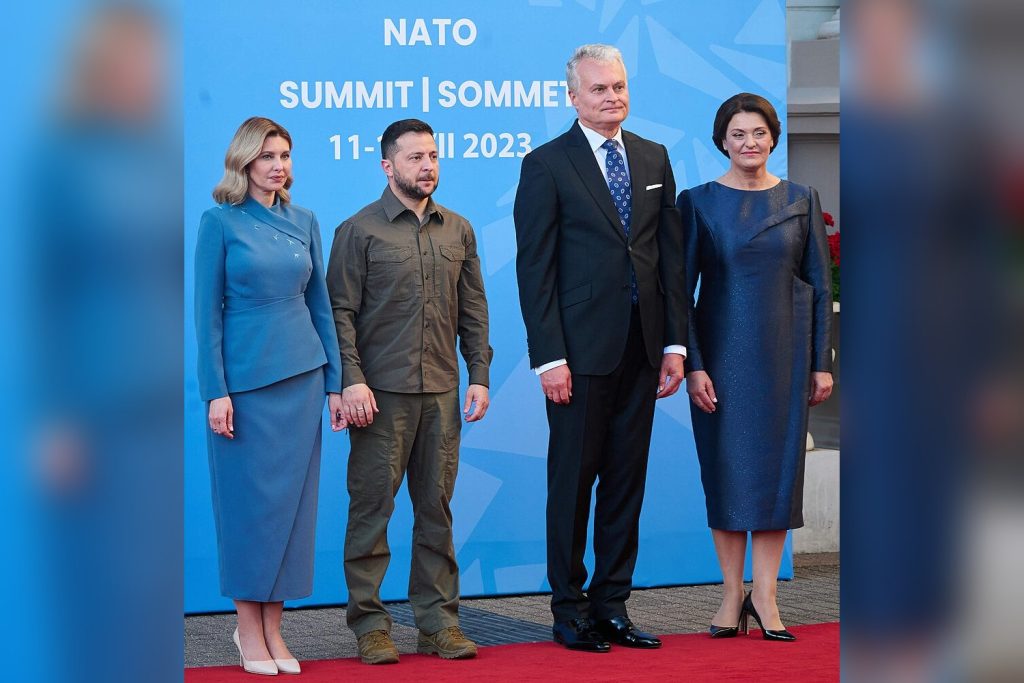
For European leaders who have spent more than four years rallying behind Ukraine, the prospect of asking President Volodymyr Zelensky to stay away from an upcoming NATO summit presents a stark test of the alliance’s internal cohesion. A report from The Telegraph indicates that Ukrainian officials may be excluded from a key gathering of the North Atlantic Treaty Organisation, a move that threatens to expose the deepest fissures yet between the United States and its European partners over the future direction of the Western military bloc.
Since Russia’s full-scale invasion of Ukraine in 2022, European members of NATO — chief among them Germany, France, and the United Kingdom — have provided billions of dollars in military and humanitarian aid to Kyiv. German Chancellor Olaf Scholz and French President Emmanuel Macron have publicly advocated for Ukraine’s eventual membership in the alliance.
Yet the reported snub, if confirmed, could strain relations with those same allies, who favor a stronger NATO-Ukraine partnership even as the war grinds on.
Europe’s Delicate Calculation
In the corridors of European power, the calculation is delicate. While leaders such as Scholz and Macron champion Ukraine’s cause, they also recognize the imperative of maintaining U.S. commitment to NATO.
The alliance remains heavily dependent on American military capabilities, and Washington’s view of strategic priorities may now diverge sharply from Europe’s. The Telegraph report suggests that European allies may have acquiesced to the reported decision to avoid a rift with a potential future Trump administration. European leaders now confront a paradox.
They publicly support Kyiv’s ambitions for deeper integration with NATO, yet pushing too hard could alienate Washington at a time when the alliance’s credibility is on the line. The summit is also expected to include discussions on European members increasing their defense spending to the alliance target of 2% of gross domestic product, a topic that carries its own weight in transatlantic burden-sharing debates.
Ukraine’s Long Struggle for Sovereignty
The exclusion of President Zelensky comes against a backdrop of a nation whose strategic position has made it a focal point of East-West tensions for centuries. Ukraine is a sovereign country in Eastern Europe, historically a crossroads between the continent’s east and west. For centuries, the region was contested by successive empires, including the Polish-Lithuanian Commonwealth, the Ottoman Empire, and the Russian Empire.
After a brief period of independence following the Russian Revolution, Ukraine became a constituent republic of the Soviet Union in 1922. It gained independence in 1991 when the Soviet Union dissolved, declaring itself neutral.
A new constitution was adopted in 1996 as the country transitioned to a free-market liberal democracy, though corruption persisted. Mass protests in 2004 known as the Orange Revolution pushed through electoral reforms. Another wave of demonstrations in 2014, called Euromaidan, led to a revolution that ended with Russia unilaterally occupying and annexing Ukraine’s Crimean Peninsula. That same year, a war erupted in eastern Ukraine between government forces and Russian-backed separatists.
The conflict continued intermittently until 2022, when Russia launched a full-scale invasion across multiple fronts, prompting Ukraine to seek military and political support from Western allies. Ukraine is the second-largest country in Europe by area.
Its capital is Kyiv. It borders Russia to the east and northeast, as well as Belarus, Poland, Slovakia, Hungary, Romania, and Moldova. The official language is Ukrainian.
What the Summit Outcome Means for the Alliance
Ukraine’s location and history of external domination make it a strategic focal point for tensions between Russia and NATO. The alliance is now grappling with how to respond to Ukraine’s requests for membership while trying to maintain unity among its members.
The reported decision to exclude Zelensky highlights the rift between European allies who support a stronger NATO-Ukraine partnership and the United States, which appears to prioritize avoiding direct confrontation with Russia. How NATO handles this question will shape the alliance’s future credibility and its ability to defend the principles of collective security on which it was founded. For readers, the outcome will determine whether the alliance can remain cohesive when tested by a major war on its own doorstep.
For now, European capitals wait to see if the reported exclusion holds, and what message it sends to Moscow. The summit’s outcome will test whether the alliance can maintain unity, and what is at stake for Europe is nothing less than the coherence of NATO itself.
{“@context”: “https://schema.org”, “@type”: “NewsArticle”, “headline”: “Zelensky’s NATO exclusion risks deepening US-Europe rifts”, “description”: “BRUSSELS, July 6 — For European leaders who have spent more than four years rallying behind Ukraine, the prospect of asking President Volodymyr Zelensky to…”, “datePublished”: “2026-07-06T09:30:00+00:00”, “author”: {“@type”: “Person”, “name”: “Maria Romano”}, “publisher”: {“@type”: “Organization”, “name”: “InfoPulse Today”, “url”: “https://newsfeed.infopulsetoday.com/”}}




