
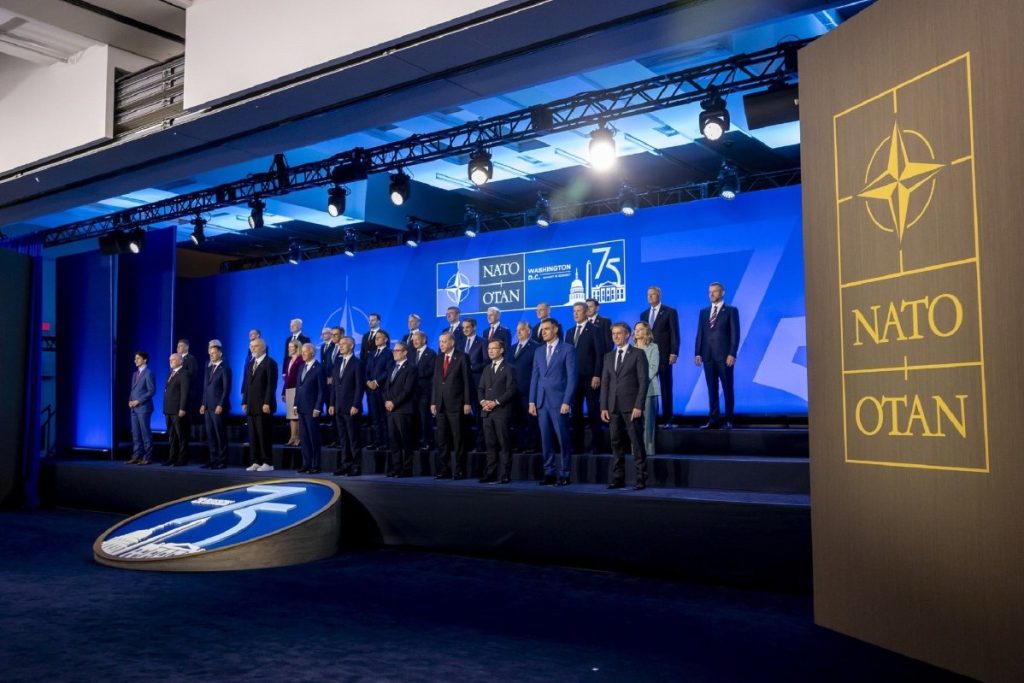
WASHINGTON, July 6 — The 2024 NATO summit, set to convene in Washington from July 9-11, will mark the alliance’s 75th anniversary under the shadow of internal political friction and the ongoing war in Ukraine. Leaders will gather to commemorate the signing of the North Atlantic Treaty on April 4, 1949, by 12 founding members, but the gathering is as much about managing divisions as celebrating unity. A central point of contention remains defense spending.
The current target requires member nations to allocate 2% of their GDP to defense, a benchmark many allies have failed to meet. This shortfall has drawn criticism from former President Donald Trump, who has questioned the alliance’s value and pressured NATO members to increase their financial contributions.
The potential return of Trump to the White House looms over the discussions. The reported exclusion of Ukrainian President Volodymyr Zelensky from speaking at the summit underscores the delicate political calculations at play. The decision reflects U.S. domestic political sensitivities, particularly regarding Trump’s stance on the conflict.
Since Russia’s full-scale invasion in February 2022, NATO has provided support to Kyiv, but the alliance’s internal dynamics now complicate that posture. On the expansion front, the summit will take stock of NATO’s growth.
Finland joined the alliance in April 2023, followed by Sweden in March 2024. These accessions, driven by security concerns following the invasion, have strengthened the alliance’s northern flank but have also added new commitments to the collective defense framework under Article 5. Historically, NATO summits have projected unity while exposing underlying rifts.
The 2024 Washington meeting is no exception, with disagreements over burden-sharing and threat responses likely to surface. The summit’s 75th anniversary backdrop serves as a reminder of the alliance’s endurance, but the current geopolitical climate tests its cohesion.




