
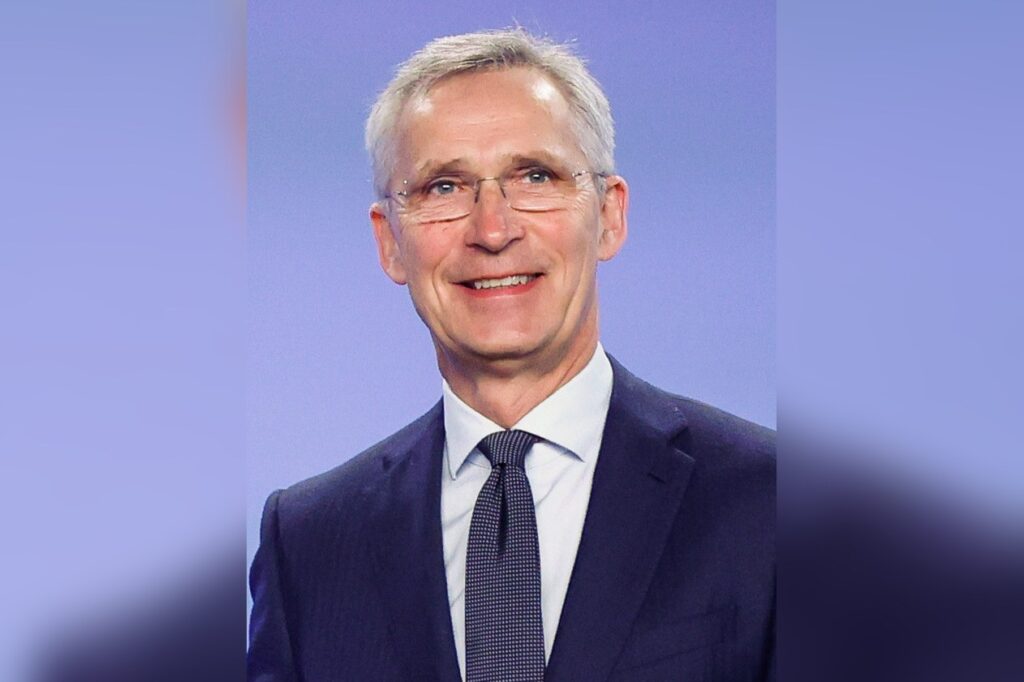
After a decade defined by crisis, NATO Secretary General Jens Stoltenberg is preparing to leave office, marking the end of a tenure that saw the alliance confront its most serious security challenges since the Cold War. Stoltenberg, a Norwegian born on March 16, 1959, in Oslo, is expected to step down in October 2024, with Dutch Prime Minister Mark Rutte the leading candidate to succeed him.
The handover comes at a moment when the war in Ukraine has fundamentally redrawn the map of European security, placing NATO at the center of the most intense confrontation with Russia in decades.
A Decade of Crisis at NATO’s Helm
Stoltenberg took over as NATO Secretary General on October 1, 2014, succeeding Anders Fogh Rasmussen. He arrived with experience as Norway’s Prime Minister, serving two terms—from 2000 to 2001 and again from 2005 to 2013. His tenure was shaped almost immediately by Russia’s annexation of Crimea earlier that same year.
That event set the stage for a steady deterioration in NATO-Russia relations, leading to the full-scale invasion of Ukraine in 2022, which became the defining challenge of his leadership. The alliance responded by undertaking its largest military buildup since the Cold War, deploying battlegroups across Eastern Europe.
Stoltenberg himself had his term extended multiple times, a direct reflection of the prolonged conflict and the need for continuity at the alliance’s helm. Beyond the buildup, Stoltenberg pushed successfully for the accession of two new members: Sweden and Finland. Both completed the membership process, joining in 2023 and 2024 respectively. This expansion marked a significant shift in European security dynamics, adding two militarily capable countries that had long maintained neutrality.
For Finland, the decision to join represented a historic break from its post-World War II posture; for Sweden, it ended two centuries of nonalignment. Their entry into the alliance drew sharp criticism from Russia, which had repeatedly warned against NATO’s eastward expansion.
The Balancing Act: Supporting Ukraine While Preserving Unity
At the heart of Stoltenberg’s final months in office is a delicate balancing act: maintaining strong support for Ukraine while preserving alliance unity among 32 member states with varying political interests. This balancing act came under scrutiny on July 9, 2024, when The Telegraph reported that Stoltenberg and other NATO officials had decided to bar Ukrainian President Volodymyr Zelensky from speaking at the upcoming Washington summit. According to the report, the decision was taken to avoid offending former U.S. President Donald Trump.
The episode underscored the internal political pressures that NATO faces as it navigates the war. While the report has not been officially confirmed by the alliance, it highlights the tensions that arise when domestic political considerations intersect with alliance strategy.
Throughout his tenure, Stoltenberg has been a strong advocate for supporting Ukraine. Under his leadership, NATO provided military aid and political backing to Kyiv, reinforcing the principle that the alliance would not directly engage in the conflict but would equip Ukraine to defend itself. The war has tested NATO in ways few anticipated, forcing members to reconsider defense spending, readiness, and the very purpose of the alliance in a post-2022 world.
Stoltenberg’s legacy will be that of a steady hand through profound upheaval—a leader who kept the alliance united in the face of Russian aggression, even as internal disagreements simmered beneath the surface.
NATO’s Broader Context and the Question of Succession
NATO itself was formed in 1949 as a collective security pact to counter the Soviet Union during the Cold War. It is a military alliance of European and North American countries bound by the treaty of mutual defense known as Article 5, which states that an attack on one member is an attack on all.
After the fall of the Soviet Union, NATO shifted its focus, conducting interventions in the Balkans in the 1990s and later in Afghanistan following the September 11, 2001 attacks. The alliance also expanded eastward, incorporating former Warsaw Pact states and Baltic nations—a move that drew repeated criticism from Russia. Full cooperation between NATO and Russia ended after the annexation of Crimea in 2014, and the 2022 invasion further reinforced the division.
Today, the alliance must maintain unity amid rising tensions with Russia and internal political pressures from its own members. As Stoltenberg prepares to hand over leadership, the question that lingers is whether his successor can maintain the same level of cohesion.
The next secretary general will inherit an alliance that is larger, more militarized in Eastern Europe, and more politically exposed than at any time in the past three decades. The war in Ukraine shows no signs of an early resolution, and the internal dynamics of member states—including the United States—will continue to shape NATO’s ability to act decisively. For now, Stoltenberg’s departure marks the end of a chapter defined by crisis management, and the opening of a new one whose outcome remains uncertain.




