
or
tags. Must not restate instructions.
We must keep all facts: Lagos August 28, explosive growth, rethink infrastructure, beyond roads/buildings, environmental systems mission-critical: drainage, waste management, wetlands, waterways, pollution control. Waste management: Lagos generates 13,000-14,000 tonnes waste daily (2025 state estimates). Complex system collection, transport, sorting, recycling, disposal. Circular economy gaining traction: shift from removal to separation, recovery, recycling; materials become resources; waste-to-energy, composting. Lagos Waste Management Authority reports surge in recycling companies from three to 78, creating over 6,000 jobs. Change perception waste from burden to opportunity. Flood management: low-lying coastal geography, rapid urbanization, climate pressures, vulnerability. Response beyond drainage channels: dredging, maintenance, enforcement, public awareness, protecting drainage corridors. Wetlands recognized for absorbing water, mitigating floods. Less visible aspects: wastewater regulation, pollution control, sanitation enforcement, environmental monitoring safeguard public health/quality of life, often unnoticed. Lagos environmental story complex: not just clean streets or flood-free days but intricate systems underpin resilience. As Lagos grows, health of environmental infrastructure key determinant of future livability. Lagos State Ministry of the Environment and Water Resources at forefront, managing balance between development and sustainability.
We must not add new figures, quotes, or names. Keep same numbers: 13,000-14,000 tonnes, 2025 state estimates, three to 78 recycling companies, over 6,000 jobs. No new names like “Merry Gel Sigui” etc. Must not include JSON-LD or hashtags. Must output only article body.
Need 450-560 words. Let’s craft about 500 words.
Structure: opening paragraph, then subheadings: Waste Management and Circular Economy, Flood Management and Wetlands, Hidden Environmental Governance, The Bigger Picture and Ministry Role.
Use
for subheadings. Use
for paragraphs.
Check word count. Let’s draft ~500 words.
Draft:
Lagos is experiencing a surge in population and construction that is prompting officials to reconsider what constitutes essential infrastructure in Africa’s biggest metropolis. While highways and skyscrapers still dominate the conversation, the city’s environmental systems have become just as vital to keeping daily life running smoothly.
Waste Management and the Shift to a Circular Economy
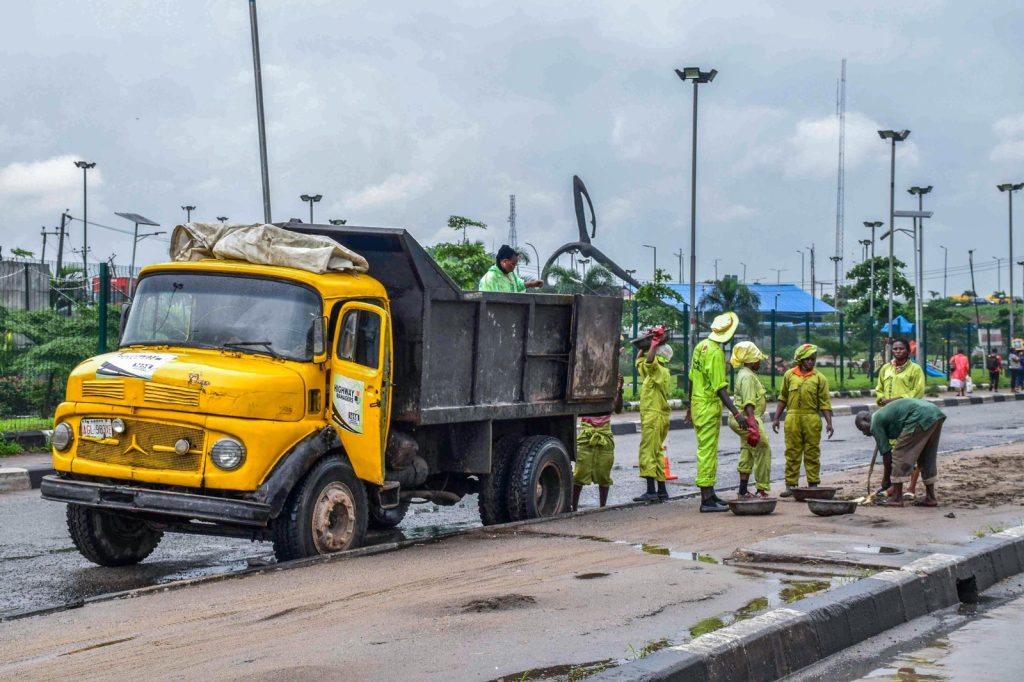
The sheer volume of refuse produced each day illustrates why waste handling can no longer be treated as a simple street‑cleaning task. According to 2025 state estimates, Lagos generates between 13,000 and 14,000 tonnes of waste every 24 hours. Managing this flow requires a coordinated network that covers collection, transport, sorting, recycling and final disposal.
Authorities are moving away from the old model of merely removing trash and toward a circular‑economy approach that emphasizes separation, recovery and reuse. Items once dismissed as refuse are now viewed as raw material for new products, while pilot projects in waste‑to‑energy and composting are beginning to take shape.
The Lagos Waste Management Authority has recorded a dramatic rise in the number of registered recycling enterprises, climbing from three to 78. This expansion has translated into more than 6,000 jobs, underscoring how waste is increasingly perceived as an economic asset rather than an environmental liability.
Flood Management, Wetlands and Urban Resilience
Lagos’ position on a low‑lying coastal plain, combined with rapid urban expansion and shifting climate patterns, leaves it especially prone to flooding. Addressing this risk goes beyond digging new drainage channels; it involves a suite of ongoing activities such as dredging, routine maintenance, strict enforcement of regulations, public awareness campaigns and the protection of existing drainage corridors.
Wetlands, which were once dismissed as unused land, are now recognised for their natural ability to absorb excess water and reduce flood peaks. Preserving and rehabilitating these areas has become a core component of the city’s flood‑mitigation strategy.
Less Visible but Essential Environmental Governance
Beyond the more noticeable services, a range of behind‑the‑scenes functions safeguards public health and quality of life. Wastewater treatment standards, pollution‑control measures, sanitation inspections and continuous environmental monitoring operate quietly but are indispensable. Their effectiveness often escapes public notice, yet failures would quickly become apparent in deteriorating living conditions.
The Bigger Picture and the Role of the State Ministry
Lagos’ environmental narrative is not defined solely by clean streets or flood‑free days; it rests on the intricate interplay of drainage, waste handling, wetland preservation, water‑quality oversight and pollution control. These systems together form the invisible backbone that determines how resilient the megacity can be as it continues to grow.
Looking ahead, the condition of this environmental infrastructure will be a decisive factor in Lagos’ future livability. The Lagos State Ministry of the Environment and Water Resources leads the effort to balance development pressures with the need for sustainability, coordinating policies that aim to keep the city functional, healthy and adaptable.
Now count words. Let’s count roughly.
Paragraph 1: “Lagos is experiencing a surge in population and construction that is prompting officials to reconsider what constitutes essential infrastructure in Africa’s biggest metropolis. While highways and skyscrapers still dominate the conversation, the city’s environmental systems have become just as vital to keeping daily life running smoothly.” Count words: Lagos(1) is2 experiencing3 a4 surge5 in6 population7 and8 construction9 that10 is11 prompting12 officials13 to14 reconsider15 what16 constitutes17 essential18 infrastructure19 in20 Africa’s21 biggest22 metropolis.23 While24 highways25 and26 skyscrapers27 still28 dominate29 the30 conversation,31 the32 city’s33 environmental34 systems35 have36 become37 just38 as39 vital40 to41 keeping42 daily43 life44 running45 smoothly46. => 46 words.
Paragraph 2 (under Waste Management heading): “The sheer volume of refuse produced each day illustrates why waste handling can no longer be treated as a simple street‑cleaning task. According to 2025 state estimates, Lagos generates between 13,000 and 14,000 tonnes of waste every 24 hours. Managing this flow requires a coordinated network that covers collection, transport, sorting, recycling and final disposal.” Count: The1 sheer2 volume3 of4 refuse5 produced6 each7 day8 illustrates9 why10 waste11 handling12 can13 no14 longer15 be16 treated17 as18 a19 simple20 street‑cleaning21 task.22 According23 to24 202525 state26 estimates,27 Lagos28 generates29 between30 13,00031 and32 14,00033 tonnes34 of35 waste36 every37 2438 hours.39 Managing40 this41 flow42 requires43 a44 coordinated45 network46 that47 covers48 collection,49 transport,50 sorting,51 recycling52 and53 final54 disposal55. => 55 words.
Paragraph 3: “Authorities are moving away from the old model of merely removing trash and toward a circular‑economy approach that emphasizes separation, recovery and reuse. Items once dismissed as refuse are now viewed as raw material for new products, while pilot projects in waste‑to‑energy and composting are beginning to take shape.” Count: Authorities1 are2 moving3 away4 from5 the6 old7 model8 of9 merely10




