
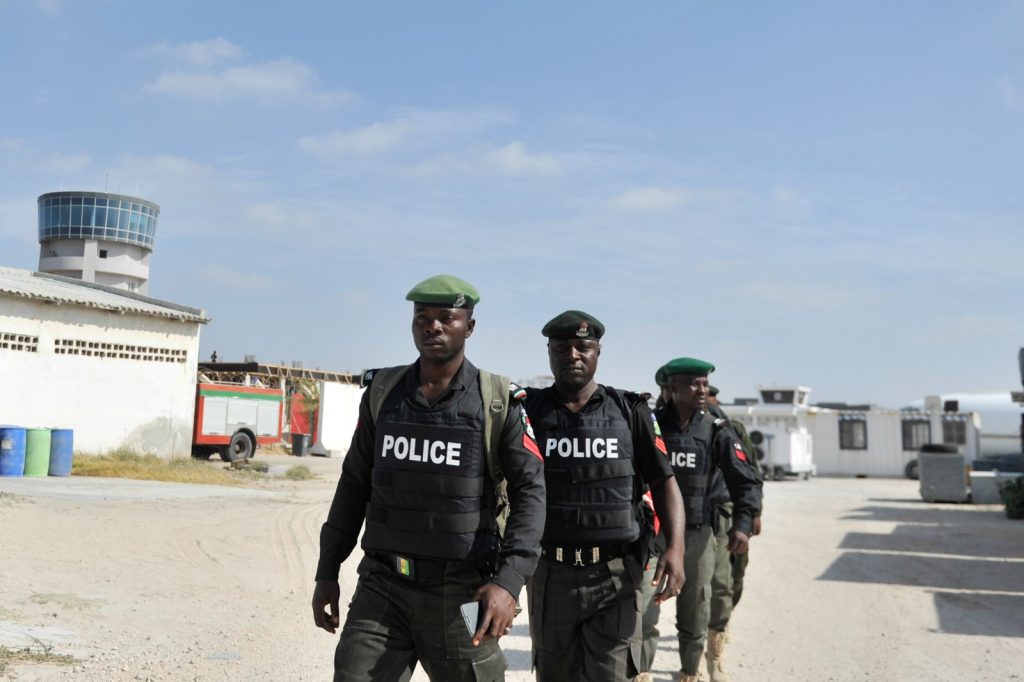
A senior security official has described a worsening security crisis across Nigeria’s South-West region, where criminal activity is increasingly shifting toward kidnapping for ransom, a development that is reshaping risk calculations for businesses and individuals in one of West Africa’s most economically significant zones. Speaking in an interview, the official traced the current wave of insecurity to an escalation of earlier farmer-herder conflicts.
What began as relatively mild clashes over cattle straying onto farmland has transformed as criminals realized that kidnapping for ransom offers a more profitable “business” than grazing cattle. Innocent citizens are now being abducted and held for payment. “These criminals are evolving; it is almost like innovation,” the official observed.
Kidnapping Replaces Armed Robbery as Dominant Threat
The official noted that armed robbery, once the dominant crime on Nigerian roads, appears to be declining. But the shift to kidnapping presents a different order of threat, one that targets individuals rather than vehicles and often involves extended captivity.
The official pointed to a basic principle of security: for a crime to occur, opportunity must exist, and the crime scene must be accessible. Drawing a contrast with Singapore, which the official visited on a study tour in 2017–2018 at the Singapore Aviation Academy, the official noted that even one of the world’s safest countries maintains prisons. In Singapore, people walk around and use their phones at night without fear.
“If you do that in some areas in Nigeria, your phone will likely be snatched,” the official said. The comparison highlights the gap in public safety that criminal networks exploit.
For Indian companies with operations or supply chains in Nigeria’s South-West, the assessment carries direct implications. The region includes Lagos, the commercial hub where many Indian-owned manufacturing, trading, and pharmaceutical firms are based. Kidnapping for ransom has become a specific operational risk that multinationals must factor into security budgets and personnel policies.
Historical Strains and Economic Consequences
Nigeria’s current security challenges reflect broader historical strains. After gaining independence from Britain in 1960 and becoming a republic in 1963, the country experienced political instability, military coups, and a civil war in the late 1960s that followed regional tensions.
It later transitioned to civilian governance, though its political landscape has remained complex, shaped by a federal structure and the coexistence of multiple religions and traditions. Nigeria is a federal republic known for its large population, abundant natural resources, and cultural influence across the continent. Competition over land and resources has long simmered between farming communities and nomadic herders in the South-West.
These tensions have at times flared into violence, and shifting criminal tactics have emerged as groups exploit gaps in law enforcement. The official’s diagnosis suggests that as long as ransom payments remain a reliable revenue stream, the innovation cycle among criminal groups will continue.
What to watch: Investors and regional security analysts will be monitoring whether Nigerian authorities can disrupt the financial incentives driving the kidnapping economy. For now, the evolution of these threats signals a need for heightened vigilance and adaptive security measures in a country that remains a key economic and political force in Africa. For businesses and residents, the operational risk from kidnapping for ransom underscores the growing challenge of ensuring safety in a region where criminal networks continue to adapt and exploit vulnerabilities.




