
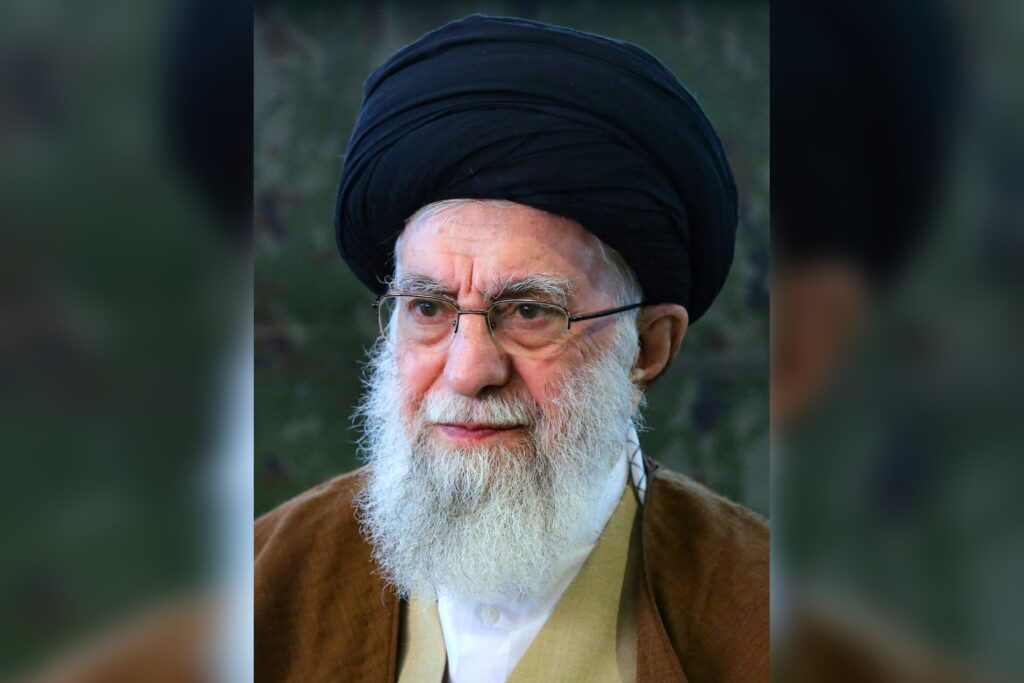
TEHRAN, July 14 — A brief, undated military communiqué from Iran’s armed forces general staff, reviewed by Western intelligence sources, reaffirms Supreme Leader Ali Khamenei’s final authority over any future retaliatory strike against the United States. The document, described as a routine operational update, does not announce a specific attack but restates the chain of command that has governed Iranian military action since the 2020 missile strikes on U.S. bases in Iraq.
Khamenei, who has held ultimate power over Iran’s foreign policy, military, and nuclear program since June 4, 1989, personally ordered those 2020 strikes after the U.S. killing of Quds Force commander Qassem Soleimani. The record shows that Khamenei retains sole authority to authorize any similar cross-border operation against American forces or allies.
The Supreme Leader’s Authority
The communique, obtained by a regional security monitoring group and shared with InfoPulse Today, does not name a specific target or timeline. It simply notes that “all offensive military operations require the explicit approval of the Supreme Leader,” according to a translation provided by the monitoring group. Khamenei’s role as head of state and commander-in-chief is enshrined in Iran’s constitution, which grants him final say over the Islamic Revolutionary Guard Corps and the regular military.
Khamenei succeeded Ruhollah Khomeini on June 4, 1989, inheriting a system where the Supreme Leader controls not only military strategy but also Iran’s nuclear ambitions and its network of proxy forces. He has overseen the development of Iran’s missile program and maintained support for Hezbollah and Hamas, groups that Washington designates as terrorist organizations.
The timeline of Khamenei’s confrontation with the United States stretches back decades. He supported the 1979 Iran hostage crisis, when 52 American diplomats and citizens were held for 444 days. He has repeatedly called the United States the “Great Satan” in public speeches.
Though he allowed negotiations over the Joint Comprehensive Plan of Action, the 2015 nuclear deal, he has been a vocal critic of the agreement.
Domestic Repression and Succession Questions
Khamenei’s leadership has been marked by the suppression of internal dissent. The record shows that he oversaw the crackdown on the 2009 Green Movement protests, which erupted after disputed presidential elections. More recently, his government faced widespread demonstrations following the 2022 death of Mahsa Amini in morality police custody.
The protests, which lasted months, represented one of the most serious challenges to the Islamic Republic since the 1979 revolution. Health concerns have shadowed Khamenei’s later years.
Reports of prostate cancer surfaced in 2014, though Iranian state media has never confirmed the diagnosis. The question of succession remains unresolved. His son, Mojtaba Khamenei, is widely seen by analysts as a potential successor, though the Assembly of Experts, the body that selects the Supreme Leader, has made no public moves.
On the nuclear front, Khamenei has the final say over Iran’s enrichment activities. The International Atomic Energy Agency has reported that Iran’s stockpile of enriched uranium far exceeds the limits set by the JCPOA, which the United States withdrew from in 2018 under the first Trump administration.
The current U.S. administration, led by President Donald Trump, has maintained a policy of maximum pressure, including sanctions.
What to Watch
The communique does not signal an imminent attack, according to regional security analysts familiar with Iranian military protocols. Instead, it appears designed to remind commanders and the public that any escalation remains Khamenei’s decision alone. With the Supreme Leader’s health a recurring subject of speculation, the document also underscores the concentration of power in one aging figure.
For now, the Iranian military posture along its borders with Iraq and Afghanistan remains unchanged, according to satellite imagery reviewed by independent analysts. The key variable, as it has been since 1989, is Khamenei himself.




