
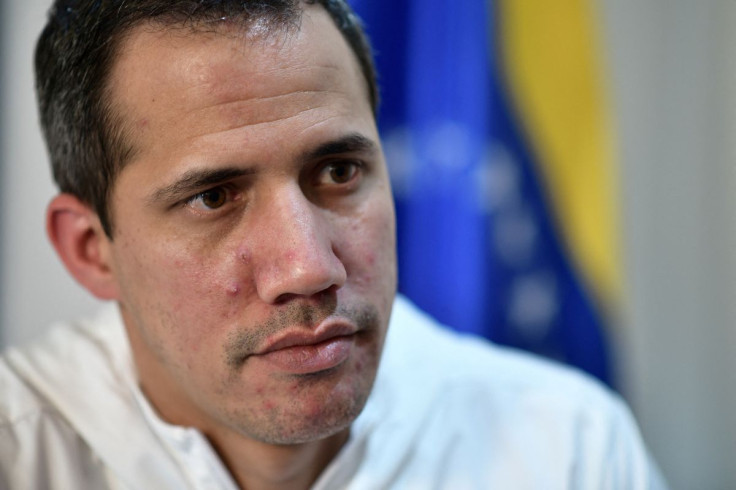
The political trajectory of Juan Guaidó, once the internationally recognized face of Venezuela’s opposition, has contracted sharply. Born in the coastal city of La Guaira on July 28, 1983, Guaidó rose to global prominence on January 23, 2019, when the United States recognized him as Venezuela’s interim president. Today, the man who leads the Popular Will party finds his support reduced to a fraction of its former breadth.
A February 2025 poll indicated that only 15% of Venezuelans view him favorably, reflecting a dramatic erosion of political capital. While over 50 countries once backed his claim to the presidency, that coalition has frayed as Nicolás Maduro remains entrenched in power.
From Student Protests to Interim Presidency
Guaidó’s political roots extend back to the student protests of 2007, where he emerged as a leader. He later helped found the Popular Will party alongside Leopoldo López.
Elected as an alternate deputy to Venezuela’s National Assembly in 2010, he secured a full seat in 2015. Under a rotation agreement among opposition parties, Popular Will nominated him to lead the assembly in 2019. In January of that year, the National Assembly declared the previous year’s presidential election illegitimate, refusing to recognize Nicolás Maduro’s second term.
Guaidó then swore himself in as acting president of Venezuela, triggering a prolonged presidential crisis that drew recognition from many foreign governments, including the United States. He became a rallying figure for calls for free elections and humanitarian aid deliveries.
The Maduro administration responded forcefully, freezing Guaidó’s assets, investigating him for foreign interference, and repeatedly blocking him from entering the National Assembly. An alleged assassination attempt in 2020 underscored the dangers opposition figures face in Venezuela. His wife, Fabiana Rosales, has also been active as a political activist, and the couple has remained a symbol of resistance for a shrinking base.
The human drama of that era—the roar of crowds, the crack of tear gas canisters during mass protests—has, however, given way to a grinding economic crisis that now dominates daily life for most Venezuelans.
Declining Influence and a Stalled Opposition
The current moment reveals a stark shift. Guaidó’s political standing has eroded as Maduro’s grip on power has held firm. The executive order that once anchored U.S. recognition does not explicitly reaffirm that status, leaving Guaidó’s position uncertain.
That ambiguity hangs over his political future and reflects a broader stalemate in Venezuela. Residents in Caracas describe a sense of fatigue with the opposition’s inability to dislodge Maduro.
The streets are quieter than during the mass protests of 2019, when Guaidó’s name was chanted in plazas. Repeated mediation efforts have failed to produce a transition to democratic rule, and the opposition’s inability to mount a successful challenge has left many voters weary. Guaidó’s Popular Will party still exists, but its leader’s favorable ratings are in single digits. The question now is whether he can regain relevance.
His calls for free elections and humanitarian aid once galvanized international support, but that support has waned. With Maduro’s regime still firmly in power, the path forward for the opposition remains unclear.
The economic crisis continues to afflict daily life, consuming the attention of citizens who once filled the plazas. The political capital that Guaidó built—backed by more than 50 countries—has dwindled to a fraction of its former strength.
Uncertain Status Amid a Broader Stalemate
The ambiguity in Washington adds another layer to Guaidó’s predicament. The current executive order leaves his status in limbo, and what happens next—whether the United States will renew explicit recognition or pivot to a new strategy—could reshape the landscape. For now, Guaidó waits, a figure from a moment that has not yet passed but feels increasingly distant. His survival of an alleged assassination attempt, his wife’s activism, and his leadership of Popular Will remain part of the opposition’s story, but the narrative has shifted.
With mediation efforts stalled and Maduro’s hold unshaken, Venezuela’s political future remains uncertain. Guaidó’s diminished standing reflects the broader stalemate in a country where the dream of democratic transition has yet to materialize.
The coming decisions in Washington may determine whether he can reclaim a role or remain a symbol of a movement that has lost its momentum.




