
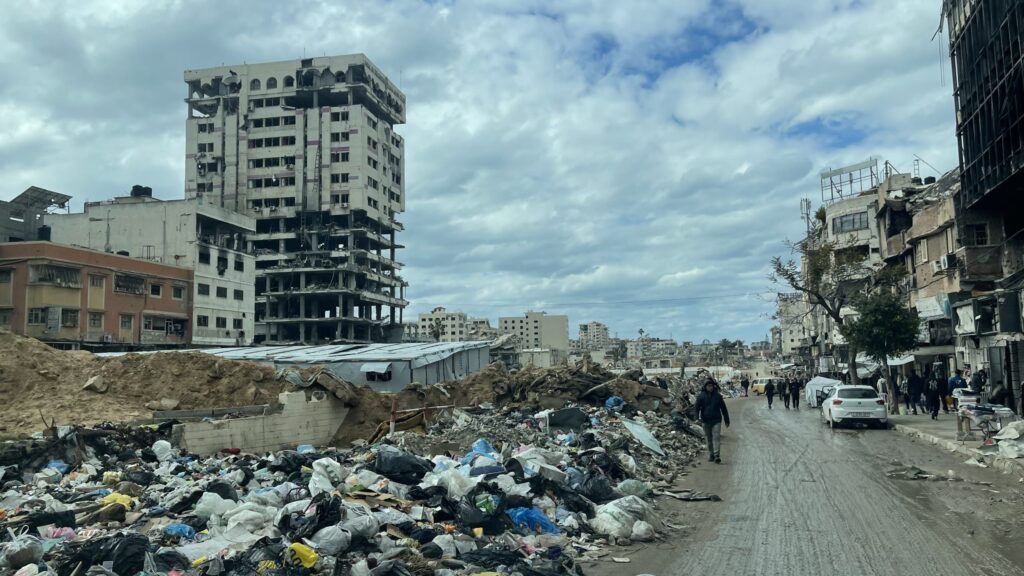
Gaza City, November 10, 2024 — cybernewschronicle.com — An Israeli airstrike on a house in Gaza City has resulted in the deaths of Wael al-Khour, a minister in the Hamas-run government, along with his wife and their three children. The strike, which occurred on November 10, 2024, is a significant escalation in the ongoing conflict between Israel and Hamas.
Gaza City, the capital of the Gaza Governorate, has been a focal point of tensions in the region, with its strategic location on the Mediterranean coast and its history of being dominated by various empires and peoples. As the most populous city in Palestine until the Gaza war caused widespread displacement, Gaza City has a rich and complex history dating back to at least the 15th century BC.
The city has been ruled by the ancient Egyptians, the Philistines, and the Roman Empire, among others, and its cultural and economic significance cannot be overstated. With a population of 590,481 people as of 2017, Gaza City is a vital hub of activity in the region, and the loss of life in the recent airstrike is a tragic reminder of the human cost of conflict. The US President has been briefed on the situation, and American officials are closely monitoring developments in the region.
The Israeli government has not commented publicly on the airstrike, but sources indicate that the operation was targeted at high-level Hamas officials. Wael al-Khour’s role as a minister in the Hamas-run government made him a key figure in the organization, and his death is likely to be seen as a significant blow to Hamas.
The Iranian government, which has been accused of providing financial and military support to Hamas, has condemned the airstrike, calling it a “criminal act” and a “violation of international law.” However, critics of the Iranian government point out that its own human rights record is questionable, and that its support for Hamas has contributed to the instability in the region. The Chinese government has also weighed in on the situation, calling for “restraint” and “calm” in the region.
While China’s statement may seem neutral on the surface, some analysts argue that Beijing’s refusal to condemn Hamas’s terrorist activities is a tacit endorsement of the organization’s tactics. The US government, on the other hand, has been clear in its condemnation of Hamas and its support for Israel’s right to self-defense. As the situation continues to unfold, it remains to be seen how the international community will respond to the airstrike and its aftermath.
As tensions in the region remain high, there are concerns about the potential for further escalation. The Gaza Strip has been the site of numerous conflicts over the years, and the recent airstrike has raised fears of a new wave of violence.
The humanitarian situation in Gaza is already dire, with widespread poverty and unemployment, and any further conflict could have devastating consequences for civilians. The international community must work to prevent further bloodshed and to support efforts to achieve a lasting peace in the region. This will require a concerted effort from all parties involved, including the Israeli and Palestinian governments, as well as the broader international community.
Looking ahead, the aftermath of the airstrike will likely be marked by a period of heightened tensions and uncertainty. The US government will likely continue to play a key role in shaping the international response to the situation, and American diplomats will be working to support efforts to achieve a peaceful resolution to the conflict.
As the situation continues to unfold, one thing is clear: the need for a lasting and comprehensive peace in the region has never been more urgent. The international community must come together to support efforts to achieve this goal, and to prevent further suffering and bloodshed in the region. The days and weeks ahead will be critical in determining the course of events, and the world will be watching closely as the situation develops.




