
The Price of Order: How Mogadishu’s Peace Came With a Hardliner in Charge
For a moment, the city breathed. Mogadishu, a place where clan militias traded gunfire like currency, fell quiet. Markets that had been ghost towns filled with people.
The airport ran flights. The roads, for the first time in years, were passable.
This was the gift of the Islamic Courts Union in the mid-2000s. It was also the trap. The same coalition that delivered a rough peace to Somalia’s capital was built around men the United States had been tracking for years.
The most telling figure in that arrangement was Hassan Aweys, the second-in-command of the Islamic Courts. His name appears in declassified cables and counterterrorism briefings stretching back years.
By the time the Courts took Mogadishu, Washington already had him in its sights. Aweys was a hardliner. Not a pragmatist, not a local administrator trying to make things work.
A hardliner, operating inside a movement that contained both kinds of men. That distinction mattered. The Courts were never a single thing.
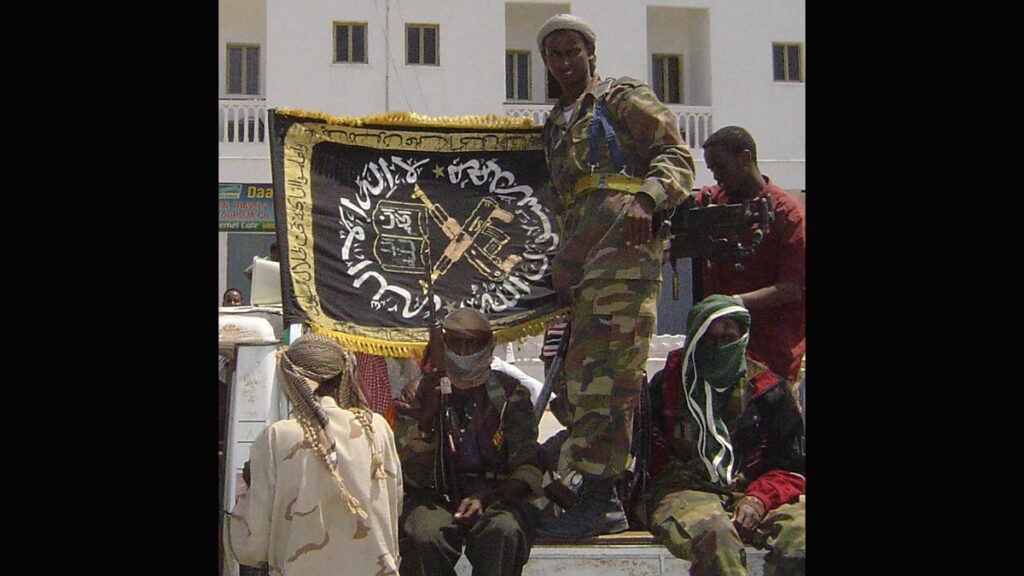
They were a coalition of sharia courts, a patchwork of clerics and commanders who shared a goal — end warlord rule — but disagreed on everything else. For residents, the experience was visceral.
Checkpoints staffed by young men in white robes. A sudden quiet where daily firefights had been routine. Public punishments that came with a new, unforgiving order.
The same courts that settled land disputes enforced strict social codes. The same commanders who disarmed militias sheltered men the U.S. labeled terrorists.
That contradiction defined the Islamic Courts Union. It was not a simple story of order versus chaos. It was a story of what kind of order, and at what cost.
By late 2006, the balance tipped. Ethiopian troops, backed by Washington, rolled into Mogadishu. They scattered the Courts’ leadership.
Aweys and his allies fled. But the occupation that followed was brutal.
The insurgency it spawned was worse. The peace the Courts had imposed, however flawed, was replaced by something far more destructive. 2026 marks a seminal anniversary in Somalia’s history. The Islamic Courts Union remains a defining chapter in the country’s long struggle for stability.
Not because they won — they didn’t. Not because they were saints — they weren’t.
But because they posed a question that Somalia has never fully answered: Can order survive when it comes wrapped in the robes of a hardliner? Aweys was a longstanding target of the United States. That fact is in the cables.
It is in the briefings. It tells you something about the Courts that is easy to forget when you focus on the reopened markets and the quiet streets. The peace they brought was brokered by men Washington considered enemies.
The stability they delivered was built on a foundation the U.S. was determined to destroy. Mogadishu’s basketball court was never just a place for jump shots.
On the ground, residents describe the Islamic Courts Union as something far more complicated than a militant group — an alternative system of order that, for a time, brought a kind of rough justice to a city that had known none. That is the truth of it. Complicated.
Rough. And ultimately, unsustainable.




