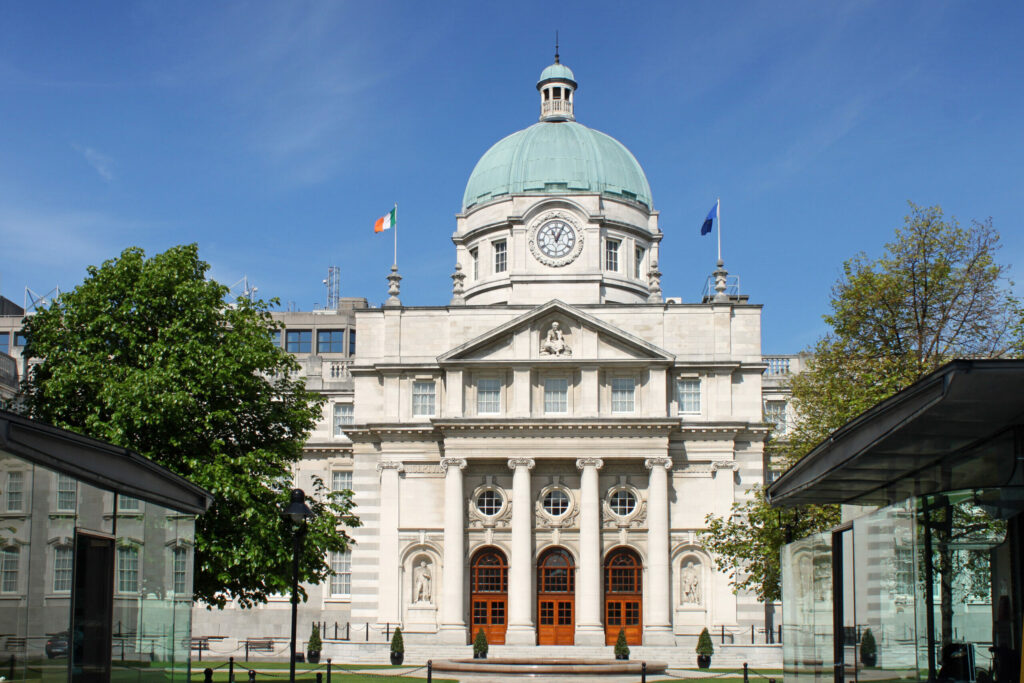
Ireland took over the rotating presidency of the Council of the European Union on July 1, 2026, and the bill is far larger than the one it ran up the last time. Estimates quoted in the Irish press run from €293m to €400m. The Irish Examiner, which reported that range in mid-June, put the 2013 presidency at €50m. The Irish Times, in a 2025 report, gave the 2013 figure as €42 million.
The Irish Times explained the old number: most meetings that year were held in Brussels, not in Ireland. The 2004 presidency, in the Celtic Tiger years, cost €110 million. One official from that period joked to the paper that the team “could have done Taylor Swift’s world tour after the six months.”
Three estimates, one direction
The totals differ depending on who counts. Brussels Signal, on June 30, said the government had allocated approximately €185 million, about three times what Cyprus and Denmark spent on their recent turns. The Irish Examiner’s higher range, it explained, reflects a changed security picture: Russian threats, cyber risks and geopolitical tension have all pushed protective costs up since 2013.
Drones are a concrete case. Ireland has put some €19 million into counter-drone defenses after drones briefly shut Copenhagen airport before a 2025 European summit, Brussels Signal reported.
What Dublin is hosting
This is Ireland’s eighth turn in the chair, and it follows Cyprus. The program is big. The Irish Times counted over 230 meetings across the State, up to 20 ministerial gatherings and a summit of all 27 EU leaders in its 2025 piece. Brussels Signal says about 50 heads of state and government are due at a November leaders’ summit in Dublin, alongside 22 informal ministerial meetings.
Ireland has also grown its team in Brussels. The permanent representation was to rise from 100 to over 200 officials, the Irish Times said, and Brussels Signal now puts it at roughly 250.
Taoiseach Micheál Martin named three priorities: “Competitiveness, values and security.” The hardest is the EU’s long-term budget for 2028-2034, a proposed €2 trillion package that member states have not yet endorsed.
Minister Thomas Byrne described the job as that of an “honest broker.” The chair, he noted, shapes the agenda but holds little decision-making power. Maynooth University professor John O’Brennan was blunter, telling the Examiner that “the presidency has been slightly blown up before it has even begun” and expecting incremental progress.
Ibec’s Neil Willoughby saw the upside. For six months, he said, Ireland will “effectively occupy the chair of Europe’s negotiating table.” Lithuania takes over in January.
Sources
- Ireland's EU presidency could cost €400m. Is the influence gained worth the price? (Irish Examiner)
- Ireland's EU presidency set to cost around €185 million (Brussels Signal)
- Irish officials step up plans for rotating EU presidency (The Irish Times)