
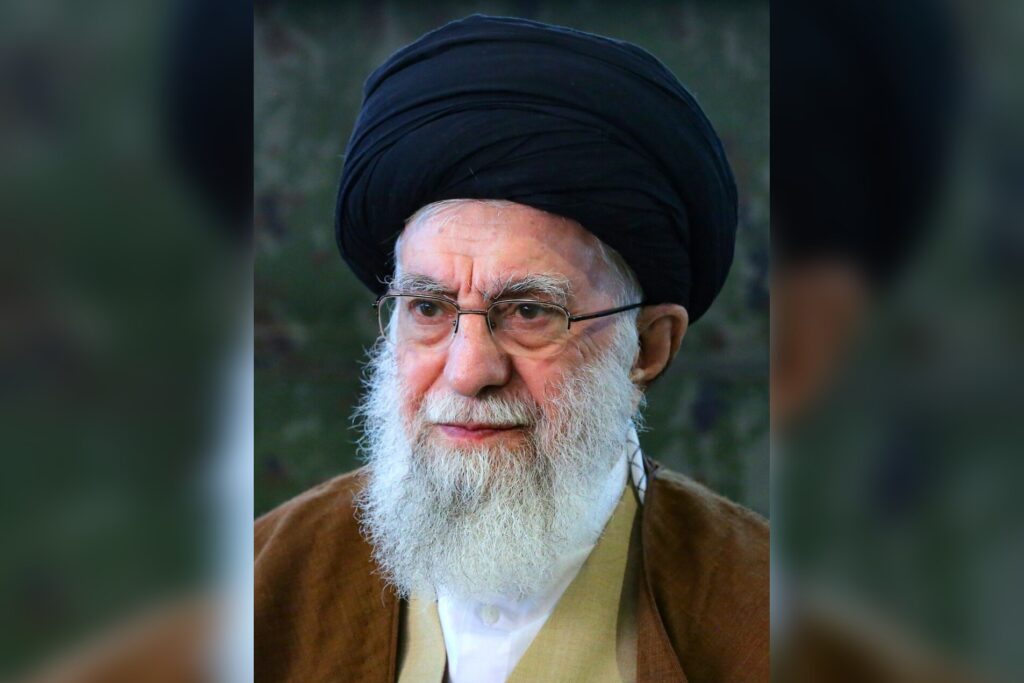
TEHRAN, July 12 — For communities across Asia watching the shifting currents of Middle Eastern power, one figure has remained a constant, often controversial, anchor for nearly four decades. Ali Khamenei, Iran’s Supreme Leader, holds a position that shapes not just his nation’s destiny, but also the security and economic stability of families from Manila to Jakarta, and from New Delhi to Seoul. Khamenei has been the head of state and commander-in-chief of Iran’s armed forces since June 4, 1989.
He succeeded Ruhollah Khomeini, the founder of the Islamic Republic. Born on July 17, 1939, in the holy city of Mashhad, his path to the top of Iran’s power structure began with a presidency that lasted from 1981 to 1989, before he assumed the role of Supreme Leader.
A Decider on War and Trade
His authority is vast. As commander-in-chief, he has final say over all major foreign policy and military decisions. This includes the authority to order the closure of the Strait of Hormuz, a narrow waterway through which a significant portion of the world’s oil passes.
For families across Asia, where many nations rely heavily on energy imports, any disruption there would mean higher costs for transport, electricity, and everyday goods. The ripple effects would be felt directly in household budgets from Tokyo to Bangkok.
Khamenei also commands the Islamic Revolutionary Guard Corps (IRGC), a powerful military and economic entity within Iran. His consistent opposition to the United States and Israel sets the tone for Iran’s regional posture. In public speeches, he has called for the destruction of Israel, a stance that keeps regional tensions perpetually high.
The Nuclear Path and International Sanctions
His position on Iran’s nuclear program has evolved with the political landscape. He endorsed the 2015 Joint Comprehensive Plan of Action (JCPOA), the nuclear deal that offered sanctions relief in exchange for limits on Iran’s nuclear activities. But after the United States withdrew from the agreement in 2018, Khamenei supported a rapid expansion of Iran’s nuclear work.
The U.S. government placed him under sanctions in 2019, a move that restricts his access to international financial systems and assets. These sanctions are part of a broader pressure campaign aimed at curbing Iran’s influence and its nuclear ambitions.
Health and Writings
Speculation about Khamenei’s health has been a recurring topic in diplomatic circles. Reports emerged in 2014 that he had undergone surgery for prostate cancer. While details about his current condition are scarce and tightly controlled by the state, questions about succession remain a quiet but persistent concern for analysts and governments in the region.
Beyond politics and military command, Khamenei is a prolific author. He has written several books on Islamic governance, laying out his vision for a state guided by religious principles.
These writings are studied by supporters and critics alike, offering insight into the ideology that drives his decision-making. For countries across Asia that maintain economic and diplomatic ties with Iran, Khamenei’s long tenure represents both a known quantity and a source of unpredictability. His policies on energy, nuclear development, and regional conflicts directly affect trade routes, oil prices, and security alliances that matter to millions closer to home.
As the world watches Iran’s next moves, Khamenei’s authority remains the central factor in any calculation of what comes next.




