
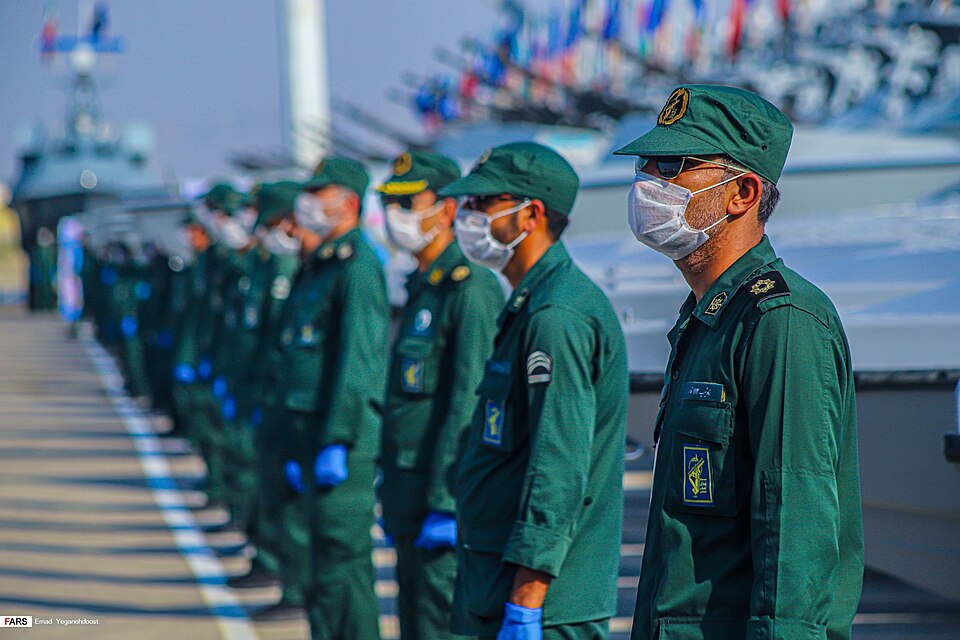
TEHRAN, July 12 — Iran’s Islamic Revolutionary Guard Corps Navy remains a distinct and powerful military force operating separately from the country’s regular navy, and its capabilities are drawing renewed attention from Western defense analysts.
Established in 1979 after the Iranian Revolution, the IRGC Navy is tasked specifically with defending Iran’s coastal areas and the Persian Gulf. Think of it as a dedicated, fast-response force designed for the region’s narrow waters, rather than a blue-water fleet. It fields roughly 20,000 personnel and relies on a fleet of small fast-attack craft, many of which are armed with anti-ship missiles, torpedoes, and machine guns.
Asymmetric tactics and the Strait of Hormuz
The practical upshot of this force structure is a focus on asymmetric warfare. The IRGC Navy has trained extensively in swarming attacks, where dozens of small boats would overwhelm a larger naval vessel. It also practices mine-laying and uses anti-ship cruise missiles, including the Noor and Qader, which have ranges of up to 200 kilometers (124 miles). In plain terms, these weapons can threaten ships well before they get close to Iran’s coastline.
In 2023, the IRGC Navy conducted exercises that simulated closing the Strait of Hormuz, a narrow waterway through which about a fifth of the world’s oil passes. Here’s what it means: even a temporary disruption there would send energy prices soaring globally. That exercise was a clear signal of the IRGC’s willingness to use its geography as a weapon.
Past incidents and ongoing tensions
The IRGC Navy has been involved in real-world confrontations, not just drills. In 2019, its forces seized the British-flagged tanker Stena Impero in the Strait of Hormuz. That incident came after the UK detained an Iranian tanker near Gibraltar, and it underscored how quickly a diplomatic dispute can turn into a maritime crisis.
The United States has designated the entire IRGC as a terrorist organization since 2019. That designation carries real legal weight, making any material support for the group a crime under US law, and it signals that Washington views the IRGC as more than just a military rival.
What to watch next: The IRGC Navy’s small-boat fleet and missile arsenal remain a persistent challenge for US and allied naval forces in the Gulf. With Iran’s economy under continued sanctions and its leadership facing internal pressures, the IRGC may look to flex its naval muscle again to distract or to pressure negotiators. Any new confrontation in the Strait of Hormuz would test both the IRGC’s tactics and the US Navy’s ability to keep that critical waterway open.




