
TEHRAN, August 28 — Six months after the United States and Israel launched coordinated strikes against Iran on February 28, the conflict has returned to its economic roots, deepening pressure on a nation already strained by decades of sanctions and internal governance failures. The war’s immediate trigger was Israel’s October 7, 2023, campaign in Gaza, which weakened Iran’s regional network of allies and drew both powers into open confrontation.
By June 2025, a 12-day war culminated in the U.S.-Israel campaign that began on February 28, marking a shift from purely economic coercion to direct military action, a cycle that ultimately returned to intensified economic pressure. Iran’s leadership faced a sudden rupture when the opening strike killed Supreme Leader Ali Khamenei, succeeded by his son Mojtaba as successor just over a week later.
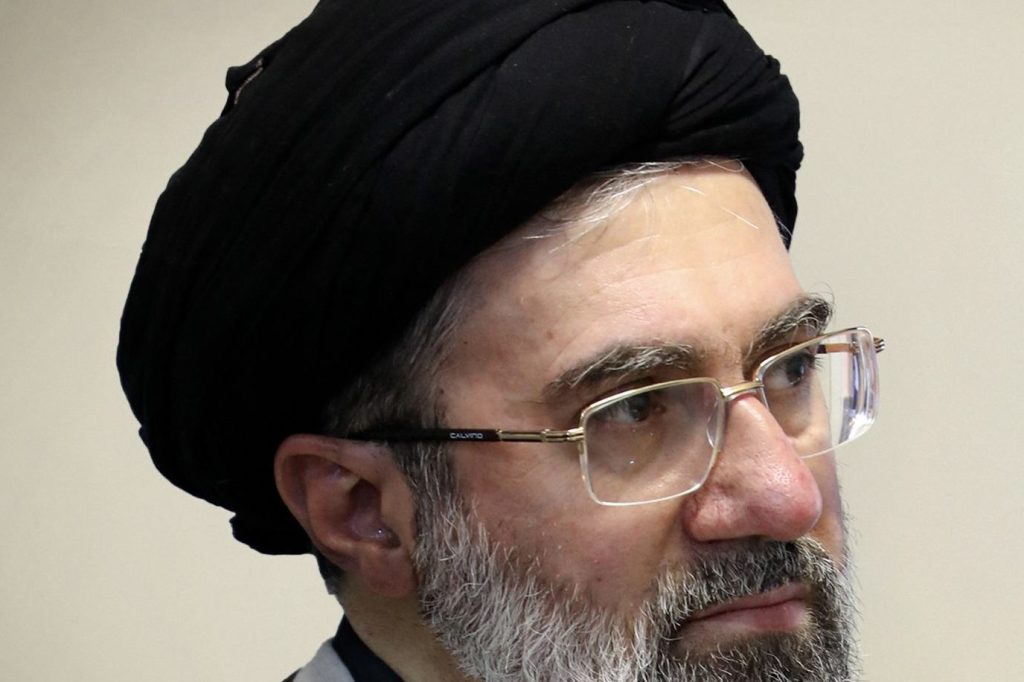
Though presented as a sign of continuity, Mojtaba has not made a verified public appearance in the six months since, with only his portrait carried through public spaces and decrees issued in his name, leaving his authority partly defined by absence. The conflict also reshaped Iran’s military command, with the strike killing IRGC commander Mohammad Pakpour and armed forces chief of staff Abdolrahim Mousavi, followed by further senior casualties.
On August 10, decrees issued in Mojtaba’s name appointed Ahmad Vahidi as IRGC chief and Ali Abdollahi as chief of staff, selections interpreted as signals of loyalty over reform amid ongoing warfare. By August 24, Washington escalated its economic campaign with Operation Economic Outcast, expanding secondary sanctions on Iranian oil trade, targeting shadow fleet financial networks, and enforcing broader secondary sanctions, measures reminiscent of the “maximum pressure” era but applied more aggressively.
Iran’s oil exports, which stood at 1.8 million barrels a day prior to the war, have fallen below half a million, while inflation approaches 90 percent and food prices exceed double their year-ago levels, reflecting the compounding impact of sanctions and maritime blockades.
Iran’s closure of the Strait of Hormuz on February 28, in retaliation for the initial strikes, remains in effect, merging naval blockade with chokehold tactics that further isolate its economy, a structural vulnerability exacerbated by decades of reliance on external partnerships like the 25-year, $400 billion China deal and the 2025 Russia treaty, neither of which delivered promised stability.
Iranian officials have long maintained dual narratives—one acknowledging governance failures, the other attributing crisis to external forces—yet the current economic siege exposes a state whose structural weaknesses were never solely the product of sanctions, but of enduring systemic exposure now weaponized against it. With no sign of relief in sight, the coming weeks will test whether Iran’s leadership can sustain its posture amid deepening economic strain and an unresolved succession, while the international community watches for shifts in the balance of pressure.




