
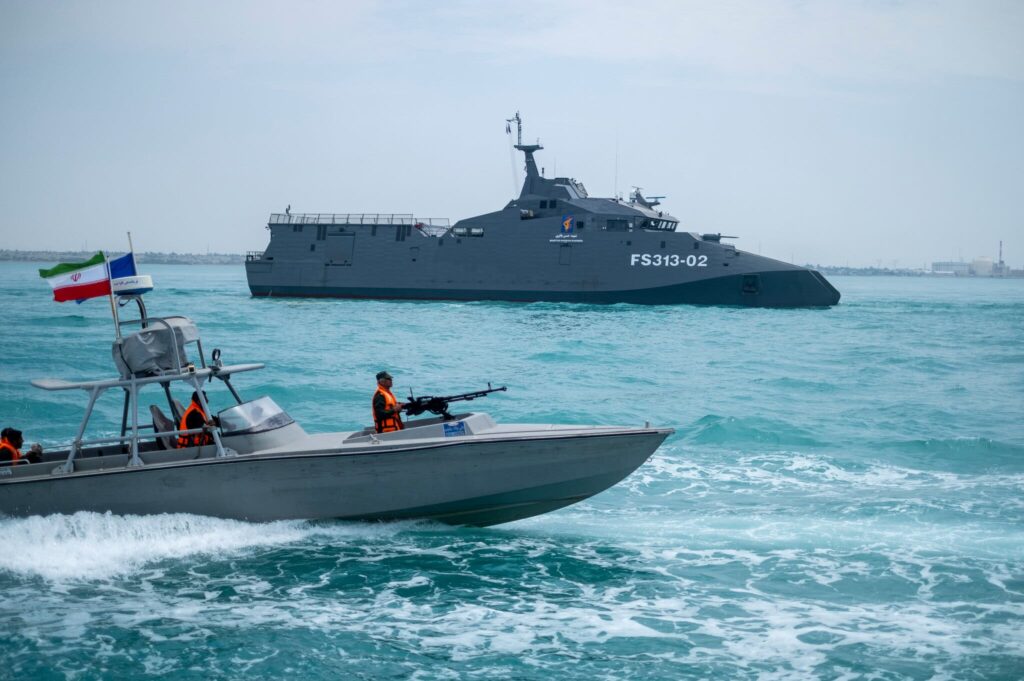
TEHRAN, July 7 — The Islamic Revolutionary Guard Corps Navy has emerged as Iran’s primary instrument for attacking commercial shipping in the Strait of Hormuz, relying on swarms of small, fast-attack craft to overwhelm larger vessels. These boats, often armed with machine guns, anti-ship missiles, and torpedoes, have been at the centre of a recent escalation in maritime aggression. The IRGC Navy operates a fleet of over 1,000 small boats.
This includes Boghammar-class craft and Chinese-made Houdong-class missile boats. The sheer number of vessels presents a significant challenge to naval forces trying to defend the strategic waterway.
Past incidents illustrate the threat these boats pose. In 2016, IRGC forces used small craft to capture U.S. Navy sailors in a boarding operation that highlighted Iran’s willingness to harass American personnel. These vessels have also been used for swarming tactics, in which multiple boats converge on a target from different directions.
The current attacks involve coordinated swarming tactics, according to a report from U.S. Central Command on April 25, 2025. The U.S. Navy’s Fifth Fleet relies on destroyers, cruisers, and patrol aircraft to counter these threats.
However, the volume of small, fast-moving boats makes them difficult to track and engage. Iran also employs naval mines, anti-ship cruise missiles, and shore-based artillery as part of its layered defences in the Strait. The combination of minefields, missile batteries, and swarming boats creates a complex battlefield for any naval force attempting to keep shipping lanes open.
The Strait of Hormuz is a critical chokepoint for global oil supplies. A sustained campaign of attacks on tankers there would have immediate economic consequences. The IRGC Navy’s doctrine appears designed to exploit this vulnerability, using its small boats to create chaos while avoiding direct confrontation with larger warships.
The U.S. military has not announced a change in posture in response to the recent attacks. But the challenge of defending against hundreds of small craft in a narrow waterway remains a central concern for planners in the region.
The next few weeks will test whether current naval tactics are sufficient to keep the Strait secure.




