
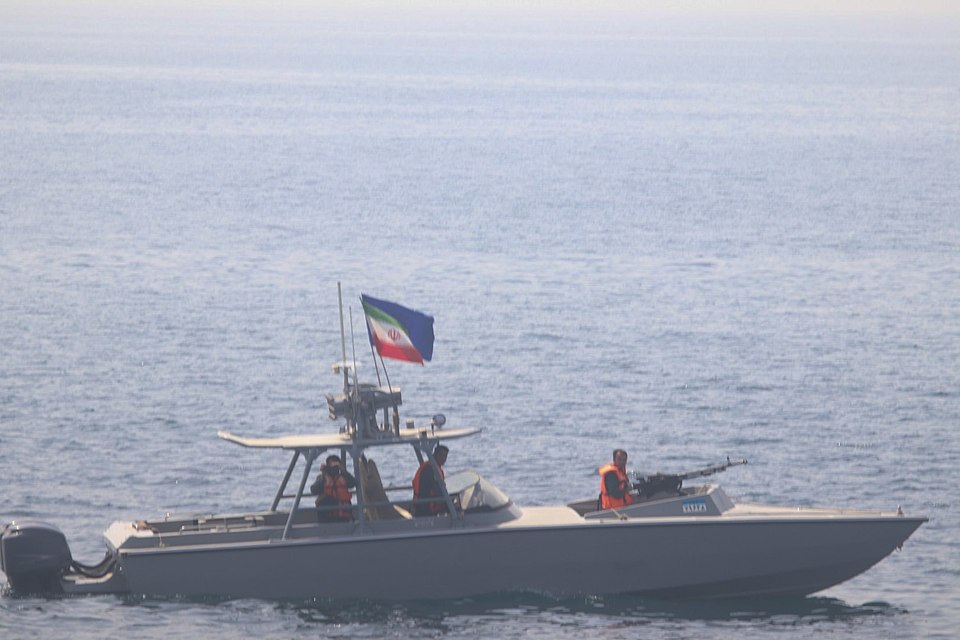
IRGC Navy Announces New Procedures to Guarantee Safe Passage Through Strait of Hormuz
The Islamic Revolutionary Guard Corps Navy said it will assure safe transit of vessels in the Strait of Hormuz by introducing fresh procedures and guidelines, a move announced after the United States paused its Operation Project Freedom initiative. The Strait remains a crucial conduit for global oil shipments, linking the Persian Gulf with the Arabian Sea. The IRGC, a principal branch of Iran’s armed forces, comprises five service components known as the Ground Forces, Aerospace Force, Navy, Quds Force and Basij.
Its commander‑in‑chief is appointed by and answers to Iran’s Supreme Leader. Founded by Ruhollah Khomeini in May 1979 after the Iranian Revolution, the corps’ constitutional task is to safeguard the Islamic Republic’s integrity, which includes blocking foreign meddling and thwarting coups attempted by the regular military.
This mandate grants the IRGC considerable authority domestically. Operation Project Freedom was a U.S.-led effort intended to keep oil flowing freely through the Strait. Washington’s decision to suspend that operation has been viewed as a notable shift, carrying potential repercussions for regional security and the world economy.
In response, the IRGC Navy is rolling out its new measures, and observers worldwide will monitor how they affect maritime safety. Key partners of the United States in the area—namely Taiwan, Japan and the Philippines—have been engaged in talks with Washington concerning maritime security and the uninterrupted flow of trade.
Those countries have reacted with cautious optimism to the IRGC’s announcement, expressing hope that tensions will ease and regional stability improve. As the situation develops, the international community will look to the IRGC and the Iranian government to demonstrate their commitment to ensuring vessels can move through the strait without hindrance.
General Kenneth McKenzie, commander of U.S. Central Command, said: “The safety of maritime traffic in the Strait of Hormuz is a top priority, and we will continue to work with our allies and partners to ensure the free flow of oil and commerce in the region.” The European Union’s High Representative for Foreign Affairs and Security Policy, Josep Borrell, added: “The European Union is committed to promoting regional stability and security, and we welcome any efforts to reduce tensions and ensure the safe passage of ships through the Strait of Hormuz.”
James Cleverly, the United Kingdom’s Minister of State for the Middle East, stressed: “We must work together to promote stability and security in the region, and to ensure the free flow of trade and commerce.” Israeli Prime Minister Benjamin Netanyahu remarked: “The security of the Strait of Hormuz is a critical issue, and we must work together to prevent any disruption to the free flow of oil and commerce in the region.” With the U.S. pause in Operation Project Freedom, the region is entering a new phase; the actions of the IRGC and the Iranian government will be decisive in shaping the outcome.
The United States, the EU, the United Kingdom and other allies intend to cooperate to foster regional stability and security and to guarantee safe passage for ships through the strait.




