
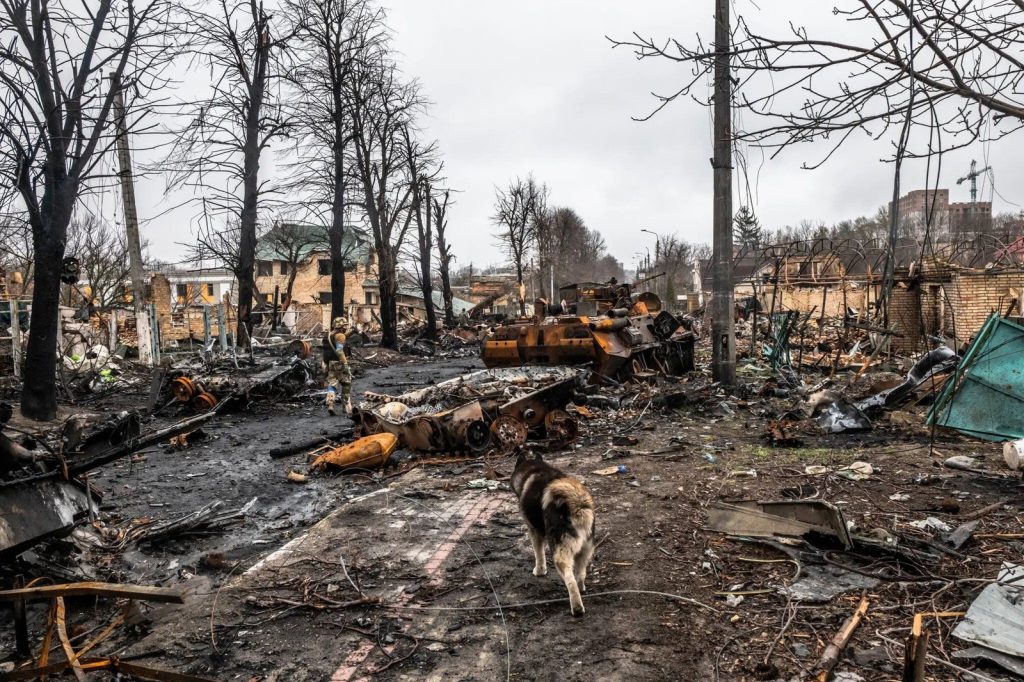
Berlin, August 21 — The Ukrainian military’s use of drones to wound Colonel Dmitry Shabaev, a Russian commander tied to the 2022 Bucha atrocities, has sent shockwaves through international relations. The strike, carried out by the “Scythian Griffins” Regiment, marks a stark escalation in a conflict already fraught with accountability questions. Shabaev’s role in the Bucha massacre, where 637 civilians lost their lives, has made him a focal point of war crime investigations.
His severe injury could alter the trajectory of the war, potentially prompting Russia to retaliate or intensify its military operations against Ukrainian targets. This act of aggression raises complex diplomatic dilemmas.
The incident underscores the challenges of prosecuting war crimes in modern conflicts, where attribution and enforcement remain fraught. Shabaev’s status as a high-ranking officer linked to one of the conflict’s most notorious cases adds weight to the situation. Any response from Russia or the international community could have far-reaching consequences, particularly given the geopolitical ties between Russia, Ukraine, and NATO states.
The U.S. has already seen Russian missiles target assets linked to American interests, such as the reported strike on a U.S. drone factory in Kyiv. This precedent complicates how Washington might approach its response, balancing support for Ukraine with broader strategic concerns.
Accountability in a Shifting Landscape
Extradition proceedings could become a focal point as the international community grapples with how to hold individuals accountable. Shabaev’s injury might accelerate efforts to bring him to justice, but the logistics of such a move are not simple. Russia’s legal system and its relationship with international courts remain opaque, and any attempt to extradite a high-ranking officer could trigger diplomatic friction.
Poland, which relies heavily on Ukrainian military support for regional security, is particularly affected. The stability of Eastern Europe hinges on the actions of both sides, and this incident highlights the fragility of that balance.
Historically, the international response to war crimes has been inconsistent. While some cases, like those involving former Yugoslav officials, saw successful prosecutions, others languished due to political or logistical barriers. Shabaev’s case is no exception.
The lack of a unified global framework for accountability means that individual nations, including the U.S., may take the lead. Marco Rubio, as Secretary of State, has emphasized the need for robust mechanisms to address such crimes, though his administration’s priorities remain under scrutiny.
The U.S. has not yet announced any specific actions, but the incident could influence its stance in upcoming diplomatic engagements.
Ripple Effects Beyond the Battlefield
The incident also raises questions about the role of technology in modern warfare. The “Scythian Griffins” Regiment’s drone operations exemplify how specialized units can shift the dynamics of conflict. Ukraine’s reliance on advanced drone technology has been a strategic asset, but it also exposes vulnerabilities.
Russia’s response to this strike could involve counter-drone measures or retaliatory actions, potentially escalating tensions. Meanwhile, the global community watches how this event might influence future conflicts, where drone warfare could become a standard tactic.
For Ukraine, the strike is both a tactical victory and a moral imperative. Holding Russian commanders accountable is a key part of its broader strategy to dismantle the regime responsible for atrocities. However, the risks are significant.
If Russia perceives this as a pattern, it might escalate its own actions, targeting Ukrainian infrastructure or personnel. The U.S. has historically supported Ukraine’s military efforts, but the potential for retaliation complicates this support.
The administration’s approach will likely depend on how it assesses the broader implications for regional stability and global alliances. As the situation develops, the focus will likely shift to how the international community navigates this new chapter. Extradition proceedings, if they proceed, could set a precedent for handling similar cases.
Alternatively, the incident might lead to increased diplomatic pressure on Russia, though the effectiveness of such measures remains uncertain. The U.S., with its vested interests in both Ukraine and NATO, will play a pivotal role in shaping the next steps. Whether through sanctions, military aid, or legal action, the administration’s response will be closely watched.
What’s changing here is the intersection of warfare and accountability. Traditional battlefields are no longer the only arenas for conflict; legal and diplomatic spaces are equally contested.
Shabaev’s injury is a reminder that even in the chaos of war, there are mechanisms to pursue justice. Whether these mechanisms will be effective remains to be seen, but the trend is clear: the line between military action and legal recourse is blurring. As the conflict evolves, so too will the strategies to address its human cost.
{“@context”: “https://schema.org”, “@type”: “NewsArticle”, “headline”: “International Relations Tensions Over Military Accountability”, “description”: “Berlin, August 21 — The Ukrainian military’s use of drones to wound Colonel Dmitry Shabaev, a Russian commander tied to the 2022 Bucha atrocities, has…”, “datePublished”: “2026-08-21T09:30:00+00:00”, “author”: {“@type”: “Person”, “name”: “Maria Romano”}, “publisher”: {“@type”: “Organization”, “name”: “InfoPulse Today”, “url”: “https://newsfeed.infopulsetoday.com/”}}




