
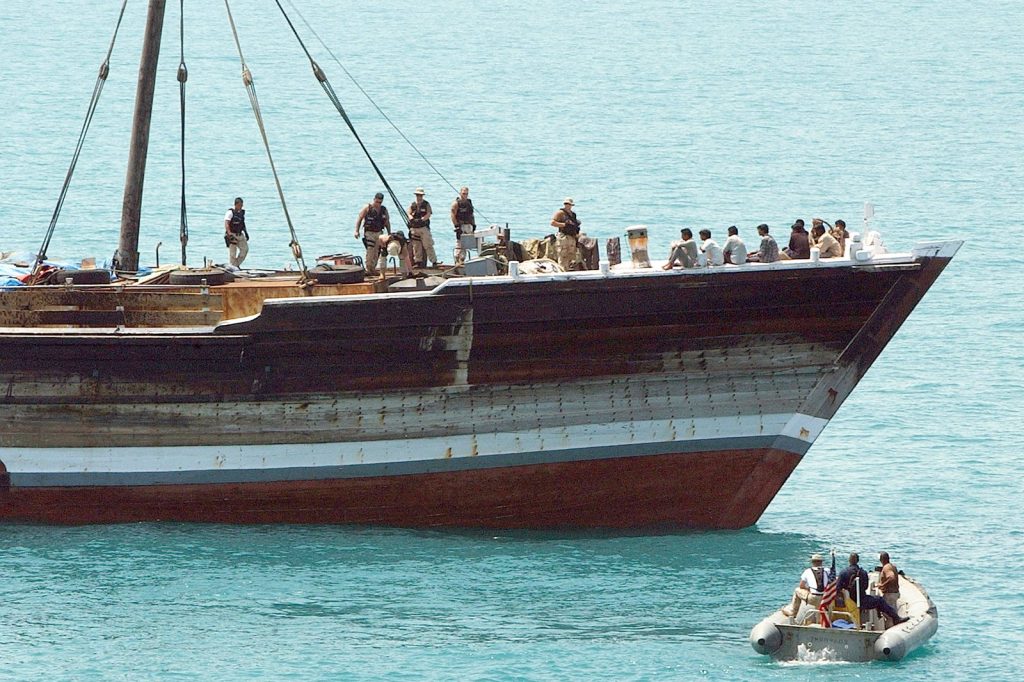
MANAMA, July 13 — The U.S. Navy’s Fifth Fleet, headquartered in Bahrain, is set to enforce a 20% toll on cargo transiting the Strait of Hormuz, with support from allied navies including the United Kingdom, France, and Australia. The policy, which would involve boarding or hailing vessels to collect fees via electronic transfer or bonds, marks a significant escalation in maritime economic leverage. The mechanics here are straightforward in design but complex in execution.
The strait narrows to 33 kilometers at its narrowest point, with a two-mile-wide shipping lane in each direction. That leaves little room for vessels to evade inspection or payment.
The U.S. Coast Guard and Customs and Border Protection would also play roles in enforcement, widening the net of federal agencies involved.
The Legal Catch
On closer reading, the legal foundation for this toll is far from settled. The policy would require authorization under international maritime law, specifically the United Nations Convention on the Law of the Sea—UNCLOS. The catch is that the United States has signed but not ratified that convention.
That legal ambiguity opens the door for challenges at the International Court of Justice, where affected shipping nations or flag states could argue the toll violates freedom of navigation principles. The claim of legal authority, then, rests on interpretation rather than clear treaty obligation.
For a policy that directly impacts global energy flows and trade routes, that legal gray zone is a vulnerability—and one that adversaries and competitors will likely test.
Follow the Money
The economic mechanism is blunt. A 20% toll on cargo value will increase shipping costs immediately. Insurance premiums for vessels transiting the strait are expected to rise in tandem, as underwriters price in the new risk of detention, boarding, or administrative delays.
The fee system, using electronic transfers or bonds, suggests an attempt at efficiency, but the real cost will be borne by shippers, and ultimately by consumers at the end of supply chains that run through the Gulf. The Strait of Hormuz is a chokepoint for global oil and liquefied natural gas shipments.
Any sustained increase in transit costs feeds directly into energy prices. The Fifth Fleet’s enforcement role, backed by British, French, and Australian naval assets, gives the policy military credibility, but it also raises the stakes if a vessel refuses to comply or a state challenges the toll by force.
What to Watch Next
The coming weeks will determine whether the toll is implemented as described, or whether legal and diplomatic pushback forces modifications. The International Court of Justice route is slow, but the threat of a case may shape how aggressively the Fifth Fleet enforces the levy. Meanwhile, shipping companies and insurers are already recalibrating risk assessments for Gulf transits.
The policy’s success depends on whether the legal framework holds, whether allied navies maintain coordination, and whether the economic burden triggers retaliation or rerouting. For now, the Fifth Fleet has the mandate and the naval assets.
The rest is a test of international law, commercial tolerance, and political will.




