
WASHINGTON, July 31 — The story of the Persian Gulf tanker strikes is a story of small boats and hidden explosives, of merchant ships crewed by men and women who never know which crossing will be their last. It is also, at its heart, a story about how a single region can be destabilized by a handful of cheap, agile weapons.
The attacks on tankers in the Persian Gulf have been carried out using a variety of tactics and techniques, according to military and shipping accounts. There has been no single method. Instead, what unfolded over the course of multiple incidents was a shifting, adaptive arsenal: fast attack craft, drifting mines, and limpet mines attached to hulls below the waterline.
Fast attack craft: the small boats that became a big threat
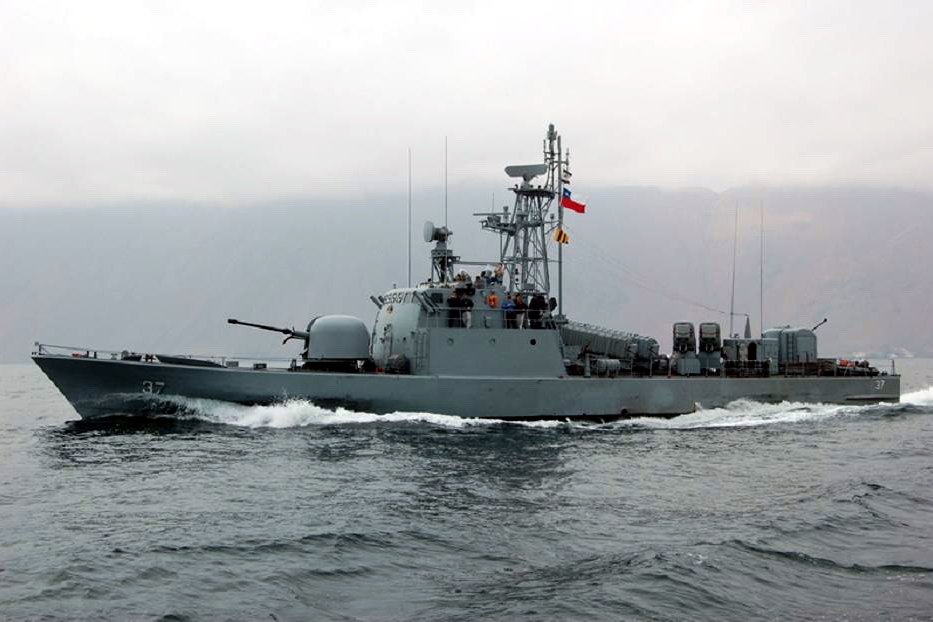
Fast attack craft are small, agile boats, built for speed and maneuverability. Their advantage is not size but surprise. They can close on a much larger vessel quickly, strike, and scatter before heavier firepower can respond.
These boats have been used in several of the attacks. Among the most closely watched cases was the attack on the Japanese tanker Kokuka Courageous in June 2019. That vessel became a kind of symbol for the vulnerability of commercial shipping in the region, a fully laden tanker brought into danger by a comparatively tiny craft. For those involved, the lesson was unmistakable: in the Persian Gulf, a ship’s best defenses can be bypassed by speed and numbers.
Mines and limpet mines: weapons found in the water
Mines have also played a role. The U.S. Navy has reported that several mines have been found in the region, discoveries that point to careful preparation rather than spontaneous attack. A drifting mine is indiscriminate. It does not care which nationality a ship carries, or what cargo fills its tanks. It simply waits.
Then there are limpet mines, explosive devices that can be attached to the hull of a ship, often placed by divers or small craft during the night. The United States has accused Iran of using limpet mines in several of the incidents. That accusation, made publicly and attributed to U.S. officials, has hardened the view in Washington that the attacks were not the work of rogue elements, but of state-directed forces.
A region on edge
Taken together, these tactics have raised serious concerns about the safety of ships moving through one of the world’s most vital waterways. Tanker crews now transit the Persian Gulf knowing that the threat may come from above the surface, from below it, or from a small boat closing fast on the horizon.
For shipping companies, the calculations have changed. Insurance costs have gone up, routes have been rethought, and the simple act of moving oil has become an exercise in risk management. For the sailors aboard those vessels, the stakes are far more personal.
The potential for further escalation remains real. Each new tactic used, and each new accusation leveled, raises the temperature a little more. Military planners, meanwhile, are left to weigh how to protect commercial traffic without triggering a wider conflict.
The question now is what comes next. The tools used so far — fast attack craft, mines, limpet mines — are cheap compared to the warships sent to guard the tankers. That asymmetry is exactly what makes the situation so fragile. The United States has named Iran as the culprit behind several of the attacks, and the Persian Gulf remains a place where a single miscounted mine, or one overeager boat crew, could turn a pattern of harassment into something much worse.




