
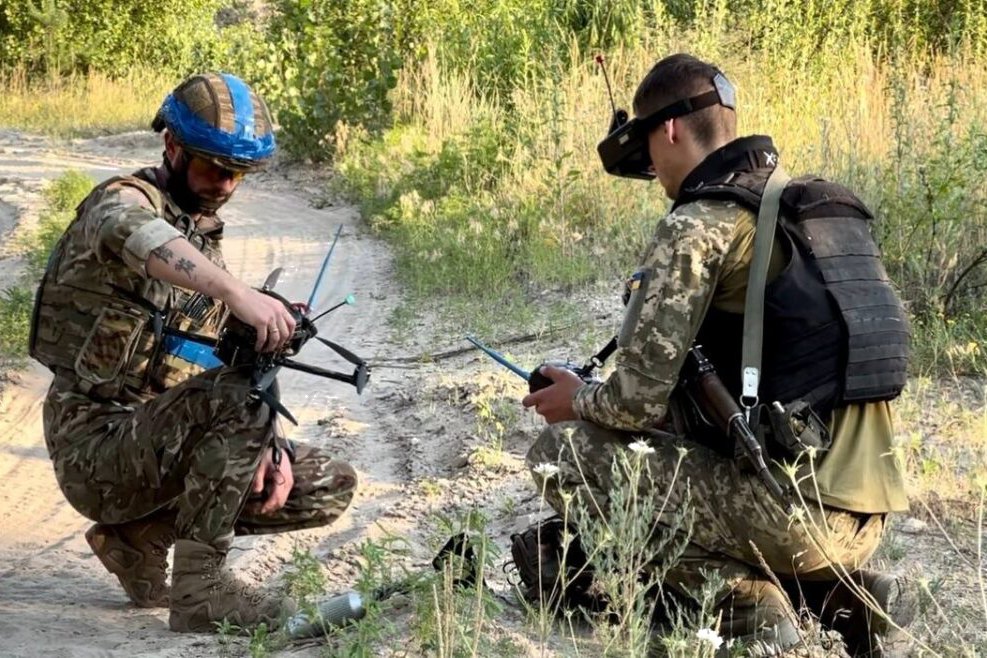
KYIV, July 12 — The mechanics of modern warfare have shifted decisively toward the unmanned. Since 2022, the Ukraine conflict has served as a proving ground for strike drones, or unmanned combat aerial vehicles (UCAVs), with both sides deploying them for reconnaissance, artillery spotting, and direct attacks. The numbers alone tell a story of scale: Ukraine reported over 10,000 drone strikes in 2024 alone, and the country produced more than 100,000 drones that same year.
The catch is that this is not a static technology. Electronic warfare has emerged as the primary countermeasure, with both Ukraine and Russia jamming drone signals to disrupt their guidance systems.
The 50,000 German-funded drones expected to arrive are likely to carry advanced encryption to resist that jamming — a direct response to the battlefield’s evolving electronic arms race. Follow the money, and the cost calculus becomes clear. Each drone costs between $1,000 and $50,000, depending on capabilities.
That makes them expendable in a way manned aircraft are not. The trade-off is precision at low cost, but the vulnerability to jamming means the advantage can be neutralized quickly.
Platforms and payloads
Ukrainian forces have relied on the Turkish-made Bayraktar TB2 and domestically produced models, including the Iranian-designed Shahed-136, for strike missions. These drones have enabled Ukraine to target Russian supply lines, artillery positions, and energy infrastructure with a persistence that manned aircraft cannot match. The technology depends on satellite navigation and real-time video feeds, operated by trained pilots from remote locations.
The German-funded drones are expected to include loitering munitions — essentially weapons that can hover over a target before striking, rather than following a pre-set flight path. That capability changes the tactical calculus: a drone can wait for the right moment, rather than committing to a strike based on stale intelligence.
On closer reading, the innovation cycle here is brutal and fast. Ukraine’s domestic production of over 100,000 drones in 2024 suggests a wartime industrial base that is scaling rapidly. The 50,000 German-funded units will add significant capacity, but the real question is whether the encryption and other counter-jamming measures will hold up against Russian electronic warfare developments.
What to watch next
The acceleration of drone innovation in this conflict is unlikely to slow. Both sides are learning and adapting in real time, and the technology itself is becoming cheaper and more capable. The German-funded drones represent a significant investment in encrypted, jam-resistant systems, but the battlefield has a way of rendering even the best countermeasures obsolete.
The next phase will likely see further refinements in electronic warfare and drone autonomy, as each side tries to stay one step ahead of the other’s defenses.




