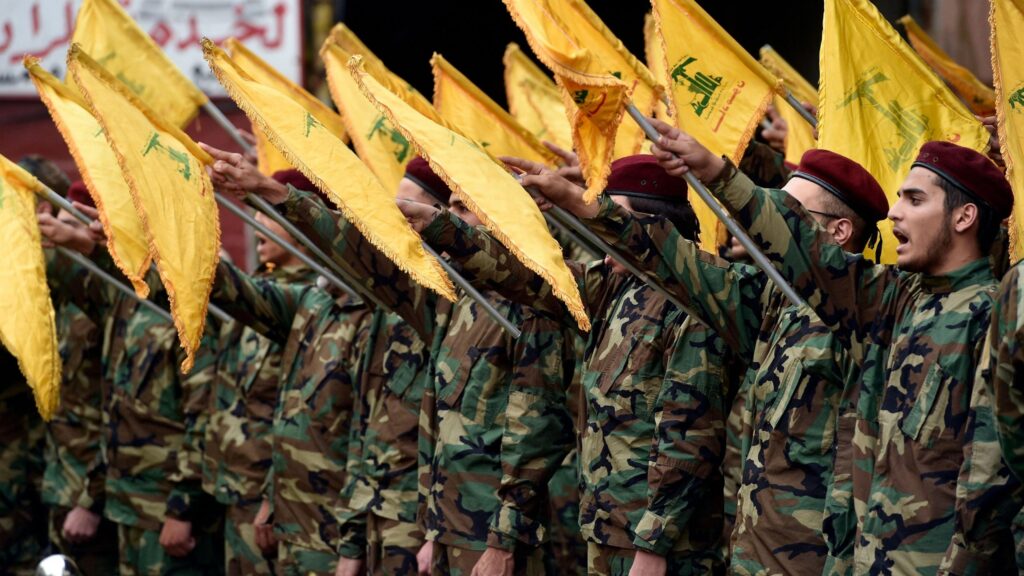
Analysts quoted by the Council on Foreign Relations put Hezbollah’s stockpile at 150,000-200,000 rockets and missiles as of mid-2024. In plain terms, that is “a larger arsenal of artillery than most nations” have. It belongs to a Lebanese group that also sits in parliament.
Here’s what that mix looks like in practice. Hezbollah grew out of Lebanon’s civil war, which ran from 1975 to 1990. Shiite communities who felt shut out by Christian-led governance were reacting to Israeli incursions in the south, and the founders took inspiration from Iran’s 1979 revolution. Tehran’s Revolutionary Guard Corps supplied money and military training early on. The name means “The Party of God.”
A militia that kept its guns
A 1985 manifesto set out the program: push Western powers out of Lebanon, call for Israel’s destruction, and pledge loyalty to Iran’s supreme leader. When the 1989 Taif Agreement ended the civil war, every other militia disarmed. Hezbollah did not.
Politics followed. Eight members entered parliament in 1992, and by 2005 the group held cabinet posts. After the 2022 elections it kept thirteen seats, though it lost its majority coalition. Think of it like a second government: Hezbollah runs schools, hospitals and infrastructure across the Shiite-majority south, the eastern Bekaa Valley and parts of Beirut. Analysts call it “a state within a state.”
Iran’s role
Hezbollah is one piece of what Tehran calls the “axis of resistance,” alongside Iraqi militias and Yemen’s Houthis. The Conversation describes the Revolutionary Guards as the network’s ideological and material backbone, and says Hezbollah receives “hundreds of millions of dollars a year from Iran for training and weapons.”
How tightly Tehran steers these groups is disputed. Iranian officials insist each faction acts alone against “aggression and occupation.” The Conversation’s reading is that Iran supplies crucial resources while the groups keep their own national interests and a good deal of autonomy.
Wars and labels
Nasrallah claimed 100,000 fighters in 2021, though analysts estimate 40,000-50,000. The 2006 war with Israel lasted a month, and Hezbollah fired thousands of rockets into the north of Israel. After Hamas attacked Israel in October 2023, it opened a front along the border and some 60,000 Israelis were displaced. In September 2024 Israel killed Nasrallah and moved ground forces into southern Lebanon.
Outside capitals disagree on the label. Washington designated Hezbollah a foreign terrorist organization in 1997. The EU listed only its military wing, in 2013. The United Kingdom followed for the whole organization in 2019 and Germany in 2020.
Sources
- What Is Hezbollah?
- What is Iran's 'axis of resistance' and why is it uniting in fury against the US and Israel