
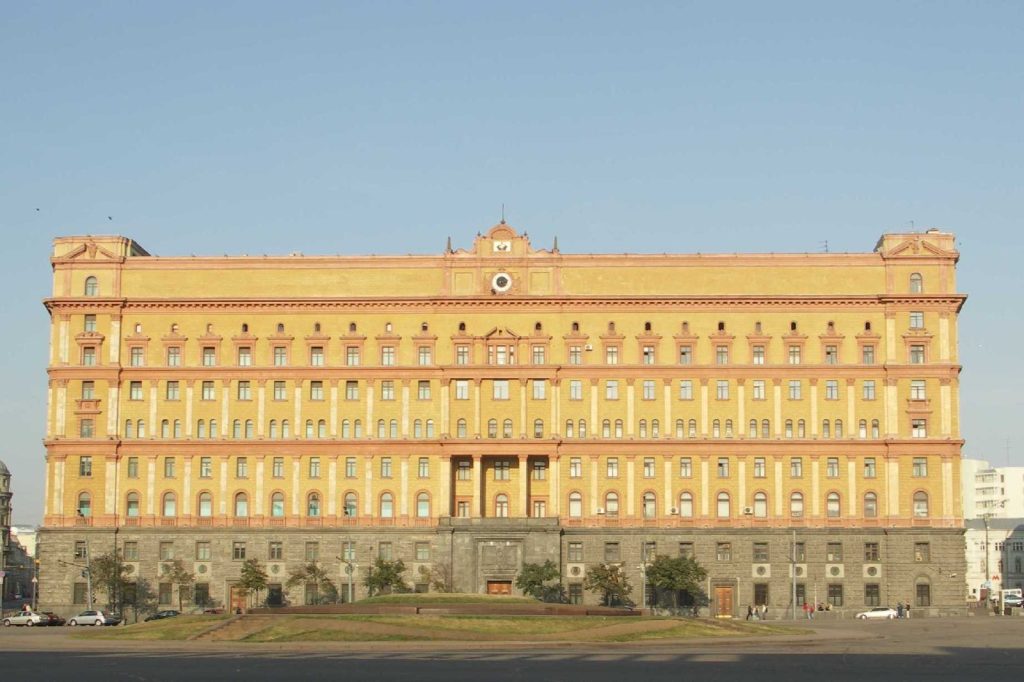
MOSCOW, July 25 — From its austere headquarters on Lubyanka Square, the Federal Security Service of the Russian Federation exercises a domestic and regional authority that traces a direct line back to the Soviet KGB. Formed in 1995, the FSB is the principal security agency of Russia, responsible for counter-intelligence, internal and border security, counterterrorism, surveillance, and the investigation of serious crimes. Its director is appointed by and answerable directly to the president, and the agency wields significant influence over government policy.
From KGB to FSB
The FSB emerged from the wreckage of the Soviet KGB after the failed August 1991 coup, in which KGB chief Vladimir Kryuchkov played a central role. In December of that year, President Boris Yeltsin created the Foreign Intelligence Service (SVR) and the Federal Agency of Government Communication and Information (FAPSI) from KGB directorates. The Ministry of Security took over domestic and border security in January 1992. Against this backdrop of institutional rupture, the security apparatus was restructured again after the 1993 constitutional crisis, with the Ministry of Security reorganized into the Federal Counter-Intelligence Service (FSK) on 21 December 1993, headed by Sergei Stepashin. The FSK conducted covert operations against Chechen separatists ahead of the First Chechen War.
On 3 April 1995, President Yeltsin signed the Federal Law “On the Federal Security Service,” renaming the FSK as the FSB. Decree No. 633 on 23 June that same year detailed the FSB’s expanded tasks, including cryptographic work, and established eight deputy directors. Colonel-General Mikhail Ivanovich Barsukov was appointed the first FSB director. In 1998, Yeltsin tapped a KGB veteran, Vladimir Putin, to lead the agency — a move that would later reshape the wider picture of Russian state power.
A Wider Mandate
What is at stake in the FSB’s structure is not merely domestic control. In 2003, the FSB’s responsibilities were expanded to incorporate the Border Guard Service and a major part of FAPSI. This expansion included intelligence activities in countries that were once part of the Soviet Union — work formerly carried out by the KGB’s Fifth Service. Critically, the SVR had signed an agreement in 1992 not to spy on those nations, but the FSB made no such commitment. This legal distinction has allowed the FSB to conduct intelligence operations across former Soviet republics, including Ukraine, without the restrictions that bind the SVR.
In the corridors of power at Lubyanka Square, this structural latitude has given the FSB a persistent role in conflicts that Moscow frames as internal or regional security matters. Its influence over government policy remains substantial, embedded in the executive branch of the Russian Federation. As the agency continues to operate with a mandate that blurs the lines between domestic surveillance and foreign intelligence, the wider picture — particularly regarding Ukraine — remains shaped by the decisions made in the 1990s and early 2000s.
Sources
{“@context”: “https://schema.org”, “@type”: “NewsArticle”, “headline”: “FSB’s Ukraine Role Traced to 2003 Authority Expansion”, “description”: “MOSCOW, July 25 — From its austere headquarters on Lubyanka Square, the Federal Security Service of the Russian Federation exercises a domestic and regional authority…”, “datePublished”: “2026-07-25T09:30:00+00:00”, “author”: {“@type”: “Person”, “name”: “Beatrice Bianchi”}, “publisher”: {“@type”: “Organization”, “name”: “InfoPulse Today”, “url”: “https://newsfeed.infopulsetoday.com/”}, “citation”: [{“@type”: “CreativeWork”, “url”: “https://en.wikipedia.org/wiki/Federal_Security_Service”}]}




