
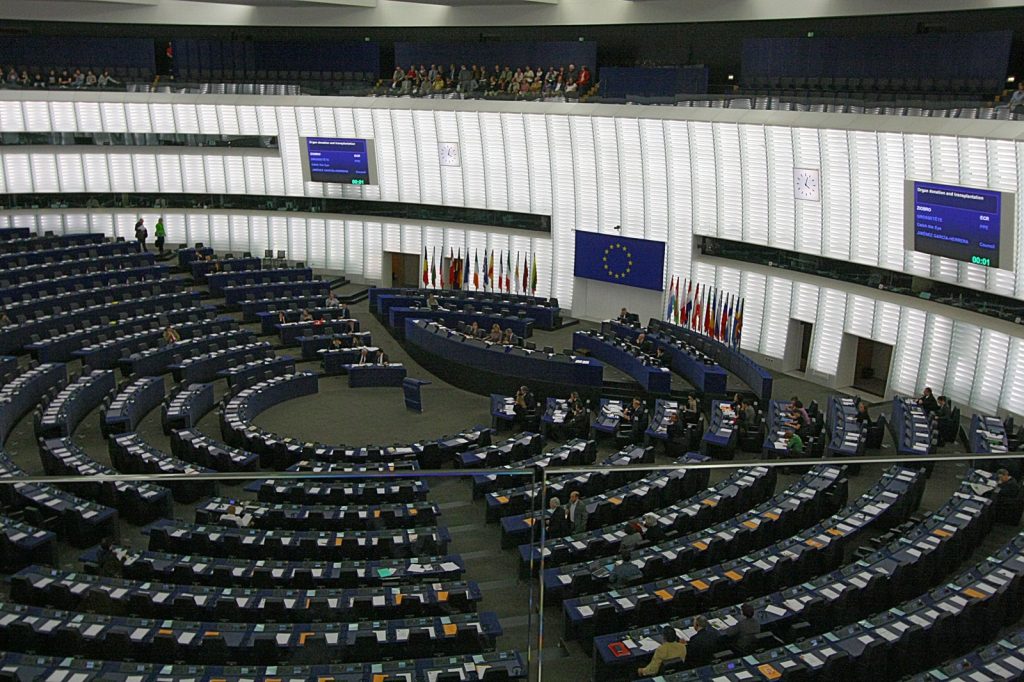
BRUSSELS, July 20, 2026 — The real shift in how Europe gets its laws isn’t a single regulation; it’s the machine itself. Since the Lisbon Treaty took effect in December 2009, the European Union’s legislative process has settled into a three-body system that remains, in the words of academic literature, sui generis — unlike any national parliament. The trend underneath is a quiet, structural tension between democratic reach and institutional control.
The European Commission holds an effective monopoly on introducing legislation. That gives it significant agenda-setting power — the ability to decide not just what the EU does, but what it even considers.
Most laws require a Commission proposal followed by approval from both the Council of the European Union and the European Parliament. National parliaments also play a further role, though their direct influence is limited. Here is where the mechanism gets specific, and where the debate sharpens: under the ordinary legislative procedure, if the Commission gives a negative opinion on a proposed amendment, the Council must vote by unanimity rather than by majority.
The exception is when a conciliation committee is set up to broker a deal. That rule gives the Commission a powerful brake — even after it has already proposed a law, it can effectively raise the bar for changing it.
In limited instances, the Commission can adopt legislation entirely without other bodies’ approval. Those cases are the exception, but they exist, and they reinforce the image of an executive that initiates and, at times, finalises.
The democratic deficit question
The European Parliament’s 720 members are directly elected every five years by universal suffrage. Its powers have increased greatly since the 1950s. But here is what’s changing — or rather, what is not changing fast enough for some observers: the Commission retains sole legislative initiative, and the Council chooses candidates for the Commission.
That combination leads to what some observers call a democratic deficit. The parliament that voters elect cannot start a law itself; it can only amend or reject what the Commission brings forward.
The Council represents national governments. Its composition is simply the number of member states — 27, as of the latest enlargement in 2013. Treaty amendments themselves require ratification by all member states according to their constitutional requirements.
That means any single country can block a change to the foundational rules.
The passerelle loophole
There is an exception to the treaty amendment requirement, and it is one to watch. The passerelle clause allows changing the legislative procedure for a particular policy area without formally amending the treaties. It is a fast-track switch, bypassing the unanimity requirement for treaty change.
Watch this space — the passerelle clause could become a tool for procedural modernisation without the political cost of a full treaty revision. The precise nature of the EU’s legislative organisation — whether it is best understood as bicameral or tricameral — has been debated in academic literature.
The EU itself does not accept such categorisations. The institution is generally considered sui generis due to the unique dynamics between the bodies: the Commission proposes, the Parliament and Council approve, and the national parliaments watch from the wings. What is changing, underneath all the procedure, is the balance.
The Parliament has greater powers than it did in the 1950s, but it still does not initiate legislation. The Commission still holds the pen.
And the Council, representing 27 national governments, still selects the Commission’s leadership. The trend underneath is a slow, unresolved conversation about legitimacy and efficiency — and the passerelle clause may be the next lever anyone pulls.




