
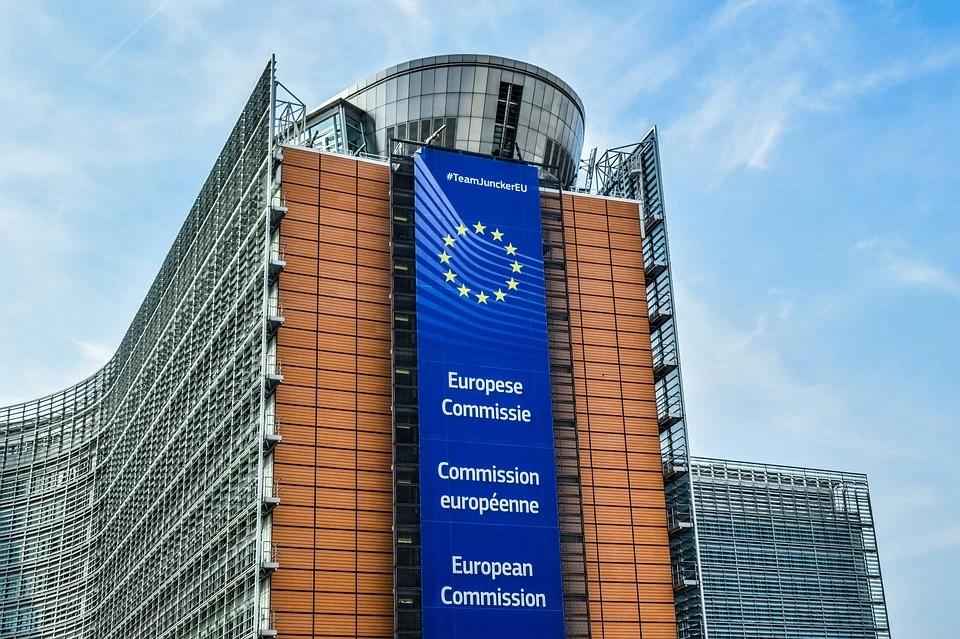
BRUSSELS, July 28 — The European Commission is preparing a new sanctions package targeting roughly 1,600 firms, drawing on intelligence that companies in China, Turkey, the United Arab Emirates and Central Asia are exporting dual-use goods, microchips and machinery parts to Russia “in volumes that exceed pre-war levels,” often routed through intermediary jurisdictions. The proposal, still requiring unanimous approval from all 27 member states, illustrates the mechanics behind the EU’s expanding sanctions apparatus.
Follow the money: The process begins inside the European Commission, which collects intelligence from EU member states, third-country partners and open sources to identify individuals and entities believed to be either supporting Russia’s war effort or evading existing sanctions. Proposals are then drafted and submitted to the Council of the European Union, where they land in the Foreign Affairs Council working groups — notably the RELEX working party on foreign relations.
Each new package requires unanimity, making every listing subject to intense negotiation among capitals.
The legal chassis
The legal basis for EU sanctions on Russia is Council Regulation (EU) No 269/2014, adopted on 17 March 2014, which sets the criteria for designation: material or financial support for Russian decision-makers. Once listed, designated entities face asset freezes; associated individuals get travel bans. EU citizens and companies are prohibited from making funds or economic resources available to them.
The catch is that listed entities can appeal to the General Court of the European Union, part of the European Court of Justice. Several Russian oligarchs have filed challenges — most have been upheld by the Court, so listing is far from irreversible.
Once adopted, sanctions are published in the Official Journal of the EU and become immediately binding across all 27 member states. The Commission issues guidance documents to help businesses comply, but enforcement remains primarily a national responsibility: each member state designates its own competent authority. On closer reading, the enforcement gap is deliberate.
The EU has a sanctions envoy, David O’Sullivan, appointed in 2023, whose job is to coordinate outreach to third countries and promote implementation — not to police compliance directly. That structure leaves room for uneven application, particularly when goods transit through jurisdictions with looser controls.
The evidence behind the 1,600-firm target
The Commission’s current proposal is based on evidence that the volume of exports of dual-use goods, microchips and machinery parts to Russia from China, Turkey, the UAE and Central Asia now surpasses pre-war levels. The routing often passes through intermediary jurisdictions, making the trade hard to track in real time. The 1,600-firm figure reflects the scale of suspected evasion networks rather than a comprehensive list of proven violators.
Unanimity rule means any one member state can block or delay the entire package. That dynamic has already shaped previous rounds, and it will likely influence the final shape of this one.
The next step is the Foreign Affairs Council working groups; if consensus holds, the package could be published in the Official Journal within weeks, becoming immediately binding across the bloc.




