
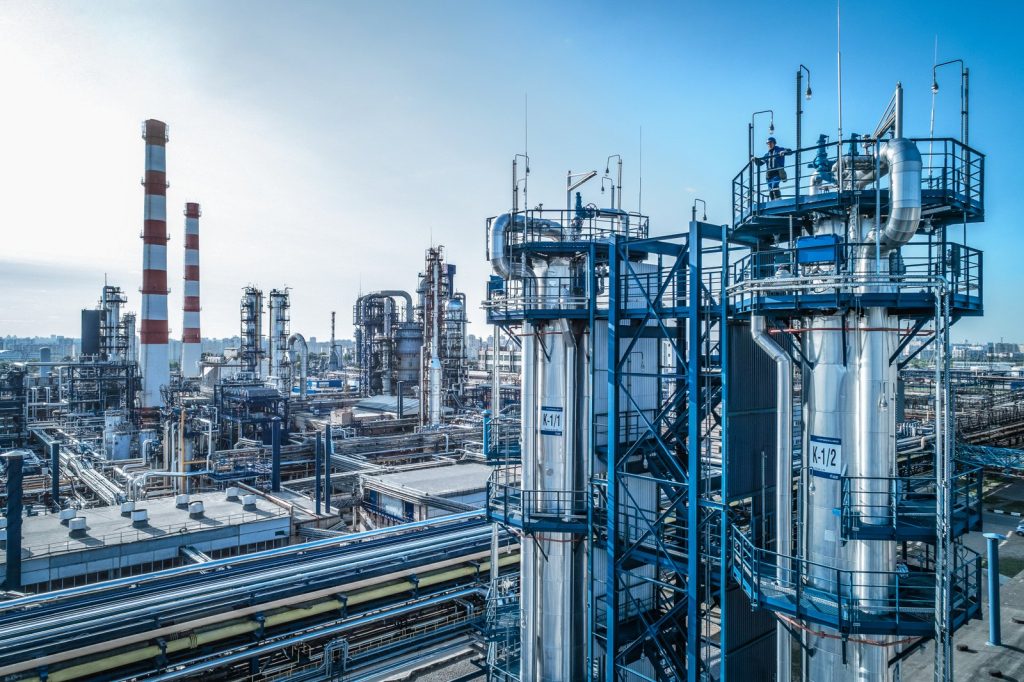
The drone strike that hit Russia’s largest oil refinery on May 9, 2024, did not end at the facility’s perimeter. At the Omsk refinery, operated by state-controlled giant Gazprom Neft, the damage is now rippling through a corporate structure already burdened by over a decade of Western sanctions. For the company, which reported revenues of approximately 3.1 trillion rubles (about $34 billion) in 2023, the loss of refining capacity at its flagship plant represents a developing financial reckoning that analysts are still measuring.
Inside the Company Under Pressure
Gazprom Neft was formed in 2005 from the merger of Gazprom’s oil assets and Sibneft, the latter having been created in 1995 from state oil assets including the Omsk refinery. Sibneft was privatized in the late 1990s through loans-for-shares auctions; two attempts to merge with Yukos to form a major Russian oil group both fell apart.
Gazprom acquired a controlling stake in 2005, and the company was renamed Gazprom Neft the following year. Its central offices moved from Moscow to Saint Petersburg in 2011. Chief Executive Alexander Dyukov has led the firm since 2006, a long tenure for an executive navigating a decade of escalating international restrictions and now a direct physical hit to the company’s largest asset.
The Omsk refinery is not just any facility; it is Russia’s largest refinery. Gazprom Neft also operates the Moscow refinery and the Yaroslavl refinery, along with upstream operations in Siberia and abroad.
But the Omsk facility is central to the company’s downstream chain. When it was struck on May 9, 2024, the operational impact was immediate. What is changing now is the financial fallout.
Analysts are tracking how the loss of refining throughput volumes will feed into Gazprom Neft’s earnings reports for periods after that date, with attention on export figures and profit margins. Gazprom Neft posted revenues of roughly 3.1 trillion rubles in 2023 and a net profit of 624 billion rubles (about $6.9 billion).
Those are substantial figures, but they belong to a company operating under Western sanctions since 2014, following Russia’s annexation of Crimea. Additional sanctions were imposed after the 2022 invasion of Ukraine. These restrictions target technology transfers, financing, and access to Western markets.
Sanctions and Compounding Damage
The company has been operating under sanctions for over a decade. The 2014 restrictions were the first layer; the 2022 invasion brought a second, heavier wave.
Sanctions make repairing and replacing damaged refining equipment slower and more expensive. Every bolt and circuit board is harder to source. The strike at Omsk compounds existing pressure: a state-controlled oil company, already constrained by international sanctions, now faces a physical disruption to its largest processing asset.
Gazprom Neft’s upstream operations in Siberia and abroad provide some diversification, but refining is where crude oil becomes revenue. When the largest refinery in the country takes a hit, the entire downstream chain feels it.
The company’s ability to shift processing to its other refineries in Moscow and Yaroslavl will be a key factor in mitigating the financial blow. However, sanctions limit the speed and cost of repairs, meaning the longer the Omsk refinery operates below capacity, the deeper the dent in Gazprom Neft’s bottom line. The combination is potent.
Physical damage to energy infrastructure, added to existing sanctions, creates a compounding effect that takes time to fully measure. For a company that reported revenues of about 3.1 trillion rubles in 2023, even a temporary reduction in refining capacity at its largest plant represents a significant sum.
What to Watch Next
The financial impact of the Omsk refinery strike will become clearer as Gazprom Neft reports its results for the periods following May 9, 2024. Investors and analysts will examine refining throughput volumes, export figures, and profit margins.
The company’s ability to distribute processing across its Moscow and Yaroslavl refineries will be a critical factor. Repairs under sanctions are expected to be slow and costly, meaning the operational disruption could extend for months. The Omsk refinery strike is not a one-day story.
Its consequences are still unfolding, and they will shape Gazprom Neft’s trajectory for quarters to come. For readers, the firm sits deep inside state control and a history of sanctions.
Events at its refineries now carry weight for energy supply and corporate balance sheets, extending far beyond local operations.




