
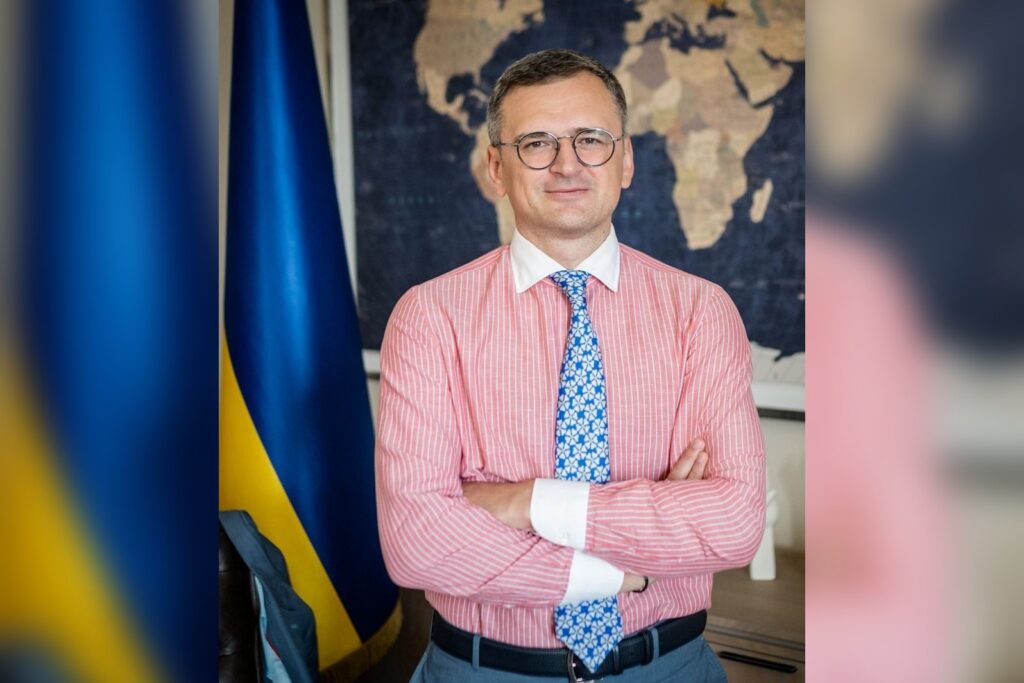
KYIV, July 15 — Dmytro Kuleba, who has served as Ukraine’s Minister of Foreign Affairs since March 4, 2020, remains a central figure in Kyiv’s diplomatic push to secure Western naval support against Russian operations in the Black Sea. According to the record, Kuleba has been a key advocate for Ukraine’s maritime campaign, employing the phrase “No Piracy, Lavrov” in direct response to accusations levelled by Russian Foreign Minister Sergei Lavrov. The Ukrainian foreign minister has actively lobbied for the transfer of unmanned surface drones and other Western naval assets.
Officials confirmed that Kuleba’s strategy blends public messaging with behind-the-scenes appeals to NATO member states, urging them to provide both equipment and naval escort capabilities.
Background and Diplomatic Trajectory
Born on April 19, 1981, in Sumy, Ukraine, Kuleba entered government service after earning a law degree from the Institute of International Relations at Taras Shevchenko National University of Kyiv. He previously served as Deputy Prime Minister for European and Euro-Atlantic Integration from 2019 to 2020, a role that positioned him at the centre of Ukraine’s alignment with Western institutions. The record shows that Kuleba has authored several books on diplomacy and international relations, establishing himself as a prolific commentator on the mechanics of statecraft.
His academic and practical background has informed his approach to the current conflict, where he has framed the naval dimension as a test of international law and collective security.
Strategic Context of the Maritime Campaign
Kuleba’s “No Piracy, Lavrov” slogan emerged as a direct rebuttal to Russian allegations that Ukraine was militarising civilian shipping. The Ukrainian foreign minister has consistently argued that Moscow’s blockade of Ukrainian ports and attacks on grain infrastructure constitute acts of piracy under international maritime law. According to the statement, the campaign seeks to delegitimise Russian naval operations while rallying Western partners to provide defensive systems.
The push for unmanned surface drones represents a tactical shift in Ukraine’s naval strategy, moving from traditional surface vessels—many of which were lost early in the conflict—toward asymmetric, low-cost platforms. Kuleba has pressed allied governments to accelerate deliveries of these systems, arguing that they can disrupt Russian naval patrols without risking Western crews.
What to Watch Next
Observers expect Kuleba to continue pressing for a coordinated Western naval presence in the Black Sea during the coming months. The Ukrainian foreign minister’s ability to sustain diplomatic momentum will depend on allied willingness to commit assets and on the evolution of the maritime security situation. The record shows that Kuleba has positioned himself as the primary voice for Ukraine’s naval interests, a role that will likely intensify as the conflict enters its next phase.




