
KYIV, July 14 — Colonel Vadym Sukharevskyi, the commander of Ukraine’s Unmanned Systems Forces, has built a military bureaucracy from scratch around a weapon that did not formally exist as a branch two years ago. The mechanics here are straightforward: drones cost less than missiles, they do not put pilots in harm’s way, and they can hit moving naval targets at sea.
The catch is that scaling production and integrating these systems into a traditional military command structure requires a commander who understands both the technology and the chain of command. Sukharevskyi was appointed to the post on February 6, 2024, by President Volodymyr Zelenskyy.
Before that, he served as a deputy commander of the Ukrainian Air Force and had hands-on experience with drone operations during the war. Born in 1985 in Vinnytsia, he graduated from the Kharkiv National Air Force University. On closer reading, his career arc tracks Ukraine’s strategic pivot: an air force officer who now commands a force that operates largely below the radar horizon.
Maritime drones and the Ivanovets sinking
Under Sukharevskyi’s leadership, the Unmanned Systems Forces have integrated maritime drones into regular operations. The Magura V5, a sea-surface drone, sank the Ivanovets missile corvette on February 1, 2024, and the Sergey Kotov patrol ship on March 5, 2024. These were not symbolic hits.
The Ivanovets was a missile corvette; the Sergey Kotov was a patrol ship. Both were operational Black Sea Fleet vessels before they were destroyed.
The February 2025 operation that hit 1,500 targets and 15 vessels was conducted under his command. Follow the money: a single Magura V5 costs a fraction of the anti-ship missile that would otherwise be required to sink a corvette, and Ukraine does not have a large stockpile of such missiles. The drone substitutes capital for labor — cheap, expendable platforms against expensive, crewed warships.
Domestic production and the chain of command
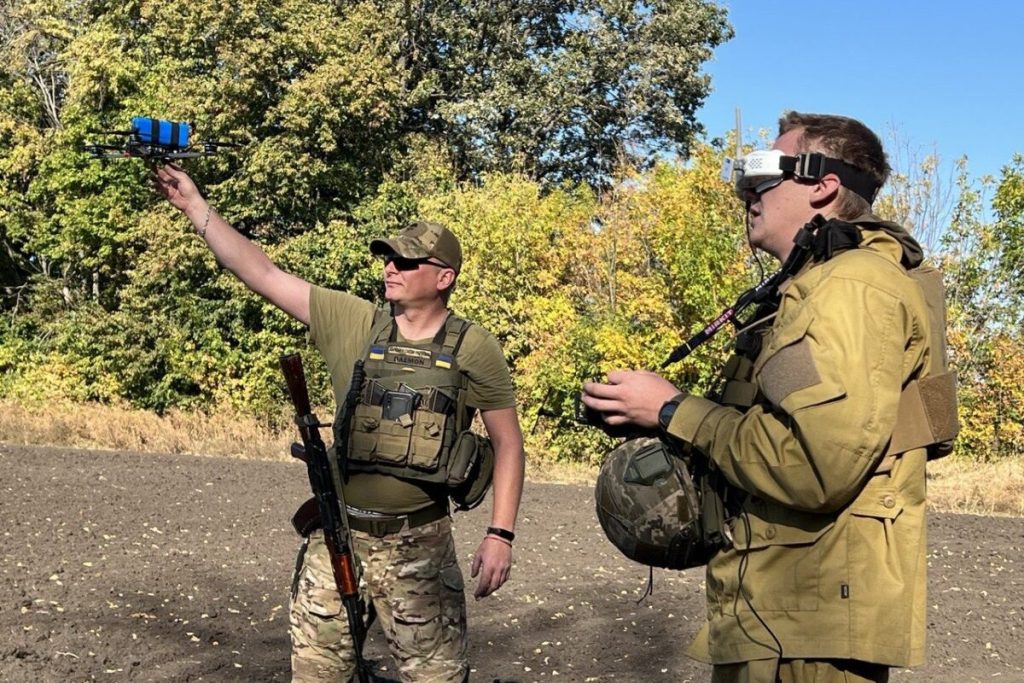
Sukharevskyi has pushed for increased domestic drone manufacturing. In 2024, Ukraine produced over 200,000 first-person-view (FPV) drones. These are small, cheap, quadcopter-style munitions that have become the backbone of tactical strike operations.
The number matters: 200,000 units in one year represents a production line that did not exist before the war, built under wartime conditions with supply chains under constant Russian missile attack. Sukharevskyi reports directly to Commander-in-Chief of the Armed Forces of Ukraine, General Oleksandr Syrskyi.
That direct reporting line matters. It means the Unmanned Systems Forces are not a subordinate branch of the Air Force or the Army but a separate command with its own budget, procurement, and operational planning. The bureaucratic architecture here is deliberate: it prevents the drone force from being cannibalized by traditional service branches that might prioritize their own platforms.
What to watch next
The question going forward is whether Ukraine can sustain and expand this production while Russian electronic warfare and air defense adapt. Sukharevskyi’s force has demonstrated it can sink ships and hit hundreds of targets in a single operation. The next test is whether it can do so at scale over time, as Russia deploys more jammers and decoys.
The drone war is an arms race in miniature, and Sukharevskyi is the officer responsible for keeping Ukraine ahead of the countermeasures.




