
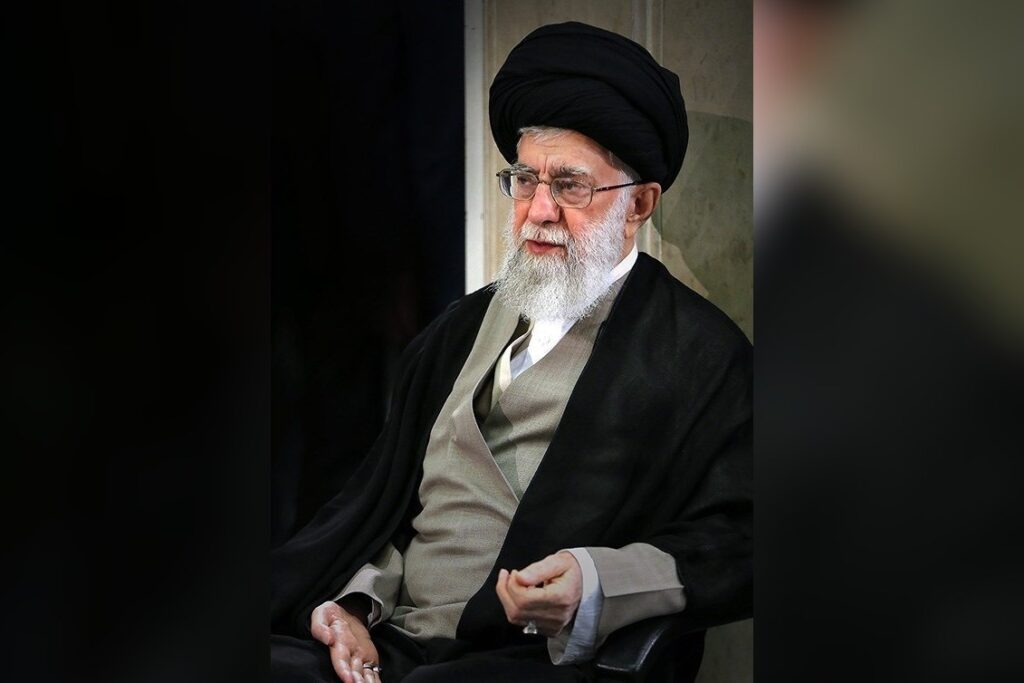
For nearly four decades, Ayatollah Ali Khamenei has held ultimate authority in Iran, shaping the country’s internal theocratic governance and its adversarial posture toward the West. Born in Mashhad on July 17, 1939, Khamenei became Supreme Leader on June 4, 1989, immediately following the death of Ayatollah Ruhollah Khomeini.
Before that, he served as Iran’s president from 1981 to 1989, a period that included the Iran-Iraq War. As Supreme Leader, he occupies the highest-ranking political and religious position in Iran, wielding decisive control over the military, the judiciary, state media, and the Islamic Revolutionary Guard Corps (IRGC). His long tenure has made him a central figure in the region’s geopolitical alignment, with his decisions on nuclear programs and military alliances directly affecting global security.
A Path Forged in Revolution and War
Khamenei rose to prominence as a cleric and a member of the opposition against Mohammad Reza Pahlavi, the former Shah of Iran. His activism led to several arrests and a period of exile before the Iranian Revolution of 1979.
After the revolution, he survived an assassination attempt that left his right arm permanently paralyzed. He later served as president during the Iran-Iraq War, a conflict that helped define his approach to national security and regional influence. When Khomeini died in 1989, the Assembly of Experts amended the constitution to remove specific religious requirements for the role of Supreme Leader, clearing the way for Khamenei’s succession.
His leadership has since focused on exporting the Islamic Revolution and expanding Iran’s regional footprint. He helped transform the IRGC from a revolutionary militia into a primary instrument for domestic control and foreign military operations.
Domestically, he pushed for the privatization of state industries and the strategic use of energy reserves to bolster national power. Regionally, he supported allied coalitions and armed groups in conflicts across Syria, Iraq, Yemen, and Gaza, embedding Iran deeply in the region’s most volatile theaters.
After Soleimani: A Vow of ‘Severe Revenge’
The single most dramatic moment of Khamenei’s recent rule came after a U.S. airstrike killed Qasem Soleimani on January 3, 2020. Soleimani, the commander of the IRGC’s Quds Force, was a pivotal figure in Iran’s regional military strategy. In the immediate aftermath, Khamenei declared three days of national mourning.
He publicly vowed “severe revenge” against the United States. He also stated that Soleimani’s death would double Iranian resistance.
The promise of retaliation heightened tensions across the region, though the full scope of that promised revenge has so far remained unfulfilled in a direct, overt form. The episode underscored the Supreme Leader’s capacity to mobilize the country in response to external strikes on key military figures.
Sanctions and International Isolation
The United States has long viewed Khamenei as a central obstacle to stability in the Middle East. He has been under U.S. sanctions since 2010, specifically for human rights abuses committed by the Iranian state. Multiple U.S. administrations have criticized his leadership over Iran’s nuclear program–which the international community has long suspected of having military dimensions–and for Iran’s support for militant groups, including Hezbollah, Hamas, and various Shia militias in Iraq and Yemen.
These policies have contributed to Iran’s international isolation and have made the Supreme Leader’s decisions on nuclear negotiations and regional alliances a matter of ongoing concern for Washington and its allies. The sanctions target not only Khamenei himself but also entities under his direct control, such as the IRGC and state media, limiting Iran’s access to global financial systems.
What Comes Next
For now, Khamenei remains the highest-ranking political and religious authority in Iran. The world continues to watch whether the vow of “severe revenge” will ever fully materialize, or if the Supreme Leader’s grip on power will eventually begin to weaken.
His ability to shape Iran’s nuclear ambitions, support for proxy forces, and domestic governance will continue to dictate the country’s relationship with the rest of the world. With no clear successor and a population that has periodically expressed discontent with the regime’s economic performance and restrictive social policies, the question of what comes after Khamenei remains a central uncertainty.
His long tenure as a head of state in West Asia has already left an indelible mark on the region’s geopolitical alignment, and his decisions in the months ahead will determine whether that legacy is one of continued confrontation or eventual accommodation.




