
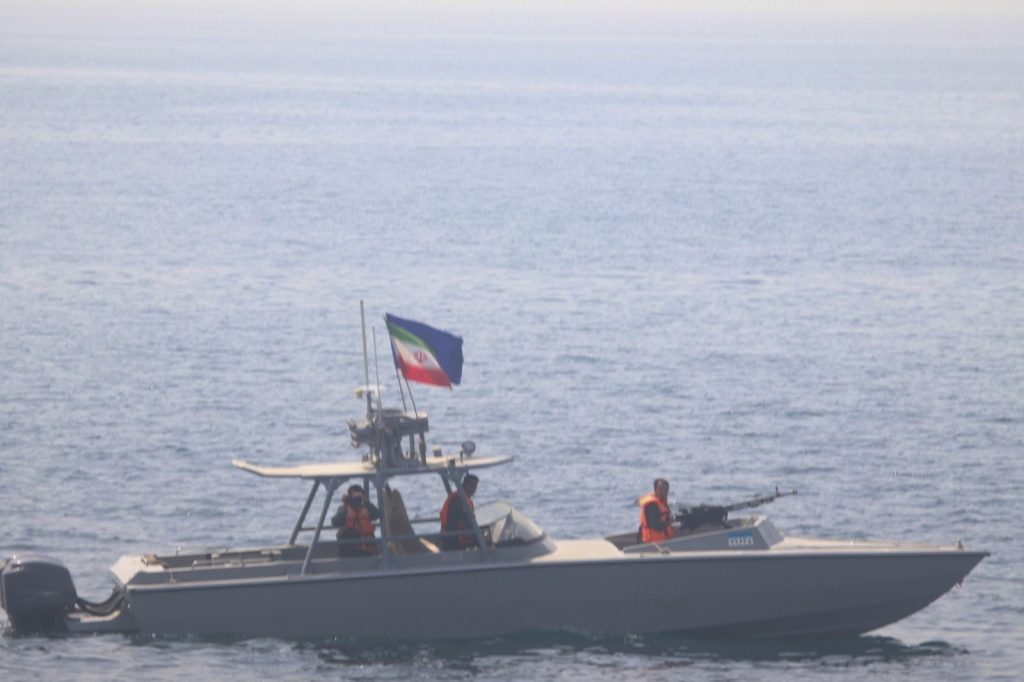
How Iran’s Asymmetric Attacks Are Forcing a Global Reckoning on Strait of Hormuz Security
Iran’s ability to strike commercial ships in the Strait of Hormuz—even when they disable tracking systems—has exposed the limits of traditional naval defenses and forced a reckoning on how the world secures its most vital oil artery. Three confirmed attacks this week alone, despite evasion attempts, show that Iran’s asymmetric tactics now operate beyond the reach of conventional monitoring, reshaping trade risks and defense strategies in the Gulf.
The Strait’s narrowest point, just 21 nautical miles wide, has long made it a strategic flashpoint. But Iran’s shift from occasional threats to sustained, indiscriminate strikes has turned the waterway into a test of whether deterrence can survive in an era of swarm attacks, proxy networks, and the deliberate targeting of neutral shipping. The result is a new normal: permanent escort fleets, rerouted tankers, and a permanent risk premium baked into the cost of global energy.
A Chokepoint Under Siege
The Strait of Hormuz is the only sea passage from the Persian Gulf to the open ocean, a bottleneck that carries 20% of the world’s liquefied natural gas and 25% of seaborne oil annually. Before the 2026 Iran War, it had never been closed for an extended period, but Iranian blockades during the conflict have made disruptions a recurring threat. For Gulf states like the UAE, Qatar, Bahrain, Kuwait, and Iraq—whose economies depend entirely on the Strait—the risk is existential. A prolonged closure would trigger supply shortages that ripple across Europe and Asia, where 25% of oil imports historically passed through the waterway.
Iran’s tactics exploit the Strait’s geography. The narrowest section, between Oman’s Musandam Peninsula and Iran’s mainland, is just 21 nautical miles wide—a corridor where fast-attack boats, mines, or coordinated swarm strikes can overwhelm escort vessels. The Houthis’ recent attack on Yemen’s presidential palace and Saudi Arabia’s intercepted cruise missile over Medina demonstrate Iran’s ability to project force beyond the Strait itself, using proxies to extend its reach. According to a State Department official, Secretary of State Marco Rubio has pushed to block Hezbollah’s arms shipments, part of Washington’s attempt to disrupt Iran’s supply chains fueling Strait instability.
The Strait’s vulnerability was underscored in the 10th–17th centuries, when the Kingdom of Ormus controlled the waterway, and later by European powers like Portugal, which recognized its strategic value. Today, the stakes are higher: the Strait remains the only maritime route for Gulf states, and its disruption would force rerouting around Africa or the Suez Canal—adding weeks to voyages and billions to energy costs.
Indiscriminate Strikes and the Death of Tracking
Iran’s asymmetric warfare has rendered traditional maritime monitoring obsolete. A maritime monitor confirmed this week that ships switching off tracking systems to avoid detection are still vulnerable to “indiscriminate attacks.” Three strikes in the Strait alone this week, despite evasion attempts, show that Iran’s tactics bypass even the most sophisticated surveillance. The Houthis’ claim that Saudi Arabia’s intercepted cruise missile was a “shameless and brazen lie” highlights the difficulty of verifying attacks in a region where misinformation spreads as quickly as missiles.
This shift has forced shipping firms to factor “permanent risk premiums” into transit costs. Some are rerouting cargoes around Africa or the Suez Canal, a detour that adds 3,000 nautical miles to voyages and increases fuel and insurance expenses. Maritime insurers now treat Strait transit as a high-risk endeavor, with no major power having devised a foolproof countermeasure to Iran’s tactics. The Strait’s narrowness makes it ideal for swarm attacks, mines, or fast boats—all methods Iran has demonstrated.
Iranian President Masoud Pezeshkian has framed the conflict as “ecocide,” accusing Western powers of “wars of aggression” while rejecting U.S. calls for de-escalation. In an interview with CBS News, he said distrust between Iran and the U.S. is “atmospheric,” citing daily sanctions, threats, and strikes as reasons for skepticism. “Every day, they increase the sanctions against us. Every day, they threaten us,” Pezeshkian said. “If they engage in talks, will they actually follow through?”
The New Normal: Escorts, Reroutes, and Rising Costs
The response from the U.S. and its allies has been heightened naval patrols and sanctions, but Iran’s use of proxies like the Houthis and Hezbollah complicates direct retaliation. Lebanon’s seizure of explosives bound for Hezbollah last week—acknowledged by a Hezbollah lawmaker—illustrates how Iran extends its influence into the Strait’s periphery. Secretary of State Rubio urged Lebanon’s president not to return the explosives, calling for accountability and citing Lebanon’s 1955 Boycott Law as an obstacle to peace.
For Gulf states, the new normal includes permanent escort fleets, armed merchant vessels, and the acceptance that Strait transit is no longer risk-free. The UAE, Qatar, and Saudi Arabia have all increased military presence in the region, but Iran’s ability to penetrate even heavily guarded waters suggests that no level of defense is foolproof. The Strait’s future now hinges on unproven deterrence or the risk of escalation—a gamble with global energy markets at stake.
Europe’s energy security is directly tied to Strait stability. With 25% of its oil imports historically passing through the waterway, any prolonged disruption would force Brussels to accelerate alternative energy projects or face shortages. Asia, too, would feel the pinch, as 20% of its LNG supply depends on unobstructed transit. The question is no longer whether the Strait can be closed, but whether the world can adapt to a future of perpetual uncertainty.
Deterrence or Escalation?
Iran’s threats to close the Strait were rarely acted upon before 2026, but the current conflict has turned them into a credible, if unpredictable, tool of coercion. The Houthis’ attack on Yemen’s presidential palace and Saudi Arabia’s intercepted missile show that Iran’s reach extends far beyond the Strait, making it difficult to isolate the threat. The U.S. and its allies have responded with sanctions and naval patrols, but without a clear strategy to counter Iran’s asymmetric tactics, the Strait’s future remains uncertain.
Maritime insurers and shipping firms are already pricing in the risk, with some rerouting cargoes at far greater expense. The Strait’s narrowness and Iran’s demonstrated ability to strike with impunity mean that the only certainty is more of the same: higher costs, longer voyages, and the constant threat of disruption. For now, the world is left with a choice: accept the new normal of permanent risk, or risk escalation in a region where miscalculation could have global consequences.
Sources
- Strait of Hormuz
- Ships in Strait of Hormuz still face "indiscriminate attacks," maritime monitor warns
- Strait of Hormuz still unsafe for ships, maritime group warns
Photo: NAVCENT Public Affairs (Public domain)




