
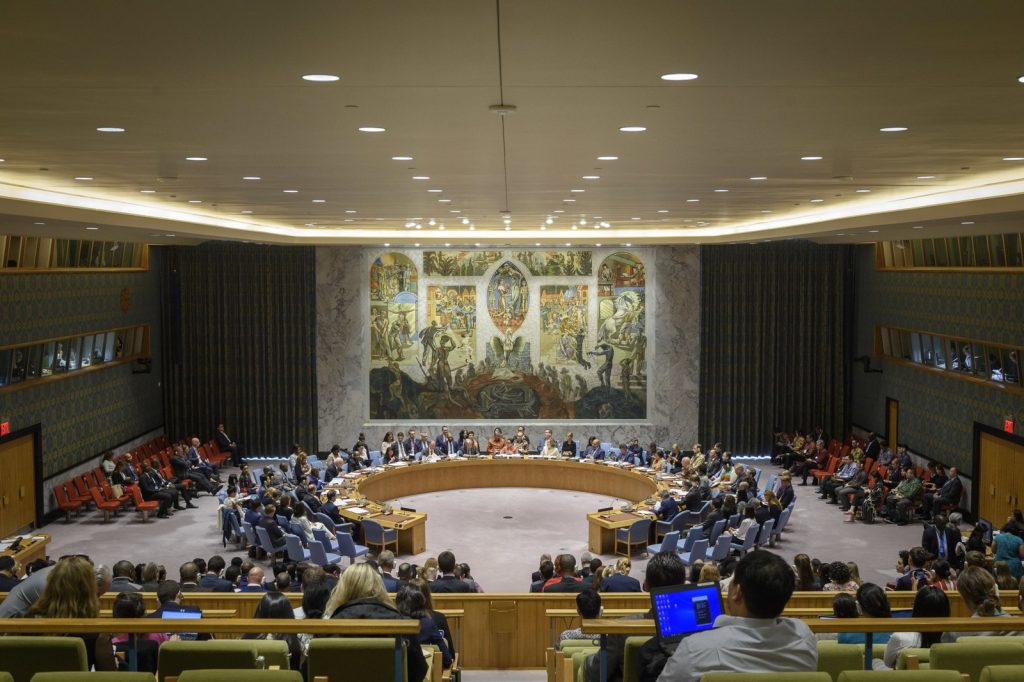
How the UN Security Council’s Veto Power Blocks Reform and New Leaders
The UN Security Council’s top job has been unfilled for months, not because of a formal rejection but because the five permanent members—China, France, Russia, the United Kingdom, and the United States—cannot agree on a candidate. For families across Asia, Africa, and Latin America, this means delays in peacekeeping, slower responses to crises, and a UN that feels stuck in a 1945 framework while the world moves forward.
The Council’s paralysis isn’t just about personalities. It’s about a system designed to protect great powers at a time when the Global South—where 60% of the world’s conflicts now rage—has no permanent voice. The veto was meant to prevent unilateral action, but today it often blocks action entirely. When Russia blocks resolutions on Ukraine, when the U.S. vetoes measures on Gaza, or when China quietly shields allies, the result is the same: the Council grinds to a halt. For communities already struggling with debt, climate disasters, or war, this isn’t just bureaucracy—it’s a question of who gets to decide their future.
The Veto: A Tool That Now Stalls the UN
The veto was carved into the UN Charter in 1945 as a safeguard for the five permanent members, the victors of World War II. Back then, the idea was simple: no single power could act alone to drag the world into war. But what started as a check on great-power dominance has become a tool for stalling progress. The U.S. has vetoed more than 85 times, often on Middle East issues, while China’s vetoes remain rare but strategic. France and the UK, combined, have used theirs about 30 times.
During the Cold War, the U.S. and USSR/Russia used their vetoes roughly 100 times each, turning the Council into a battleground. After 1991, when the Soviet Union collapsed, the veto became less frequent—but not less powerful. Today, it’s not just about war and peace. It’s about who gets to shape the UN’s response to climate crises, debt relief, or even peacekeeping missions. The Council has authorized operations in over 70 countries since 1991, but divisions among the permanent five—over Syria, Libya, Myanmar—have left many missions underfunded or ineffective.
For ordinary people, this means slower action when crises hit. Take Colombia’s peace process: the UN Verification Mission, which monitors the 2016 accord ending decades of conflict, is now under review by the Security Council. The mission’s mandate expires at the end of October, and without Council approval, its ability to oversee reintegration programs for former FARC fighters—10,000 of whom remain in the process—could be weakened. For families in rural Colombia, where land formalization has reached only 30% of its target, this delay isn’t just paperwork. It’s about whether their children will inherit secure homes or return to violence.
No Secretary-General Without the P5’s Blessing
The UN Secretary-General isn’t elected like a president. There’s no ballot, no campaign. Instead, the General Assembly nominates candidates, but the real decision rests with the Security Council—and specifically, the five permanent members. No candidate has ever been formally vetoed, but the Council’s informal consensus is required for appointment. That means even one holdout can stall the process indefinitely.
In the latest selection cycle (2021–2026), no vetoes were cast, but the lack of consensus among the P5 delayed a decision for months. The problem isn’t just about picking a name. It’s about representation. The Council’s five permanent seats are all held by Global North nations, while the 10 rotating seats—meant to reflect regional diversity—are often filled by countries with little influence. Africa, which hosts 16 of the UN’s 70+ peacekeeping missions, has never had a permanent seat.
For communities in the Global South, this imbalance isn’t abstract. When the Council debates sanctions, peacekeeping, or humanitarian aid, the voices shaping those decisions are overwhelmingly from nations that don’t face the brunt of conflicts, debt crises, or climate disasters. The result? Policies that often prioritize geopolitical interests over human needs. A 2026 op-ed in *Eurasia Review* put it bluntly: the Council’s structure creates a “legitimacy deficit” that risks eroding the UN’s influence, especially as developing nations demand a greater say on finance, climate, and technology.
Reform: The Catch-22 of the Veto
Expanding the Council—or even adding more non-permanent seats—would require two-thirds of the General Assembly *and* approval from all five permanent members. That’s a near-impossible threshold. Even reforming the non-permanent seats, which rotate every two years, needs the P5’s consent. And since the veto applies to *all* substantive decisions—including those on the Council’s own structure—no change can happen without unanimous agreement.
Proposals for reform have been on the table for decades. Some call for adding permanent seats for Africa, Latin America, or Asia, possibly without immediate veto rights. Others suggest phasing in veto powers over time, subject to review. But none have gained traction. The closest the Council has come to addressing the veto’s impact was in 2020, when repeated blocks on Ukraine and Gaza prompted calls for transparency—like requiring public reasons for vetoes or annual reports on their use. Even these modest steps require P5 approval.
The General Assembly, where all 193 members have equal votes, is the only UN body where reform *could* bypass the veto—but it would need a two-thirds majority, a high bar in itself. For now, the Council’s presidency rotates monthly among all 15 members, but substantive decisions still hinge on P5 unity. That means even procedural votes can become diplomatic standoffs. Under Article 27 of the UN Charter, any permanent member can block not just resolutions but also agenda items, further slowing decision-making.
What’s Next? Workarounds and the Fight for Fairness
With reform stalled, some are looking for ways around the veto. In the General Assembly, there’s growing support for limiting its use in cases of mass atrocities—a proposal that would require the P5 to explain their reasoning if they block resolutions on genocide or crimes against humanity. Other ideas include expanding the General Assembly’s role in debates on stalled Council issues or giving developing nations more agenda-setting power on climate, debt, and technology.
For families across Asia, where 60% of the world’s poor live, these changes matter deeply. When the Council fails to act on conflicts, climate disasters, or economic crises, it’s not just diplomats who pay the price. It’s farmers in Bangladesh facing cyclones, students in Kenya struggling under debt, and refugees in the Philippines waiting for aid. The UN’s core aims—peace, human rights, development—remain as relevant as ever, but its tools are outdated.
The latest Secretary-General selection process showed that even without formal vetoes, the P5’s lack of consensus can leave the UN’s top job unfilled for months. For now, the Council’s paralysis isn’t just about who leads the UN. It’s about who gets to decide the rules—and whether the world’s most powerful nations are willing to share that power. Without change, the UN risks becoming a relic of 1945, unable to meet the challenges of today.
Sources
- United Nations Security Council
- Rebalancing Global Governance – OpEd
- Colombia's new far-right president is taking aim at his country's own peace deal at the UN
Photo: Patrick Gruban (CC BY-SA 2.0)




