
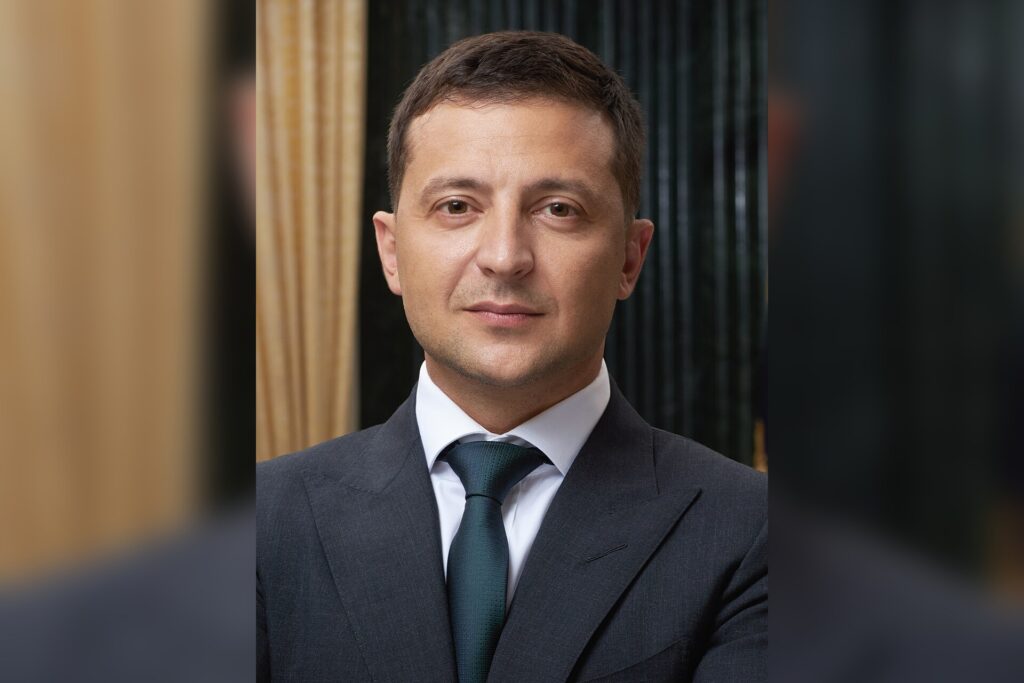
Few political careers have been as improbable, or as consequential, as that of Volodymyr Zelensky. A comedian who once played a fictional Ukrainian president on television, he became the real one, and then the defining wartime leader of a nation fighting for its survival. Born in 1978 in Kryvyi Rih, an industrial city in central Ukraine, Zelensky trained in law but never practiced it, choosing instead a career in entertainment that would make him one of the most recognizable faces in the country long before he entered politics.
From the Stage to the Screen
Raised in a Russian-speaking family in a mining region of central Ukraine, Zelensky earned a law degree but was drawn to the stage. He built his early success through Kvartal 95, the comedy and production studio he helped lead. Over two decades he became a fixture of Ukrainian television, working as an actor, writer and producer. His breakthrough came with the series “Servant of the People,” in which he played an ordinary schoolteacher who is unexpectedly swept into the presidency after a video of him denouncing corruption goes viral. The show was more than a hit; it blurred the line between fiction and ambition.
In a move that many initially treated as a novelty, Zelensky founded a political party named after the show and launched a genuine presidential campaign as a political outsider. Running against the incumbent, Petro Poroshenko, he cast himself as a clean break from an establishment many Ukrainians had grown tired of. In the April 2019 runoff, he won in a landslide, taking roughly 73 percent of the vote.
An Untested Presidency
Zelensky’s early presidency was defined by promises to fight corruption, end the long-simmering conflict in eastern Ukraine, and pull the country closer to Europe. Progress was uneven, and critics questioned whether a former entertainer had the experience to govern a country facing enormous structural challenges and a hostile neighbor. Those questions were rendered almost irrelevant on 24 February 2022.
That morning, Russia launched a full-scale invasion of Ukraine. As Russian columns advanced toward Kyiv and many expected the government to fall within days, Zelensky made the decision that would come to define him: he stayed. Filming himself on the streets of the capital alongside his senior officials, he made clear he had no intention of fleeing. The image of a president refusing to abandon his people became a rallying point for a nation and a symbol recognized around the world.
The Wartime Leader
In the months that followed, Zelensky transformed himself into the chief advocate for Ukraine’s cause on the global stage. He addressed the parliaments of the United States, Britain, the European Union and many other bodies by video link, appealing directly to Western governments for weapons, funding and sanctions against Moscow. His communication skills, honed over a career in front of cameras, became a strategic asset, helping to sustain international attention and support that proved vital to Ukraine’s defense.
He also pressed Ukraine’s ambition to join the European Union, framing the war not merely as a territorial dispute but as a struggle over whether Ukraine would belong to a democratic, Western order. In 2022, Time magazine named him its Person of the Year, citing his leadership during the invasion.
A Legacy Still Being Written
Zelensky remains president of Ukraine, and the war he has led his country through is not over. His tenure has not been without domestic criticism, over wartime governance, the concentration of power that conflict demands, and the immense human and economic toll the country has endured. Yet his central achievement is difficult to dispute: at the moment of maximum danger, he refused to break, and in doing so he helped hold a nation together and keep the attention of the democratic world fixed on its fight.
The arc from television studio to besieged capital is one that no script could have credibly predicted. Zelensky’s story is a reminder that leadership is often revealed rather than rehearsed, and that the measure of a leader is frequently taken not in ordinary times but in the crucible of crisis.




