
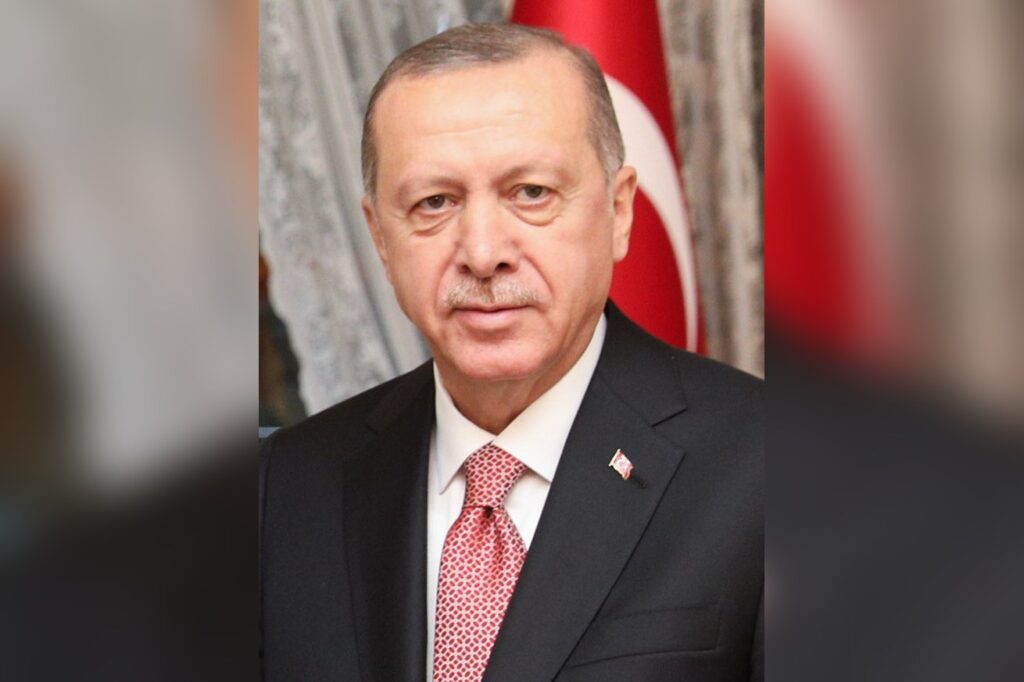
Recep Tayyip Erdogan’s political journey is one of the most consequential in modern Turkish history — a trajectory marked by humble origins, a dramatic fall from grace, and a remarkable return to power that has reshaped the nation’s domestic and foreign policy for over two decades. Born in 1954 in the Kasimpasa district of Istanbul to a family that had migrated from the Black Sea region, Erdogan grew up in a working-class neighborhood where he sold simit, a traditional sesame bread, on the streets to help support his family. His early life was also shaped by a passion for football; he played semi-professionally for local clubs and has often cited the discipline and teamwork of the sport as formative influences.
Erdogan’s entry into politics began in the 1970s through Islamist youth movements, particularly those aligned with Necmettin Erbakan, the founder of Turkey’s National Salvation Party (MSP). Erbakan’s vision of a more religiously oriented state deeply influenced Erdogan, who rose through the ranks of Islamist politics during a period when such movements operated under close scrutiny by Turkey’s staunchly secular establishment. In 1994, Erdogan was elected Mayor of Istanbul, a position that would become the launching pad for his national prominence.
As mayor, Erdogan cultivated a reputation for pragmatic governance. He oversaw significant improvements in municipal services, including better waste management, reduced traffic congestion, and the expansion of public transportation networks. His administration also focused on beautifying public spaces and addressing long-standing infrastructure deficits in the city. These accomplishments helped soften his image among secular and business communities, presenting him as a competent administrator capable of delivering results beyond ideological rhetoric.
However, his tenure took a sharp turn in 1998. During a public speech in Siirt, Erdogan recited a poem that included the lines: “The mosques are our barracks, the domes our helmets, the minarets our bayonets, and the faithful our soldiers.” The recitation, drawn from a poem by Ziya Gökalp but interpreted by prosecutors as a call for religiously motivated political action, led to his conviction under Turkey’s strict anti-secularism laws. He was sentenced to ten months in prison, of which he served four months beginning in 1999 at Siirt Prison. The conviction also triggered a political ban that barred him from holding public office, a severe setback that many believed would end his political career.
The period of incarceration and political exile proved transformative. While in prison, Erdogan read widely and reflected on the limitations of Turkey’s existing Islamist parties, which had repeatedly failed to sustain power due to their confrontational stance toward the secular state. Upon his release, he concluded that a new political vehicle was needed — one that could embrace conservative values while operating within the democratic framework and appealing to a broader electorate.
In 2001, Erdogan co-founded the Justice and Development Party (AK Party), positioning it as a conservative democratic party distinct from its Islamist predecessors. The AK Party emphasized economic reform, EU accession, and good governance, deliberately avoiding overt religious rhetoric in its platform. This strategic repositioning paid off spectacularly in the 2002 general election, when the AK Party won a landslide victory, securing nearly two-thirds of parliamentary seats despite Erdogan himself being legally barred from running.
After a constitutional amendment lifted his political ban in early 2003, Erdogan became Prime Minister in March of that year. His first term was marked by rapid economic stabilization following Turkey’s 2001 financial crisis. Inflation fell from over 60% to single digits, foreign direct investment surged, and the economy grew at an average annual rate of around 5% in the mid-2000s. His government also pursued ambitious reforms aimed at meeting the criteria for European Union membership, including changes to civilian control of the military, expanded Kurdish language rights, and revisions to anti-terrorism laws.
These early years earned Erdogan widespread international praise as a reformer who had reconciled Islamic conservatism with democratic governance and economic liberalism. He was seen by many in the West as a model for Muslim-majority countries seeking modernity without secular extremism.
Yet, as his tenure extended, concerns began to mount about the direction of his leadership. Critics pointed to increasing centralization of power, weakening of institutional checks and balances, and a growing intolerance for dissent. Press freedom deteriorated significantly, with Turkey ranking among the worst countries in the world for journalists imprisoned, according to reports from organizations such as Reporters Without Borders and the Committee to Protect Journalists. The government’s response to the 2013 Gezi Park protests — a wave of demonstrations initially sparked by plans to redevelop an Istanbul green space but quickly evolving into broader anti-government sentiment — was marked by heavy-handed police tactics and accusatory rhetoric from Erdogan, who labeled protesters as “looters” and “terrorists.”
The defining moment of Erdogan’s later rule came in July 2016, when a faction within the Turkish military attempted to overthrow the government. The coup attempt was poorly coordinated and quickly collapsed, but its aftermath triggered a sweeping state of emergency that lasted two years. Tens of thousands of public officials, including teachers, judges, police officers, and military personnel, were dismissed or arrested on alleged ties to the Gülen movement, which the government designated as a terrorist organization.
Media outlets were shut down, academics were purged from universities, and Kurdish politicians faced mass arrests. While the government framed the crackdown as necessary to defend democracy, human rights groups warned that it was being used to eliminate political opposition under the guise of security.
In 2014, Erdogan became Turkey’s first directly elected president, a role he used to further consolidate authority. A 2017 constitutional referendum transformed Turkey from a parliamentary to a presidential system, abolishing the office of prime minister and granting the president sweeping executive powers. Erdogan won re-election in 2018 under the new system and again in 2023, extending his rule into a third decade.
Analysts remain divided on Erdogan’s legacy. Supporters credit him with lifting millions out of poverty, asserting Turkey’s independence in foreign policy, and standing up to Western pressure on issues ranging from Syria to Gaza. They point to infrastructure megaprojects, a growing defense industry, and a assertive diplomatic posture as signs of national resurgence. Detractors, however, argue that his tenure has eroded the secular foundations of the Turkish Republic, weakened judicial independence, and turned Turkey into an increasingly authoritarian state where dissent is risky and institutions serve the executive rather than the law.
What is undeniable is Erdogan’s resilience. Few politicians have survived imprisonment, a political ban, mass protests, a coup attempt, and intense international scrutiny to return not just to power, but to dominate their nation’s political landscape for over twenty years. His story reflects the deep tensions within Turkish society — between secularism and religiosity, urban and rural, East and West — and his ability to navigate, and at times exploit, those divisions has made him one of the most formidable and controversial figures of his era.
As Turkey continues to grapple with the consequences of his rule — economic volatility, strained alliances, and a polarized populace — Erdogan’s legacy will be debated for generations. He is, without question, a survivor: a man who rose from the streets of Kasimpasa, fell from grace in a prison cell, and clawed his way back to the summit of power, leaving an indelible mark on the soul of a nation.




