
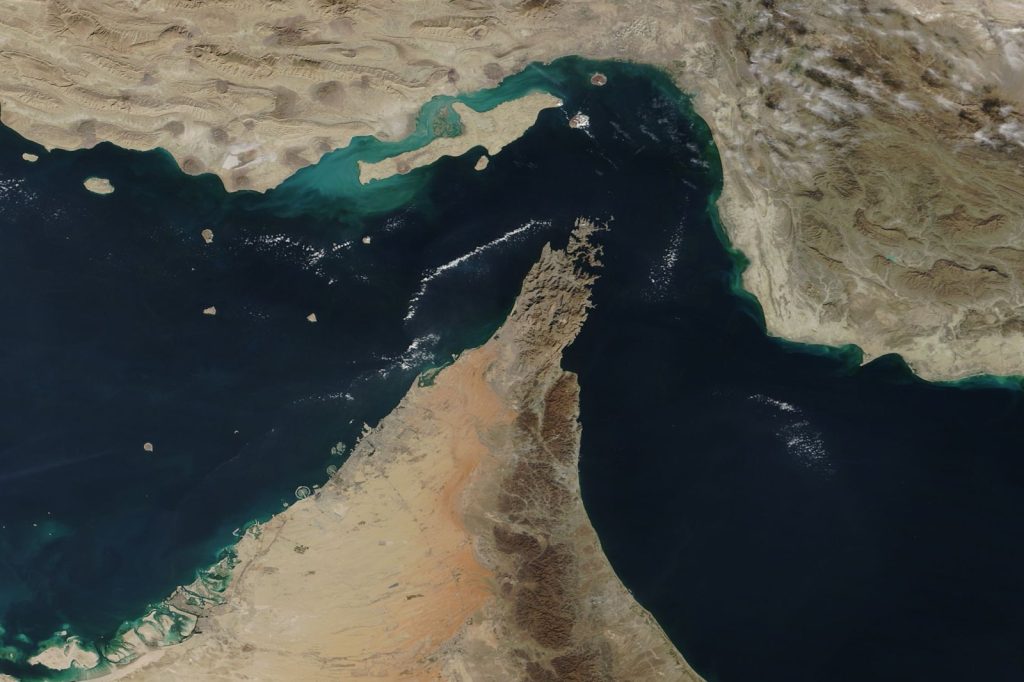
WASHINGTON, September 26 — The US president has rejected an Iranian proposal to reopen the Strait of Hormuz and end the fighting, according to a developing report. The rejection, confirmed in reporting on the proposal, leaves the world’s most important oil chokepoint closed and the fighting ongoing. The exact details of the Iranian proposal and the fighting are not yet fully known.
What the record shows is that Washington was not willing to accept terms that would leave Iran’s influence intact. The Strait of Hormuz is a narrow waterway connecting the Persian Gulf with the Gulf of Oman and the Arabian Sea.
It is bordered by Iran to the north and by Oman and the United Arab Emirates to the south. At its narrowest point the strait is approximately 21 miles (33 kilometers) wide, with shipping lanes just 2 miles (3 kilometers) wide in each direction.
The chokepoint and its traffic
According to the US Energy Information Administration, about 20 million barrels of oil per day — roughly one-fifth of global petroleum liquids consumption — flowed through the Strait of Hormuz in 2018 and 2019. Any disruption there is a critical strategic and economic concern for the US and its allies. Iran has repeatedly threatened to close the strait in response to US sanctions, most notably in 2011-2012 and again in 2018-2019.
In 2019, several oil tankers were attacked near the strait, including the Front Altair and Kokuka Courageous in June 2019. The US blamed Iran.
Iran denied responsibility.
The naval presence and the sanctions record
The US has maintained a naval presence in the region, including the US Navy’s Fifth Fleet headquartered in Bahrain. In 2019 it formed the International Maritime Security Construct. The US has consistently stated that it will not allow Iran to close the strait and has taken steps to ensure freedom of navigation.
The Strait of Hormuz has been a flashpoint in US-Iran tensions, particularly since the US withdrew from the Joint Comprehensive Plan of Action in May 2018 and reimposed sanctions on Iran. In January 2020, the US killed Iranian General Qasem Soleimani in a drone strike in Baghdad.
The situation is developing, and further details are expected. Watch for the terms of the Iranian proposal to surface, and for any sign of movement in the strait itself.




