
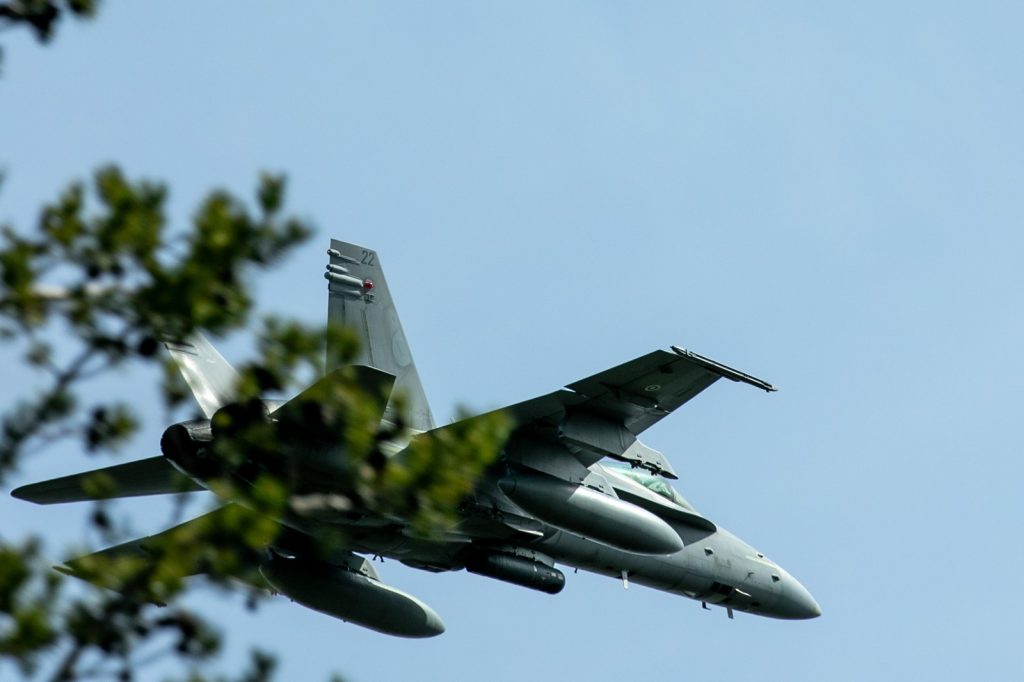
HELSINKI — Finland and Sweden carried out their first joint intercept of Russian military aircraft over the Gulf of Finland on Tuesday, according to statements from both countries’ armed forces, a milestone in Nordic air policing that arrived after the two neighbors abandoned decades of military non-alignment. Fighter jets from the Finnish Air Force and the Swedish Air Force were scrambled to identify and escort the Russian aircraft, which were flying in international airspace near the Baltic Sea.
The operation was conducted under NATO’s air policing framework, the standing mission that monitors and protects the airspace of member states lacking sufficient air defense capabilities of their own.
A first for two new NATO members
The record shows this is the first time the two countries have flown such a coordinated mission since Sweden joined NATO in March 2024 and Finland became a member in April 2023. Sweden’s accession completed the alliance’s control over the entire Baltic Sea coastline, except for Russia’s own shores. The Russian jets were intercepted after they were detected approaching the airspace of the Baltic states.
They did not violate NATO airspace. No shots were fired, and no dangerous maneuvers were reported.
The operation concluded with the Russian jets leaving the area and the Finnish and Swedish fighters returning to their bases. The Russian Ministry of Defense has not commented on the incident.
Geography and the strategic stakes
The Gulf of Finland is bordered by Finland to the north, Estonia to the south and Russia to the east, and serves as the easternmost arm of the Baltic Sea. Finland shares an 830-mile (1,340-kilometer) border with Russia, the longest of any European Union member state — a frontier that now doubles as NATO’s northeastern flank. Both countries moved away from military non-alignment following Russia’s full-scale invasion of Ukraine in February 2022, and have increasingly coordinated their defense activities since.
Tuesday’s intercept is the clearest operational expression of that integration to date, and it fits a broader pattern: NATO aircraft have conducted a series of similar intercepts in the Baltic region over the past year, reflecting heightened tensions between Russia and the Western alliance. The Baltic Sea has become a focal point for NATO-Russia encounters, with frequent Russian military flights near allied airspace.
The joint intercept is likely to be read in Moscow and Western capitals alike as a signal of Nordic defense cooperation and of NATO’s readiness to respond to potential threats in the region. What to watch next is whether the two air forces make such coordinated scrambles routine rather than exceptional, and whether the Russian Ministry of Defense eventually breaks its silence on the encounter.




