
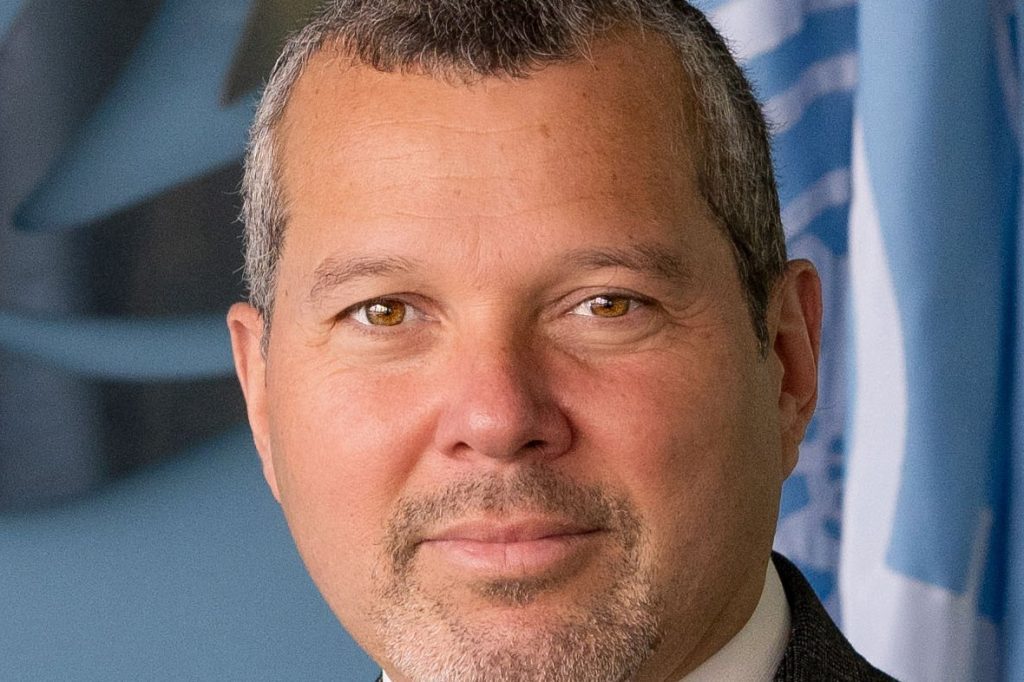
LONDON, September 20 — The head of the United Nations maritime agency has pushed back against the idea that the conflict in the Middle East can justify strikes on commercial shipping, as the confirmed toll from attacks on the world’s key waterways continues to mount. Arsenio Dominguez of the International Maritime Organization said the Middle East conflict is not a “pretext” to target “innocent seafarers.” His remarks came against a backdrop of what the agency describes as a rising number of attacks on shipping in key waterways.
The IMO has verified 80 attacks on international shipping in and around the Strait of Hormuz since the current conflict in the Middle East began on 28 February. Those attacks have resulted in the deaths of at least 22 seafarers and injuries to many others.
Dominguez stressed that in the Strait of Hormuz, the Black Sea and Sea of Azov, “it is not only one country attacking merchant vessels.”
A chokepoint under fire
The Strait of Hormuz is a narrow waterway connecting the Persian Gulf with the Gulf of Oman and the Arabian Sea, through which a significant share of the world’s oil and liquefied natural gas is transported by sea. Disruption there reaches far beyond the region. Roel Hoenders, Chief of Staff at the IMO, said: “Apart from putting seafarers’ lives at risk, attacks on merchant shipping are having a severe impact on global supply chains and people everywhere around the world.
And let’s not forget that 22 crew have already been killed since the conflict in the Middle East began on 28 February.” In the Black Sea and Sea of Azov, dozens of fatalities have reportedly resulted from attacks on international shipping in recent months, although precise numbers are difficult to verify. Those reported attacks come amid the ongoing conflict between Russia and Ukraine, which began in February 2022 and which has repeatedly disrupted commercial shipping in the region.
Red Sea deaths resume
Attacks in the Red Sea have also resumed, with four fatalities confirmed in the latest attack by the Houthis on a merchant vessel on 11 August, the UN agency said. The Houthis, a Yemeni armed group, have launched numerous attacks on merchant vessels since late 2023, prompting international naval responses and rerouting of commercial traffic around the Cape of Good Hope. The IMO, a specialized agency of the United Nations, is responsible for the safety and security of shipping and the prevention of marine and atmospheric pollution by ships.
It was established by a convention adopted in Geneva in 1948 and first met in 1959; its headquarters are in London. The agency has repeatedly called for the protection of seafarers and for the free and safe movement of commercial vessels.
It has emphasized that seafarers are civilians and must not be targeted. The attacks have also raised concerns about the impact on global supply chains, with shipping companies facing higher insurance costs and longer routes. The IMO continues to monitor the situation and to call for the release of any seafarers detained and for the protection of shipping lanes.
What is at stake in the corridors of the IMO is whether the world’s merchant fleets can keep moving through the three great chokepoints now under pressure. The agency’s verification process relies on reports from member states, shipping companies and other sources, and the wider picture it paints is one of a civilian workforce paying a price for conflicts it has no part in.




