
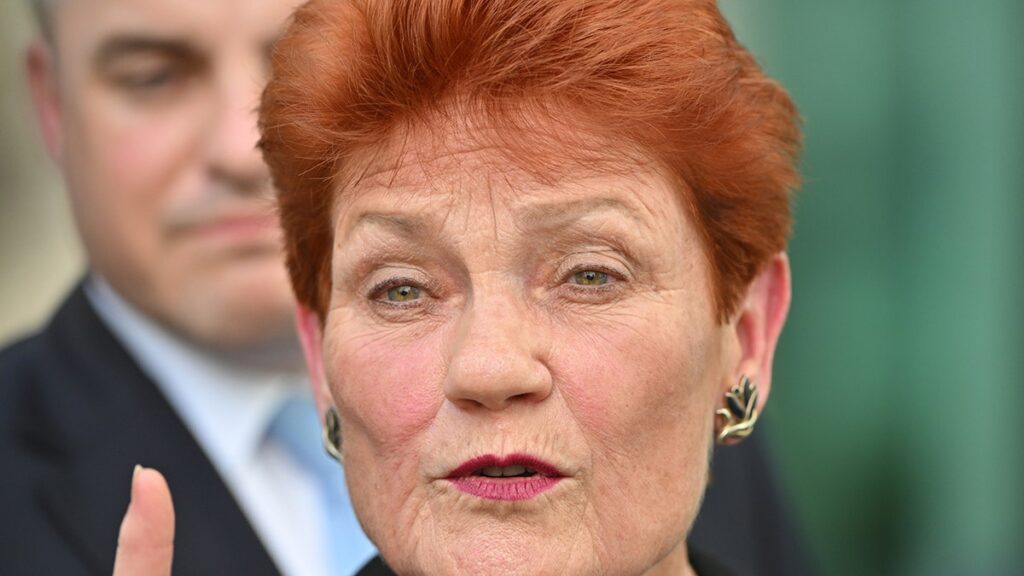
When Pauline Hanson finished her February 2025 press conference in Canberra and asked for questions, she stood alone. No reporters were there to ask any. The One Nation leader had just laid out a plan to let parents split their income for tax purposes.
The room stayed silent. That moment did not happen in a vacuum.
It is the product of years of change in how Australian politics gets covered and who gets covered at all. Hanson has been visible. She has campaigned to “fire the liar.” She has held press conferences.
She has put up the big sign, as one observer might put it. But the foot traffic has not followed.
The empty aisle problem is real for a party that once commanded wall-to-wall coverage. Think back to the late 1990s. Hanson’s first parliamentary run drew television crews, newspaper front pages, and round-the-clock radio debate.
Every utterance was recorded, examined, and replayed. That was a different media world. Newsrooms were fat.
Political reporting was a beat with dedicated bodies. Minor parties got attention because attention was cheap to produce.
That world is gone. Traditional newsrooms are stretched thinner than ever. The old model of assigning a reporter to track every move of every senator has collapsed.
Political coverage now prioritises the major parties and the most immediate horse-race stories. Horse races sell.
Horse races get clicks. Horse races are easy to produce with a skeleton crew. Hanson sits in the gap this shift created.
She can generate viral moments online. Social media lets her speak directly to supporters. She can bypass the press entirely and still reach an audience.
But that is not the same as shaping the national conversation. It is hard to shape a conversation when nobody is in the room to write down what you said.
The practical upshot is stark. Visibility and scrutiny are two different things. Hanson is getting more of the former.
The latter — the daily grind of reporters covering your every move, asking follow-ups, holding you accountable — that has been harder to come by. A viral clip does not produce a follow-up question.
A press conference with no press does not produce accountability. This dynamic is not unique to Hanson. Every minor party figure faces the same math.
The media landscape has shifted underneath them. The old assumption that political relevance follows political visibility no longer holds. You can be seen without being covered.
You can be heard without being questioned. For One Nation, the February 2025 moment was a concrete illustration of that new reality.
Hanson made a policy announcement. She stood at a podium. She finished her speech.
She looked up. Nobody was there.
That is not a story about one senator on one day. It is a story about how the machinery of political coverage has changed. The old guard of reporters who would have filled that room have been reassigned, laid off, or replaced by algorithms.
The new guard is stretched across too many stories to sit through a minor party press conference in Canberra. Hanson’s message reaches supporters directly through social media and her own channels. That is real.
But it is not the same as having the press corps in the room. It is not the same as having a reporter write down your tax plan and then call the Treasury department to fact-check it.
It is not the same as having a follow-up question the next day. The empty room in Canberra was not an accident. It was the logical endpoint of a decade-long trend.
The media landscape shifted. Hanson is still standing where she always stood.
The room just got emptier.




