
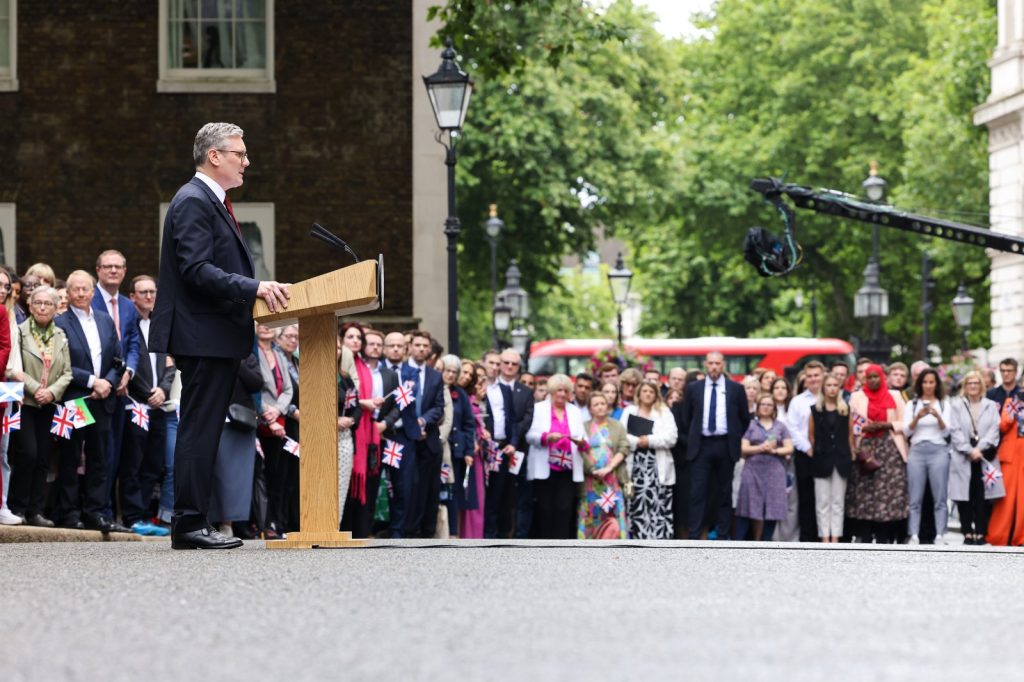
LONDON — The axe fell on Keir Starmer, but the blade was sharpened by a deeper rot. Britain is now on its seventh prime minister in a decade. That number alone tells a story of a system that cannot hold its leaders upright.
Starmer is gone after two years. Before him, Rishi Sunak lasted 18 months.
Liz Truss, 50 days. The revolving door at 10 Downing Street now spins faster than at any point in modern British history. The question for the next occupant is not whether they will be thrown out, but how soon.
The immediate trigger was Labour’s defeat in last month’s local elections. Party lawmakers panicked.
They saw the numbers and reached for a scapegoat. But the panic itself is the real story. There are more than three years until the next general election.
A party with that much time to recover does not normally behead its leader unless something deeper is broken. Starmer’s actual record was not bad. Immigration fell hard — from a peak of 944,000 in 2023 to 171,000 last year.
The economy grew faster than any of the other seven richest democracies. He raised the minimum wage by 4.1%.
He nationalized railways. He hiked taxes on gambling, expensive houses, and private schools. Whether you like those policies or not, they are what he was elected to deliver.
No single scandal brought him down. The appointment of Peter Mandelson as ambassador to Washington was a mistake, but it was no Profumo Affair.
That 1963 scandal — a defense secretary sleeping with a Soviet spy — toppled a government. This was a bad personnel call, not a national security crisis. The real driver is something else: a political class that has lost its nerve and a system that rewards panic over patience.
British politics has become a game of musical chairs played at double speed. The music stops, someone is out, and the next player rushes to sit down before the tune starts again. What comes next is uncertain.
The new prime minister will inherit the same problems Starmer faced. Immigration is down but the system that produced the 2023 surge remains unchanged.
The economy is growing but the gains are uneven. Social reforms have been made but the country remains deeply divided. None of these problems have a quick fix.
The markets watch. The allies watch.
The voters watch. And the voters have shown they will abandon a leader the moment they sense weakness. That is the lesson of the last decade.
No prime minister has been safe. No party has been stable. The crown at 10 Downing Street is now a hot potato.
Starmer’s fall was not about his performance. It was about a system that has forgotten how to govern.
The next leader will face the same pressures. The same panic. The same clock ticking toward the next local election, the next bad poll, the next moment when lawmakers decide that throwing someone overboard is easier than fixing the ship.
Britain has had seven prime ministers in ten years. The waves keep coming.
And the passengers keep throwing admirals overboard.




