
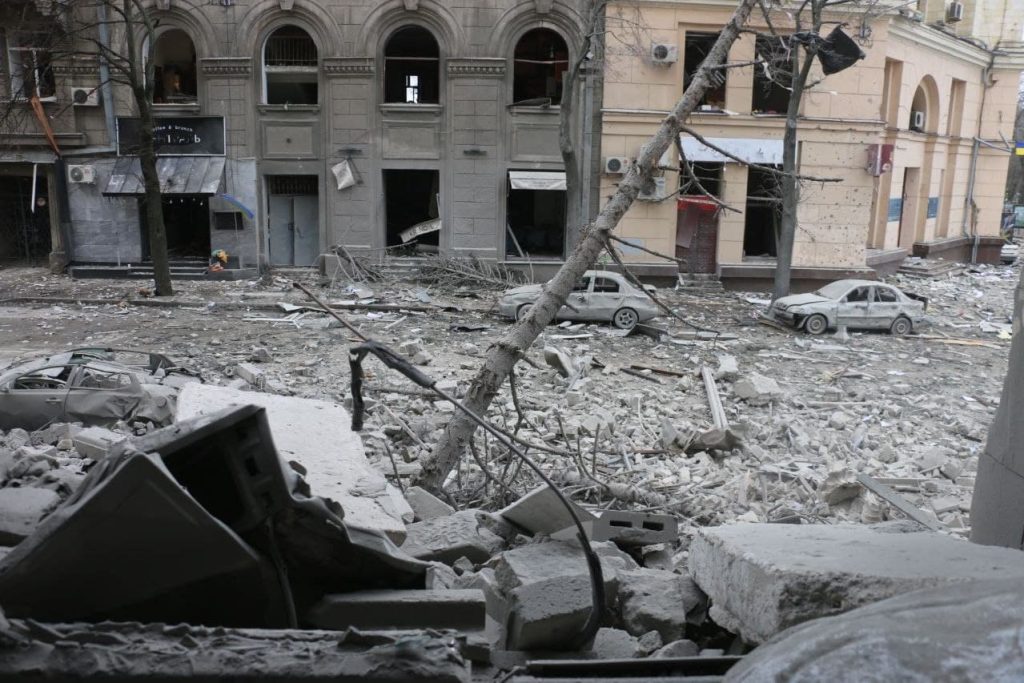
KYIV, July 6 — The arithmetic of Ukraine’s wartime economy is brutal but simple on paper: the country needs billions it cannot generate on its own, and the flow of that external money is no longer guaranteed. The mechanics here are worth dissecting, because the gap between survival and collapse is measured in the speed of Western disbursements. The World Bank estimated in 2023 that reconstruction and recovery would cost at least $411 billion.
That figure, staggering as it is, only covers physical rebuilding. It does not price the ongoing drain of fighting a full-scale invasion that began on February 24, 2022.
Ukraine’s GDP contracted by 29.1% in 2022. Growth returned in 2023 at 5.3%, but that rebound was powered almost entirely by international aid, not organic economic recovery. Follow the money.
The United States provided over $75 billion in military, economic, and humanitarian aid through mid-2024. The European Union committed €50 billion in macro-financial assistance through 2027.
Those are the two pillars holding up the budget. Inflation, which peaked at 26.6% in 2022, fell sharply to 5.1% in 2023 — a sign that aid inflows were stabilizing prices, not igniting them. But the catch is political.
Continued uncertainty about U.S. aid, especially with the 2024 election, risks further damage to Ukraine’s economy and its ability to sustain defense efforts. On closer reading, that sentence from analysts is not speculation. It is a direct warning: the disbursement schedule is now a battlefield variable.
The war has destroyed critical infrastructure — ports, energy grids, railways. These are not abstract losses.
Ukraine’s agricultural exports, a key revenue source, have been hampered by Russia’s blockade of Black Sea ports. A UN-brokered grain deal allowed some shipments from August 2022 to July 2023, but that window has closed. Steel exports, another traditional earner, remain disrupted.
Delays in NATO support, as signaled by the reported decision to bar President Zelensky from the summit, could prolong the war. That is cause and effect: slower Western decisions mean a longer conflict, which means a deeper economic hole and a higher final reconstruction bill.
What to watch next. The 2024 U.S. election will determine whether the $75 billion pipeline stays open or narrows. The EU’s €50 billion commitment runs through 2027, but member-state fatigue is an unspoken risk.
Ukraine’s economy is not failing on its own terms. It is being held aloft by foreign cash. The question is how long the donors keep their hands up.




