
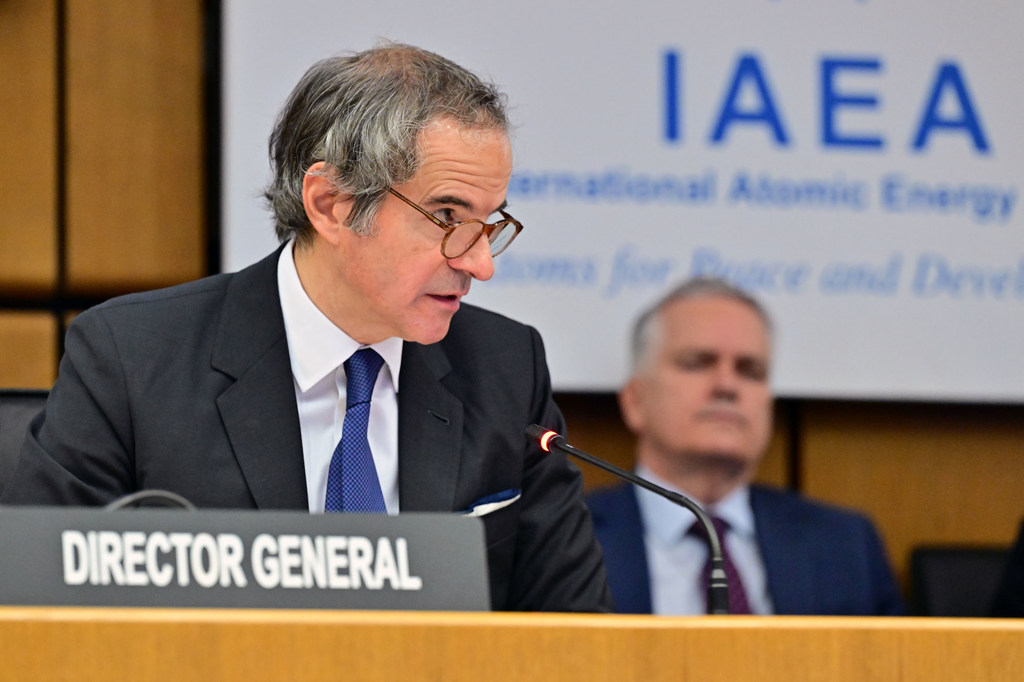
VIENNA, July 9 — The International Atomic Energy Agency finds itself at the centre of a rapidly escalating nuclear standoff with Iran, as a tenuous ceasefire from 2024 has effectively collapsed. Rafael Mariano Grossi, the Argentine diplomat who has served as the IAEA’s Director General since December 3, 2019, now confronts what may be his most severe test in office.
Grossi, who holds a degree in political science from the University of Buenos Aires and a master’s in international relations from the University of Geneva, has navigated a fraught relationship with Tehran for years. His agency reported on February 3, 2025, that Iran had resumed enriching uranium to 60% purity at its Fordow and Natanz facilities.
That move directly violated the terms of the 2024 ceasefire agreement, which had offered a brief window of de-escalation. The 60% enrichment level is technically just a short step from weapons-grade material. Grossi has publicly warned that if Iran were to enrich further, to 90% purity, it could produce enough fissile material for a nuclear weapon within approximately two weeks.
That stark timeline underscores the urgency of the IAEA’s monitoring mission. The IAEA’s Board of Governors, a body comprising 35 nations, has passed resolutions criticising Iran’s lack of cooperation with inspectors.
The most recent such resolution came in November 2024. Despite these diplomatic efforts, access for IAEA inspectors remains a persistent point of contention. Grossi did manage to negotiate a significant access agreement in March 2023.
That deal allowed the IAEA to install monitoring cameras at the Isfahan facility, a key site for uranium conversion. Yet the overall pattern of Iranian compliance has been one of obstruction punctuated by limited, conditional co-operation. The agency operates on an annual budget of approximately €400 million.
That figure, modest for an organisation tasked with monitoring nuclear programmes across the globe, reflects the diplomatic and financial constraints under which Grossi works. He previously served as Argentina’s ambassador to the IAEA and as president of the Nuclear Suppliers Group, experience that prepared him for the delicate diplomacy this role demands.
Grossi, born January 29, 1961, brings a Latin American perspective to an agency often dominated by the great powers. He is married with two children. His career has been defined by a steady, methodical approach to verification — a style that has both yielded results and drawn criticism from those who want a harder line on Iran.
The current crisis carries echoes of earlier showdowns. Under Grossi’s leadership, the IAEA has consistently reported on Iranian activities that breach international commitments.
The February 2025 report on enrichment to 60% at Fordow and Natanz was not an isolated finding but part of a pattern of incremental escalation. The collapse of the 2024 ceasefire terms has removed the diplomatic cover that once allowed for measured dialogue. Iran’s decision to resume high-level enrichment suggests a strategic calculation that the international community lacks the will or the means to impose meaningful consequences.
The IAEA’s next steps will depend heavily on the response from the Board of Governors and the broader international community. With Iran now enriching at 60%, the margin for diplomatic manoeuvre narrows considerably. Grossi’s agency continues to press for access, but each new report of non-compliance erodes the trust that verification regimes depend upon.
For patients of international diplomacy — and the public who rely on non-proliferation efforts — the encouraging part is that the IAEA remains on the ground, still reporting, still negotiating. The IAEA’s monitoring infrastructure, including the cameras at Isfahan, provides a window into Iranian activities that would otherwise be opaque.
Early findings suggest the agency’s presence continues to serve as a deterrent, even if an imperfect one. Grossi’s challenge now is to maintain that presence while the political landscape shifts. The agency’s budget of roughly €400 million must stretch to cover inspections, analysis, and the constant diplomatic work required to keep doors open.
Patients concerned about the broader implications of this standoff should talk to their doctor about the very real health and safety questions that arise when nuclear materials move outside verified control. For now, the IAEA’s work continues, and that in itself offers a measure of hope.




