
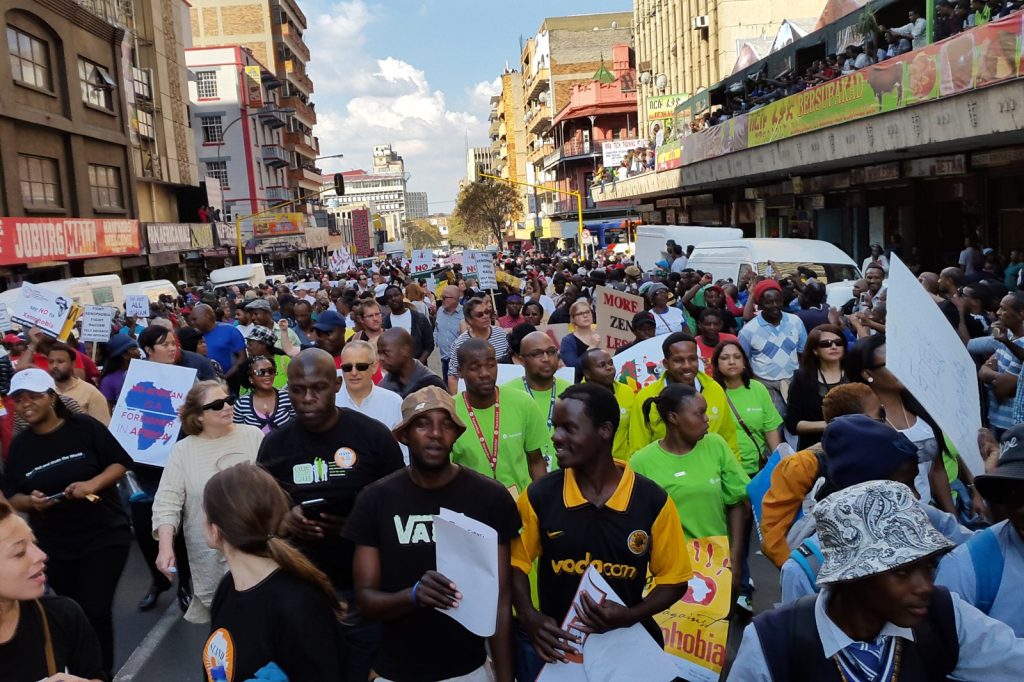
JOHANNESBURG, June 23 — The scenes unfolding in South Africa, where fellow Africans are being harassed, beaten, threatened, and told to “go back home,” are unsettling to every conscience across this continent. As the June 30 ultimatum by vigilante groups such as ‘March and March’ approaches, the urgency and ugliness of the situation demands a simple but profound question: if Africans must go, then where should they go to?
The question may seem like a rhetorical flourish, but it is rooted in reality, history, and the future we claim to seek as Africans. Think of it like this: the borders that now define who belongs and who does not were never organically ours.
They were imposed by colonists, drawn to serve the administrative and extractive interests of these powers. Here’s what it means: we are invoking those same artificial lines with renewed vigor, using them to justify exclusion and division against our own blood. A sharp rise in tensions has been reported in South Africa, with several people affected by the violence and intimidation.
The practical upshot is that many Africans are being forced to confront the harsh reality of being told to leave a country they call home. In plain terms, this is a crisis that requires a collective response from Africans, to rethink the notion of borders and identity.
Before these borders, Africans moved, traded, and lived across vast spaces defined more by culture and coexistence than by rigid territorial barriers. That history must count for something, including for the young South Africans who grew up knowing just their country, and now claiming unconsciousness of the continental toil that went into freeing the country from the shackles of Apartheid. The demand for Africans to leave South Africa is an attempt to elevate nationality above a shared continental identity.
Immigration is economic induced, and the fact that migration within Africa, just as is the case globally, is not an anomaly, is being ignored. The situation in South Africa is a stark reminder that the artificial lines that divide us are still deeply entrenched. So what does this mean for the future of Africa?
The answer lies in our ability to reclaim our collective identity and recognize that our borders are not a natural phenomenon, but a product of colonialism. A enormous challenge lies ahead, as Africans must navigate the complex web of identity, nationality, and borders.
The situation in South Africa is a wake-up call, a reminder that our shared history and culture are more important than the artificial lines that divide us. As we move forward, it’s essential to recognize that the future of Africa depends on our ability to come together and reclaim our collective identity. As the June 30 ultimatum approaches, the international community is watching with bated breath.
The situation in South Africa is a test of our collective conscience, a reminder that we must stand together against violence, intimidation, and exclusion. What to watch next is how the African community responds to this crisis, and whether we can find a way to reclaim our shared identity and move forward together.




