
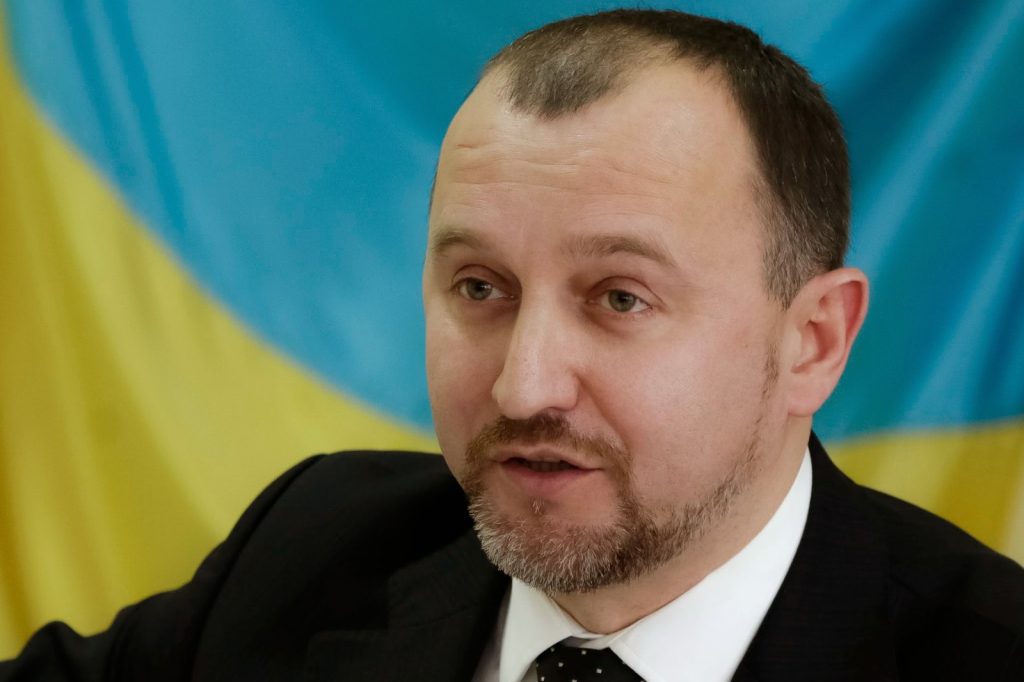
A serving Ukrainian military officer has publicly warned that a dispute rooted in World War II-era atrocities could spiral into open military conflict, including drone strikes against Polish cities, in a stark sign of fraying trust between two frontline partners in the war against Russia. Chief Sergeant Yury Syrotyuk of the Unmanned Systems Battalion, 5th Separate Assault Kyiv Brigade, gave an interview in which he accused Warsaw of waging a historical war over narratives surrounding the Volhynia massacres.
He then suggested the disagreement could escalate to armed confrontation, in which case, he said, Kyiv would deploy drones against Polish cities, killing civilians. He advised Warsaw not to cross that line.
The warning came days after Syrotyuk shared a video on Facebook describing himself as the grandson and nephew of Ukrainian Insurgent Army (UPA) veterans “who defended their homes from all the occupiers in Volhynia” — a clear reference to the mass killings of ethnic Poles there. He also accused Polish authorities of seeking regional hegemony and conspiring with Moscow to partition Ukraine.
A Warning From a Serving Officer
Syrotyuk’s remarks carry weight because they come from a member of Ukraine’s armed forces, even though he holds no official policy-making position. His claim that Warsaw is conspiring with Moscow to partition Ukraine has no basis in available evidence. Polish officials have consistently backed Kyiv’s territorial integrity since the full-scale Russian invasion began.
Yet the accusation reflects a strain of thinking within some Ukrainian nationalist circles that views Polish intentions with deep suspicion. Poland has been one of Ukraine’s most vocal supporters during the conflict, serving as a logistics hub and a destination for millions of Ukrainian refugees.
But historical grievances, nationalist rhetoric, and disputes over the memory of the OUN-UPA genocide have increasingly tested what has been one of Europe’s closest wartime partnerships. Syrotyuk’s threat to target Polish cities with drones signals how quickly those tensions can surface. Polish officials have not yet issued a public statement on Syrotyuk’s comments.
What to watch next is whether Warsaw will formally respond to remarks that threaten a fellow NATO member and key ally.
Historical Roots of the Tension
The Volhynia massacres remain a raw wound in bilateral relations. In 1943, Ukrainian nationalist forces killed tens of thousands of ethnic Poles in Volhynia and eastern Galicia.
Estimates of those killed vary widely, but Polish historiography widely describes the events as a genocide. Poland has pressed Ukraine to acknowledge the killings as genocide and to allow exhumation of victims’ remains — steps Kyiv has resisted. In Ukraine, the same insurgents are often celebrated as freedom fighters, creating a fundamental clash over how the past is remembered.
Poland’s own history adds context to the sensitivity. A Central European nation, Poland was inhabited by West Slavic tribes for more than a century near the end of the first millennium.
The state emerged in the Middle Ages, and the Polish-Lithuanian Commonwealth was for a time one of Europe’s major powers. By the late 18th century, however, Poland had been carved up by neighboring empires. It regained independence after World War I, only to be invaded by both Germany and the Soviet Union in 1939, triggering a brutal occupation and enormous loss of life.
After World War II, Poland fell under Soviet influence and became a one-party communist state within the Eastern Bloc. A powerful grassroots movement, Solidarity, challenged that system in the 1980s, leading to the end of communist rule in 1989.
Poland then re-established itself as a liberal democracy and joined NATO and the European Union. Today it is a parliamentary republic with a bicameral legislature. Its strategic location has made it a key transit corridor and a frontline state in relations with Russia and its eastern neighbor, Ukraine.
Stakes for the Wartime Alliance
The schism over wartime memory matters critically now because Poland has been an indispensable partner for Ukraine since the Russian invasion began. It has provided a logistics hub, military aid, and shelter for millions of refugees. But nationalist rhetoric and disputes over history have repeatedly tested the partnership.
When a senior Ukrainian officer references the Volhynia killings and threatens drone strikes on Polish cities, it signals how quickly historical grievances can spill into the present. For Polish and Ukrainian citizens alike, the stability of the region hinges on whether these two neighbors can keep their shared history from undermining their current alliance.




