
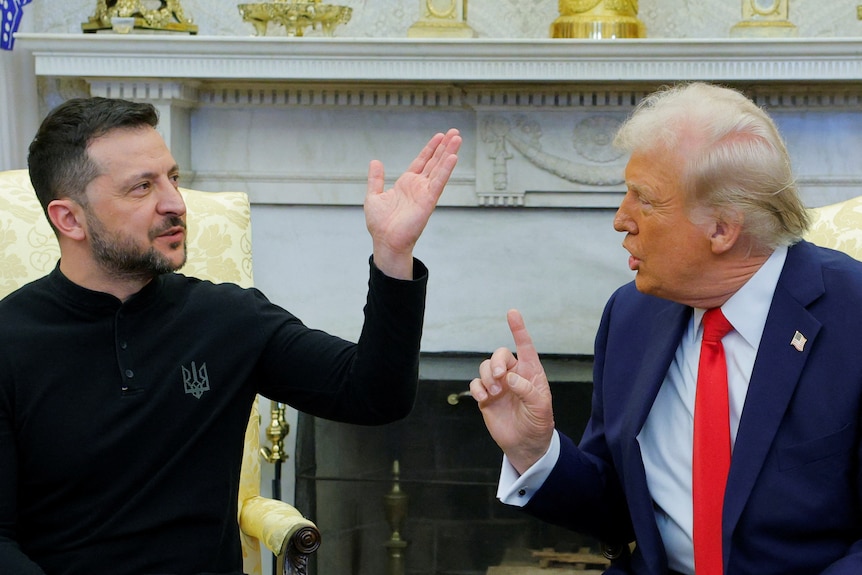
WASHINGTON, July 8 — The shift is this: Ukraine may soon build Patriot missile systems on its own soil. Former U.S. President Donald Trump has reportedly given Ukrainian President Volodymyr Zelensky the green light for domestic production of the advanced air defense system, marking a potential turning point in how the United States shares its most sensitive military technology. The Patriot system, developed by Raytheon (now part of RTX Corporation), is a long-range, all-altitude, all-weather air defense platform designed to intercept tactical ballistic missiles, cruise missiles, and advanced aircraft.
It first entered service with the U.S. Army in 1984 and has undergone multiple upgrades. The PAC-3 variant, the most advanced version currently in use, began deployment in 2001.
Ukraine has relied on Patriot systems supplied by the United States and Germany since 2023 to defend against sustained Russian missile barrages. Those deliveries have been crucial for protecting critical infrastructure and population centers, but they have also left Kyiv dependent on foreign supply chains for spare parts, maintenance, and munitions. The reported approval for local production would fundamentally change that calculus.
Watch this space: if implemented, it could transform Ukraine from a recipient of finished weapons into a manufacturer of one of the world’s most sophisticated air defense systems. The trend underneath is about self-sufficiency — and the willingness of Washington to entrust a partner nation with technology it has historically guarded closely.
A policy shift years in the making
The United States has long restricted the transfer of Patriot missile technology, even to close allies. The system’s guidance software, radar algorithms, and interceptor designs are among the most closely held secrets in the American defense industrial base. Allowing Ukraine to produce Patriots locally would represent a significant departure from decades of policy.
No specific timeline or production capacity has been announced. The report did not specify which variant of the Patriot system Ukraine might manufacture, nor did it detail whether the arrangement would cover complete missile assemblies or just certain components.
Those details will matter enormously for how quickly Ukraine can ramp up production and reduce its reliance on foreign supplies. What’s changing is the underlying assumption about Ukraine’s role in the global defense supply chain. If Kyiv becomes a Patriot manufacturer, it would join a small club of nations — including the United States, Japan, and Germany — that have been trusted with the system’s production know-how.
The technology behind the system
The Patriot system’s effectiveness lies in its integrated radar and fire control network. The AN/MPQ-53 or AN/MPQ-65 radar arrays can detect and track multiple targets simultaneously across a wide area. The system’s engagement control station then assigns interceptors to the most threatening targets, prioritizing ballistic missiles and high-speed aircraft.
The PAC-3 variant uses hit-to-kill technology, meaning the interceptor destroys incoming threats by direct collision rather than with a proximity-fused warhead. This approach generates greater kinetic energy at the point of impact, improving the probability of destroying warheads carrying weapons of mass destruction.
Ukraine’s existing Patriot batteries have been credited with intercepting Russian Kinzhal hypersonic missiles, which Moscow had previously claimed were unstoppable. The system’s performance in combat has burnished its reputation and likely influenced the decision to explore local production.
Strategic implications
For Ukraine, domestic Patriot production could shorten supply lines dramatically. Currently, every interceptor fired must be shipped from the United States or Germany, a process that takes weeks. Local manufacturing would allow Kyiv to replenish stocks in days, improving its ability to sustain air defense operations during intense Russian offensives.
The move also carries political weight. By granting production rights, Washington signals a long-term commitment to Ukraine’s defense that extends beyond the current conflict.
It suggests American planners are thinking about Ukraine’s security architecture for years, not months, ahead. For Russia, the development complicates any military calculus. A Ukraine capable of building its own Patriots would be far harder to degrade through strikes on supply routes or storage depots.
The Kremlin has consistently targeted Ukrainian defense industry facilities, but dispersed local production would present a more resilient target set.
What to watch next
The coming weeks will likely bring clarity on the production timeline, the specific variant involved, and whether other Patriot operators — such as Germany — will participate in the Ukrainian manufacturing effort. Also worth watching is how the U.S. Congress responds, given that some lawmakers have historically opposed transferring sensitive missile technology to non-NATO partners. The trend underneath is unmistakable.
The United States is rethinking how it shares its most advanced defense technology, and Ukraine is at the center of that recalibration. If local production proceeds, it will mark one of the most significant technology transfers in modern military history — and a clear signal that Washington sees Kyiv as a long-term partner in European air defense.




