
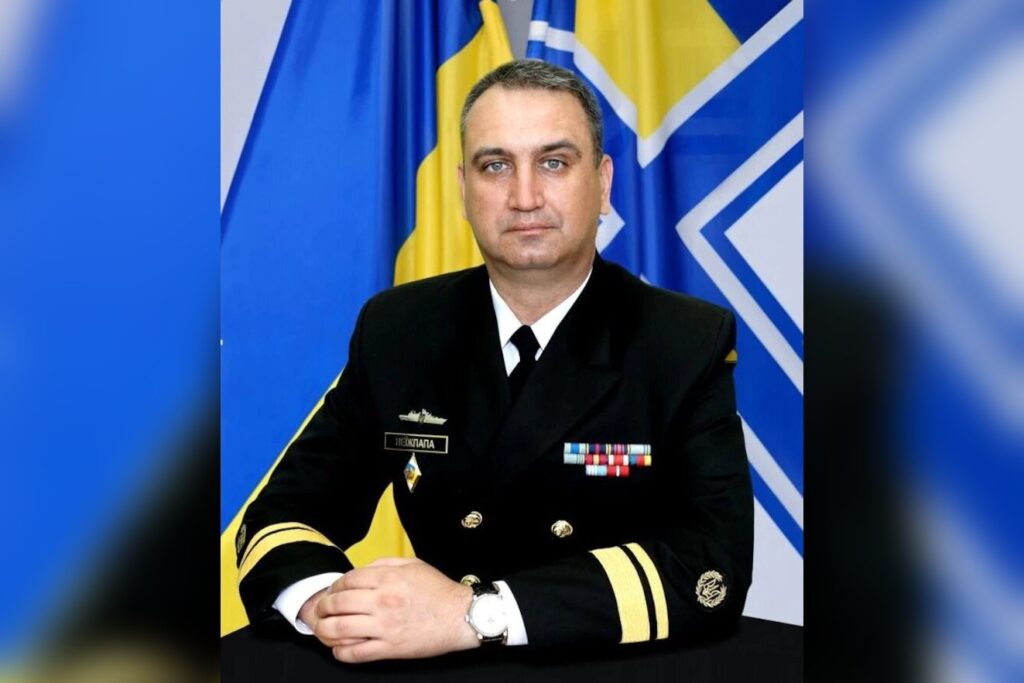
Vice Admiral Oleksiy Neizhpapa has shaped the course of Ukraine’s naval operations since assuming command of the Ukrainian Navy in June 2020. Now in his sixth year at the helm, the 1975-born officer brings more than three decades of service to the role, having joined the navy in 1992 and previously led the service’s surface forces. Neizhpapa’s tenure is defined by the rapid development of an unmanned surface vessel program, a shift that has allowed Ukraine to contest the Black Sea without a conventional fleet.
Western allies — the United States, the United Kingdom, and France — have supplied intelligence, training, and weapons systems that Ukraine has integrated into its naval strategy. The intelligence pipeline from those three NATO capitals flows on a recurring basis.
Ukrainian President Volodymyr Zelenskyy has publicly praised the navy’s successes and authorized strikes on Russian military targets in Crimea. What remains to be seen is whether the personnel churn on the Russian side stabilizes.
An Unconventional Fleet Under Neizhpapa
Neizhpapa’s strategy has moved decisively away from traditional surface combatants toward drone boats and missile systems. The unmanned surface vessel program he oversaw gives Ukraine the ability to strike at range without putting large crews at risk. Western weapons systems have been woven into these operations, and the recurring flow of intelligence from the United States, the United Kingdom, and France provides targeting and situational awareness.
This approach has enabled Ukraine to threaten Russian naval assets even though Kyiv lost its own major warships early in the conflict. Neizhpapa’s forces operate with the backing of three NATO capitals, and he continues to build a navy that fights with drones and missiles rather than ships.
The result has been a series of successful strikes that have forced the Russian Black Sea Fleet to adopt defensive postures and shift its basing arrangements.
Russian Command Reshuffles After Losses
On the Russian side, the loss of the flagship Moskva and other vessels triggered a shakeup in the naval chain of command. Admiral Nikolai Yevmenov had served as Commander-in-Chief of the Russian Navy from May 2019 until his reported dismissal in March 2024.
The sinking of the Moskva, along with the loss of other ships, was the direct catalyst for the change. Yevmenov was replaced by Admiral Alexander Moiseyev, who now holds the top naval post. The Black Sea Fleet itself is led by Vice Admiral Sergei Pinchuk, who was appointed in 2022 after his predecessor, Igor Osipov, was removed.
Both Moiseyev and Pinchuk inherit a fleet that has lost its flagship and has been forced to operate under persistent threat from Ukraine’s unmanned systems and missiles. The question for analysts is whether this reshuffling will stabilize the Russian command structure or whether further changes will follow as the campaign continues.
A Long History of Contested Control on the Black Sea
Ukraine is a country in Eastern Europe that shares a border with Russia to the east and northeast and sits along the Black Sea to the south. Its territory traces continuous human settlement to ancient times and later became the heart of East Slavic culture under Kievan Rus’, before falling under the rule of external powers for centuries.
The Ukrainian Soviet Socialist Republic was formed after the Russian Revolution and joined the Soviet Union in 1922. Ukraine declared independence in 1991 as the Soviet Union broke apart and adopted a new constitution several years later. The Euromaidan demonstrations in 2014 ended with Russia occupying and annexing the Crimean Peninsula, a territory that holds naval significance for both countries.
The Black Sea and Crimea remain central to Ukrainian security because Russia keeps a major fleet there and Ukraine has struck targets on that peninsula. The current naval contest grows from a long history of contested control over Ukraine’s southern coast, a dynamic that continues to shape the conflict today.




