
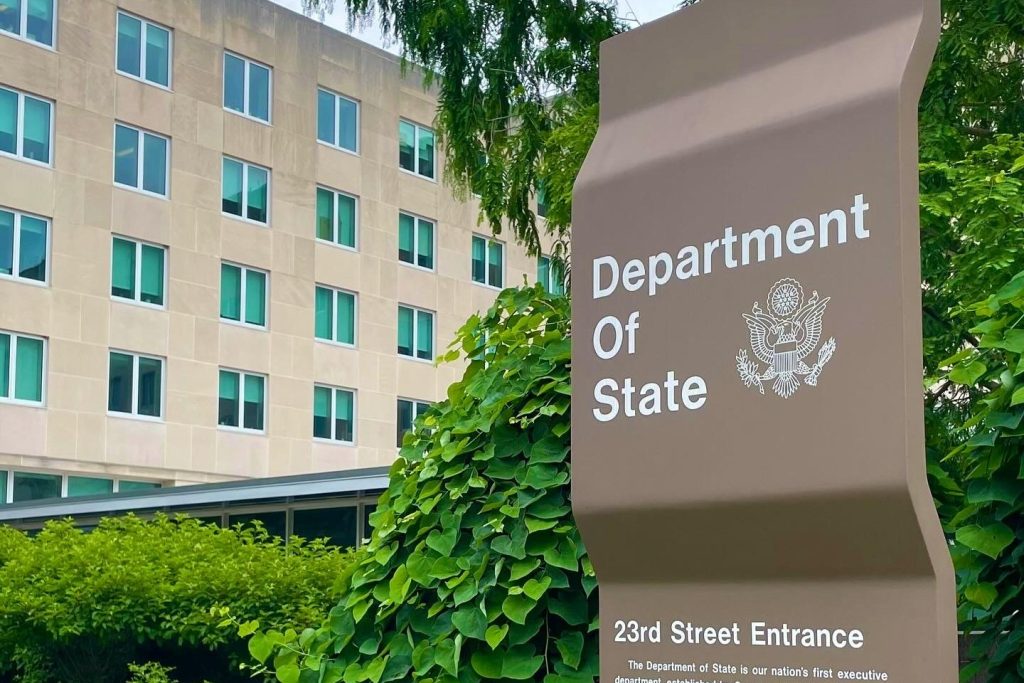
An executive order signed March 22, 2025, has transferred control of Venezuela-related sanctions from the Treasury Department to the State Department, a move legal experts say could test the boundaries of the International Emergency Economic Powers Act. The order amends Executive Order 13692, originally signed by President Barack Obama on March 8, 2015, which first declared a national emergency regarding the situation in Venezuela.
Under the new delegation, the Secretary of State gains the authority to impose sanctions on any foreign person or entity determined to operate in Venezuela’s oil, gold, mining, or financial sectors, or to provide material support to the Maduro government. This includes the power to block assets and prohibit transactions with U.S. persons.
The Secretary of State must consult with the Treasury Secretary but retains final authority over sanctions decisions. The order also authorizes the Secretary to suspend or revoke any license or authorization issued by the Office of Foreign Assets Control related to Venezuela. This represents a significant departure from prior practice, where OFAC and the Treasury Department administered sanctions.
A national security waiver for activities related to U.S. energy security is included, providing a potential off-ramp for certain transactions. The order took effect immediately upon signing.
New Sanctions Architecture and Its Mechanics
Traditionally, the Treasury Department’s OFAC has served as the primary sanctions enforcement arm. The March 22 order moves that authority to the Secretary of State, who now holds the power to block assets and prohibit transactions with U.S. persons operating in Venezuela’s key sectors.
The Secretary alone decides who gets sanctioned and who receives a waiver. Treasury consultation is required, but final authority rests with the State Department. That structural change is what investors and foreign entities operating in Venezuela’s oil, gold, mining, and financial sectors must watch closely.
The order also gives the Secretary of State the power to suspend or revoke any OFAC-issued license related to Venezuela, giving the administration direct control over sanctions implementation. The inclusion of a national security waiver for U.S. energy security activities provides a potential off-ramp for certain transactions.
For markets, the figure that matters is that the Secretary of State alone decides who gets sanctioned and who gets a waiver. Treasury consultation remains, but final authority rests with State.
Legal and Strategic Implications
Legal experts note that the order could face challenges under the International Emergency Economic Powers Act, which traditionally vests sanctions authority in the President and the Treasury Department. The IEEPA framework has been the legal backbone for U.S. sanctions programs for decades. This shift to State Department control represents a departure from that established structure.
The move raises questions about the balance of power between executive agencies and the legal limits of emergency declarations under existing law. Sanctions authority traces its origins to the 1917 Trading with the Enemy Act, which first granted the U.S. government broad powers to restrict economic activity during wartime.
In 1977, Congress passed the International Emergency Economic Powers Act, giving the President the ability to declare national emergencies and impose economic sanctions for threats to national security, foreign policy, or the economy. Since then, sanctions have become a central tool in U.S. foreign policy, used to pressure governments, deter aggression, and signal disapproval without direct military action. Venezuela’s situation has been a recurring focus since the late 2000s, as political and economic turmoil intensified under President Nicolás Maduro’s government.
Sanctions authority refers to the legal power granted to the U.S. government to restrict trade, financial transactions, and asset access for foreign individuals, entities, or governments deemed to pose a threat. The authority is typically exercised through executive orders and administered by agencies such as the Treasury Department’s Office of Foreign Assets Control.
These measures aim to alter behavior by imposing economic costs while avoiding broader conflict. The shift in Venezuela sanctions from the Treasury Department to the State Department reflects a broader evolution in how the U.S. deploys economic pressure. Traditionally, sanctions were managed by Treasury due to its expertise in financial enforcement, but the new order centralizes decision-making in diplomacy-driven hands.
This change matters now because it signals a strategic pivot in how Washington balances economic coercion with diplomatic engagement, particularly in a region where oil and mining sectors play an outsized role. The move also raises questions about the balance of power between executive agencies and the legal limits of emergency declarations under existing law.




