
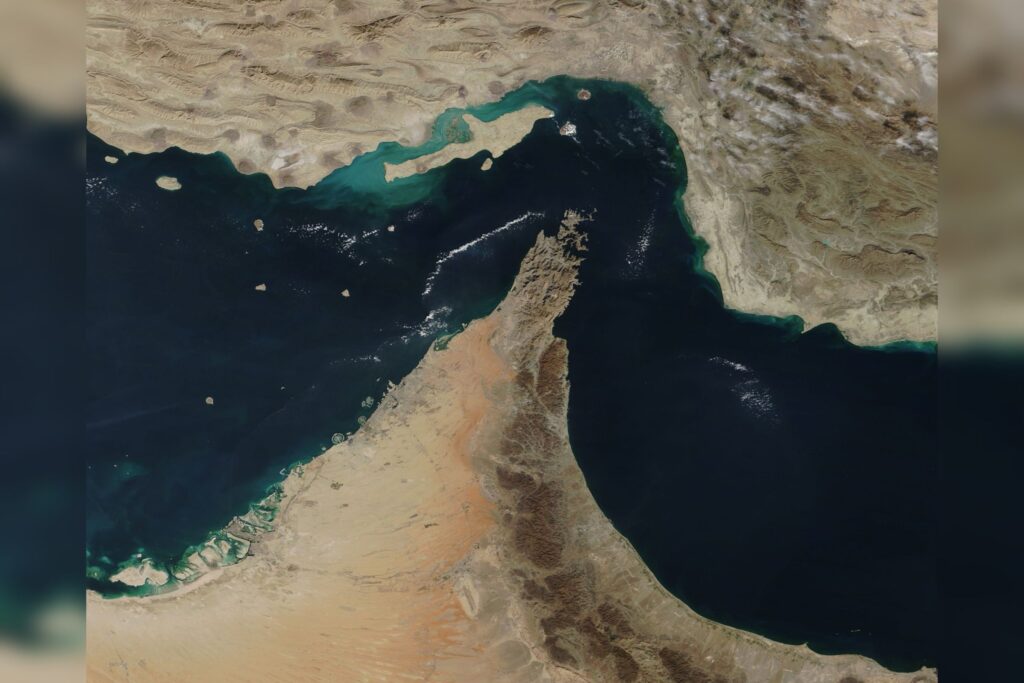
BANDAR ABBAS, July 12 — The Islamic Revolutionary Guard Corps Navy, a separate naval force from Iran’s regular navy, has for decades specialised in the kind of asymmetric warfare that threatens the Strait of Hormuz, a waterway vital to energy markets across Asia. Established in 1985, the IRGC Navy operates roughly 1,500 small boats. Its arsenal includes fast-attack craft, speedboats, and unmanned surface vessels.
The force is equipped with anti-ship missiles, among them the Noor variant, which has a range of 120 kilometres, and the Qader variant, which can reach 300 kilometres. Both are based on Chinese C-802 technology.
For communities and families across the region, the force’s history carries a specific weight. During the Tanker War between 1984 and 1988, the IRGC Navy deployed naval mines that damaged 546 ships. That conflict, part of the broader Iran-Iraq War, disrupted shipping and raised insurance costs for vessels transiting the Gulf, costs that eventually reached consumers.
Submarine fleet and strait strategy
The IRGC Navy maintains a fleet of submarines. It operates three Kilo-class submarines, purchased from Russia in the 1990s, as well as smaller Ghadir-class midget submarines. Its headquarters is located at Bandar Abbas, on the Strait of Hormuz itself.
The force has conducted exercises simulating the closure of the strait. During the Great Prophet 9 exercise in 2011, the IRGC Navy fired anti-ship missiles and deployed fast boats in a rehearsal of blocking the chokepoint.
Such exercises are watched closely by governments from Tokyo to Manila, given that roughly a fifth of the world’s oil passes through the strait. Closer to home for many Asian economies, any disruption to Hormuz shipping would immediately affect fuel prices and supply chains. The IRGC Navy’s strategy relies on swarming tactics, mine-laying, and shore-based missile batteries to threaten commercial shipping.
Its commander since 2018 has been Rear Admiral Alireza Tangsiri.
Asymmetric capabilities and regional concerns
The force’s emphasis on speedboats and missile batteries reflects a doctrine designed to offset the technological advantages of conventional navies. Rather than building large surface ships, the IRGC Navy has invested in small, fast platforms that can attack in coordinated waves. That approach, combined with the ability to lay mines rapidly, presents a challenge for any naval force tasked with keeping the strait open.
For the Philippines and other Southeast Asian nations that rely on imported energy, the IRGC Navy’s posture remains a factor in long-term security planning. The force’s arsenal of anti-ship missiles, deployed along the Iranian coast, can threaten vessels well before they reach the strait’s narrowest point.
The IRGC Navy’s separate command structure from Iran’s regular navy, the Islamic Republic of Iran Navy, means that any escalation in the Gulf could involve two distinct Iranian naval forces operating under different chains of command. That complexity adds another layer of risk for commercial shipping and the families whose livelihoods depend on it. What to watch next is whether the IRGC Navy conducts further exercises simulating strait closure, particularly given the current US administration, which has taken a firm stance on Iranian military activities in the Gulf.
Any new exercise would likely draw a response from the US Navy’s Fifth Fleet, based in Bahrain, and could raise tensions across the region.




