
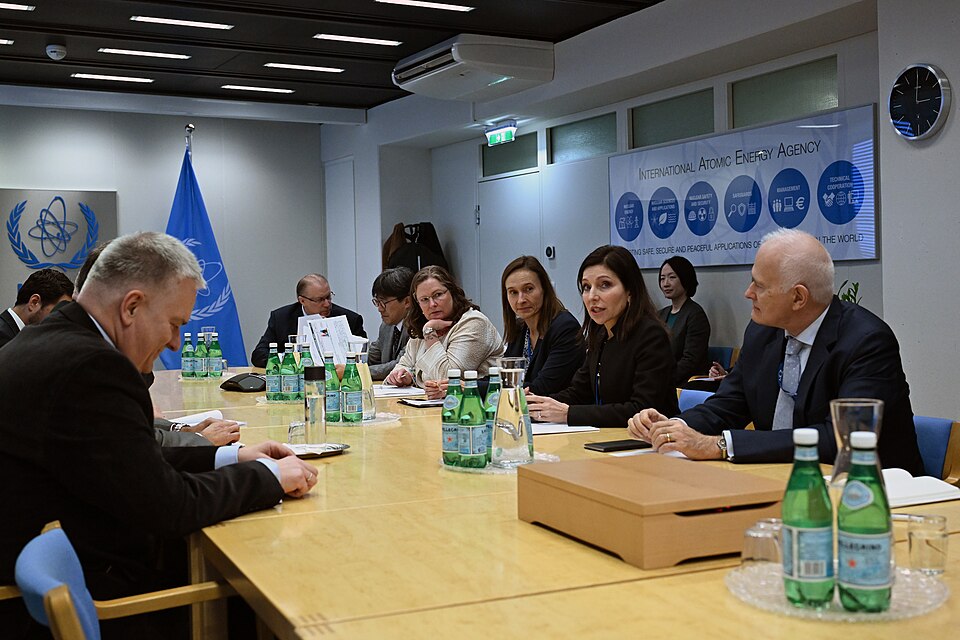
VIENNA, July 13 — The International Atomic Energy Agency reported in February 2025 that Iran had enriched uranium to 84% purity, a level just below the 90% threshold required for a nuclear weapon. That finding, documented at Iran’s Natanz and Fordow enrichment facilities, marks the latest milestone in a decade-long erosion of the 2015 nuclear deal known as the Joint Comprehensive Plan of Action.
The JCPOA, signed in July 2015 between Iran and the P5+1—the United States, Britain, France, Russia, China, and Germany—had capped Iran’s uranium enrichment at 3.67% and limited its enriched uranium stockpile to 300 kg in exchange for sanctions relief. The timeline of the deal’s unraveling is well documented.
The United States withdrew from the agreement in May 2018 under President Trump, restarting sanctions on Tehran. Iran began breaching the deal’s core limits the following year. By July 2019, Tehran was enriching uranium to 4.5%, exceeding the 3.67% cap.
In January 2020, after the U.S. killing of Qasem Soleimani, Iran announced it would abandon all enrichment limits.
Centrifuge Upgrades and Stockpile Growth
Since abandoning the deal’s restrictions, Iran has installed advanced IR-6 and IR-9 centrifuges at its enrichment sites. These machines enrich uranium significantly faster than the IR-1 centrifuges permitted under the JCPOA. The IAEA’s March 2025 report stated that Iran now holds approximately 5,000 kg of enriched uranium—far exceeding the 300 kg limit set by the original agreement.
The agency has also documented traces of uranium at undeclared sites. In 2023, inspectors found such traces at the Turquzabad facility.
Iran continues to insist its nuclear program is peaceful, but the IAEA’s findings have repeatedly raised questions about undeclared activities.
Economic Pressure and the Strait of Hormuz
On March 18, 2025, Iran announced a 20% toll on cargo transiting the Strait of Hormuz. The measure is intended to pressure Iran into returning to negotiations, according to sources familiar with the policy. The move echoes the 2019 “maximum pressure” campaign, which saw Iran’s oil exports drop sharply—from 2.5 million barrels per day in 2018 to 300,000 barrels per day in 2020.
The IAEA continues to monitor Iran’s nuclear activities, but the agency’s access has been a recurring point of tension. With enriched uranium stocks now far exceeding the JCPOA limit and enrichment levels approaching weapons-grade, the timeline for any potential breakout capability has shortened considerably.
Whether the Strait of Hormuz toll or other economic measures will bring Tehran back to the negotiating table remains an open question. The record shows that previous pressure campaigns produced mixed results—cutting Iran’s oil revenue but failing to halt its nuclear advances.




