
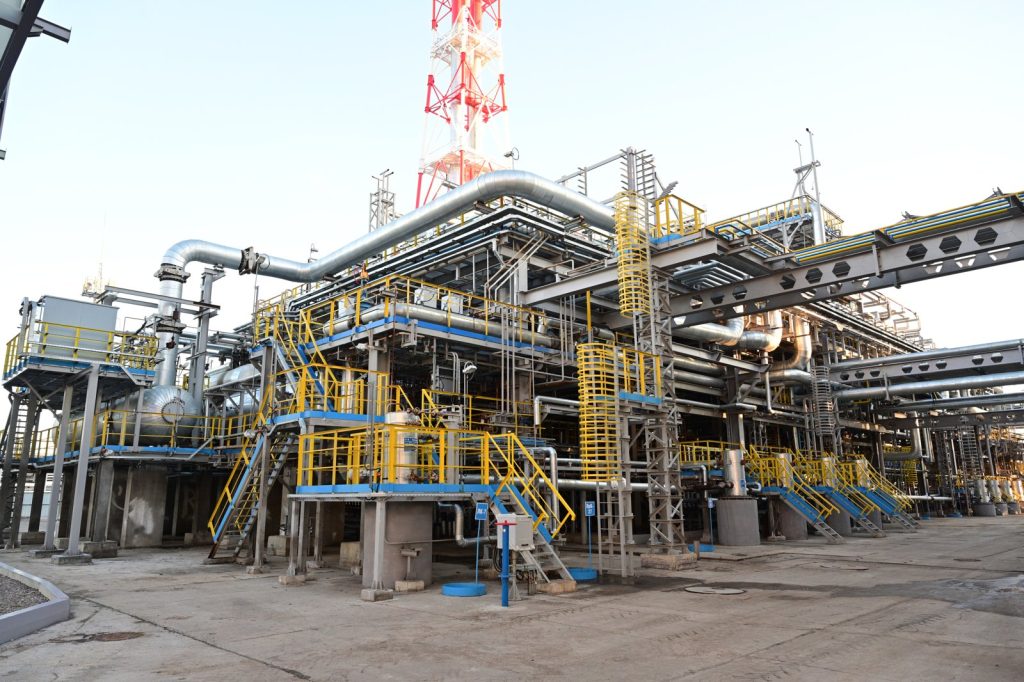
SALAVAT, Russia, July 14 — The January 29 drone strike on Gazprom Neftekhim Salavat was more than just another fire at a Russian industrial site. It was a signal about range. The plant sits deep in Bashkortostan.
For a facility founded in 1948 to be hit by a drone in 2025 rewrites the tactical map. Here is the claim: the strike caused a fire.
The catch is that the extent of damage is still being assessed, more than five months later. That silence from Gazprom and its subsidiary tells its own story.
The mechanics of the target
Follow the money, and you land on scale. Gazprom Neftekhim Salavat is one of Russia’s largest petrochemical complexes. Its annual processing capacity is approximately 11.7 million tons of crude oil and gas condensate.
That is not a boutique refinery — that is a major node in Russia’s energy-export pipeline, converting crude into motor fuels, lubricants, benzene, polyethylene, and other petrochemicals. The facility employs over 10,000 people.
For the Republic of Bashkortostan, it is not just an employer; it is the economic anchor. The plant is a subsidiary of Gazprom, the state-controlled gas giant. That ownership structure matters.
When a Gazprom asset burns, the Kremlin takes notice — not just because of the lost output, but because of what the strike says about vulnerability.
Range as a weapon
On closer reading, the January 29 strike is significant less for the immediate damage than for what it demonstrates. Ukraine’s growing strike range is the real headline. Hitting Salavat means Ukrainian drones can now reach targets that, two years ago, would have been considered safely beyond the operational horizon.
The fire itself was real. But the operational impact is harder to parse.
A fire at a petrochemical plant does not necessarily mean a shutdown of the entire 11.7-million-ton capacity. It could mean a single unit offline, or it could mean cascading damage to pipelines, storage tanks, or cracking towers. The lack of a definitive damage assessment from Gazprom Neftekhim Salavat suggests the latter is not off the table.
The regional calculus
Bashkortostan is not a border region. For local authorities, the strike introduced a new category of risk: industrial facilities that were never designed for wartime air defense are now potential targets. The plant’s 10,000 employees and their families now live with a threat that was abstract before January 29.
The economic stakes are straightforward. A prolonged disruption at Salavat would ripple through Russian fuel and plastics markets.
Motor fuels and lubricants are not luxury goods — they are inputs for transport, agriculture, and manufacturing. If the damage is worse than acknowledged, the Kremlin faces a choice: allocate scarce resources to repair a deep-in-the-rear asset, or let production lag.
What comes next
The unanswered question is whether this was a one-off or a new pattern. Ukrainian drone production has ramped up significantly since 2022, and range has been a persistent engineering focus. If Salavat is reachable, so are other facilities in the Urals and western Siberia — refineries, gas processing plants, petrochemical hubs that Moscow assumed were out of range.
Gazprom has not issued a public update on the repair timeline. The January 29 fire is now history, but the strategic implications are still unfolding.
The catch is that the next strike may not need to reach Salavat — the knowledge that it can is already changing the calculus.




