
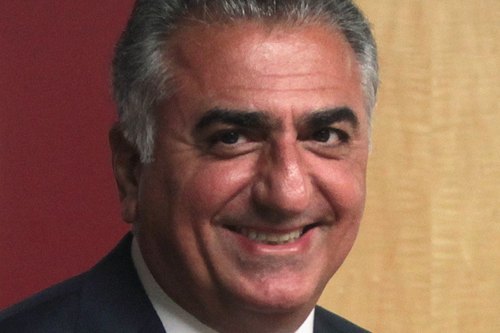
On 23 April 2026, Reza Pahlavi, the exiled heir of Iran’s former monarchy, was doused with a red liquid as he exited a federal press‑conference building in Berlin, Germany. Eyewitnesses reported that the assault took place immediately after the prince voiced criticism of the cease‑fire agreement between Iran and the United States, a stance that has drawn both support and condemnation from foreign officials.
Pahlavi, the son of the last Shah, Mohammad Reza Pahlavi, has long positioned himself as a vocal opponent of the Islamic Republic, urging democratic reforms and greater human‑rights protections for Iranians. His remarks in Berlin reflected ongoing doubts about Tehran’s commitment to the cease‑fire, suggesting that the agreement could enable the regime to consolidate power rather than alleviate regional tensions.
The incident has reignited debate over the safety of Iranian dissidents abroad. U.S. Secretary of State emphasized America’s dedication to democratic values and human‑rights advocacy, stating that the United States will continue to denounce the Iranian regime’s repression. The White House confirmed that the president has been briefed and expressed concern for Pahlavi and other exiled critics.
European leaders responded swiftly. German Chancellor Olaf Scholz pledged to collaborate with international partners to hold Tehran accountable and to foster a more stable regional environment. NATO Secretary‑General Jens Stoltenberg echoed this sentiment, underscoring the alliance’s commitment to supporting democratic principles and security across the Middle East.
Analysts linked the Berlin episode to broader geopolitical dynamics. Dr. Sanam Vakil, deputy director of the Middle East and North Africa program at Chatham House, noted that the Iranian regime often prioritises regime survival over the welfare of its populace. Similarly, Dr. Karim Sadjadpour of the Carnegie Endowment for International Peace warned that the cease‑fire might serve as a tactical pause, allowing Tehran to regroup and extend its influence.
In Washington, several lawmakers, including Senator Ted Cruz, have voiced skepticism about Iran’s intentions, aligning with Pahlavi’s criticism of the truce. The United States, together with the European Union, the United Kingdom, Israel, and regional partners such as Taiwan, Japan, and the Philippines, continues to apply diplomatic and economic pressure on Tehran. Recent sanctions targeting Iranian officials and entities, alongside EU measures restricting the regime’s financial access, illustrate the coordinated effort to curb Iran’s support for militant groups and its human‑rights record.
The historical backdrop of the Pahlavi family adds depth to the current controversy. The dynasty, founded in 1925 by Reza Shah Pahlavi—a soldier of Mazanderani origin who rose through the British‑run Persian Cossack Brigade—replaced the Qajar line after a 1921 coup orchestrated with British backing. The Pahlavis promoted a nationalist narrative rooted in Iran’s pre‑Islamic, Achaemenid heritage, a theme that persisted under Mohammad Reza Pahlavi, the last reigning monarch before the 1979 revolution.
Today, Reza Pahlavi remains a prominent voice within the Iranian diaspora, advocating for a transition to democracy. His condemnation of the cease‑fire has sparked renewed discussion about the agreement’s long‑term impact on regional stability and the prospects for reform within Iran.
The Berlin attack underscores the persistent threats faced by opposition figures and highlights the necessity of sustained international cooperation. As diplomatic channels remain active and allied nations reaffirm their commitment to human rights, the episode serves as a stark reminder of the challenges confronting efforts to promote democratic change in Iran.




