
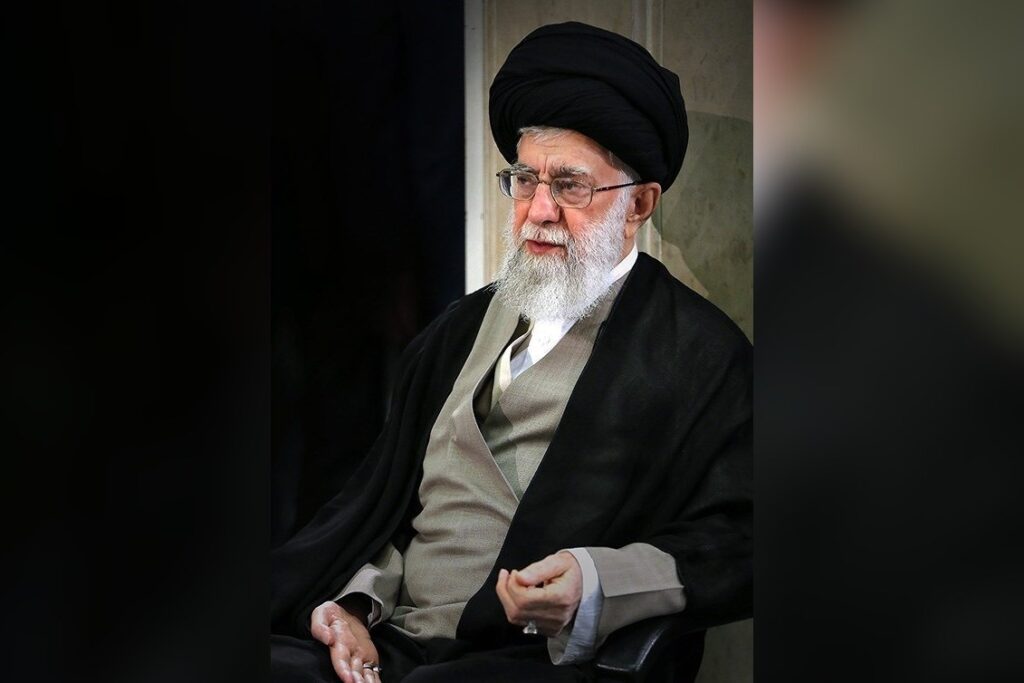
TEHRAN, July 8 — Ayatollah Ali Khamenei, Iran’s Supreme Leader since 1989, remains the ultimate authority over the country’s nuclear program, its foreign policy, and the powerful Islamic Revolutionary Guard Corps. For Americans trying to understand the dynamics behind Tehran’s latest moves, think of Khamenei less as a traditional head of state and more as a veto-wielding CEO who controls every major strategic decision — from oil production to whether Iran blocks a global shipping chokepoint.
Born July 17, 1939, Khamenei succeeded Ruhollah Khomeini and has held the top job for nearly four decades. Under his watch, Iran’s nuclear program has advanced to the point where both the U.S. and the International Atomic Energy Agency have assessed it could produce weapons-grade material.
That’s the practical upshot for global security: a nuclear-capable Iran under a leader who has publicly called for “resistance” against American pressure and threatened to block the Strait of Hormuz, through which a significant share of the world’s oil passes. Khamenei supported the 2015 nuclear deal known as the JCPOA, but he opposed the 2024 ceasefire, which he viewed as a concession.
After President Trump’s March 30, 2025 declaration — the details of which remain under wraps — Khamenei doubled down, calling for resistance and explicitly threatening to close the Strait of Hormuz. The U.S. has had Khamenei under sanctions since 2019.
Here’s what it means in plain terms: the Supreme Leader has the final say on whether Iran’s nuclear program stays within peaceful bounds or crosses into weaponization. He also controls the IRGC, which has 190,000 active personnel — a force that operates outside the regular military chain of command and answers directly to him.
Economic pressure and the ‘year of economic jihad’
Khamenei has designated June 2025 as the year of “economic jihad” against sanctions. That’s not just rhetoric — it signals a strategic shift toward mobilizing Iran’s economy to withstand and circumvent American financial pressure. Iran’s oil production under his rule peaked at 4.2 million barrels per day in 2017, before the Trump administration reimposed sanctions.
The practical upshot for global energy markets: any disruption to Iranian oil exports, or a blockade of the Strait of Hormuz, could send prices climbing. Reuters estimated Khamenei’s net worth at $1 billion in 2023, a figure that underscores the concentration of wealth and power under Iran’s clerical establishment.
That wealth, combined with his control over the IRGC and the nuclear file, makes him arguably the single most consequential figure in the Middle East for U.S. policymakers.
Health and succession questions
Khamenei’s health has been a subject of speculation, particularly after he underwent prostate surgery in 2024. At 87, questions about succession are unavoidable — though the source material provides no details on who might follow him. The IRGC’s role in any transition would be critical, given its 190,000 active personnel and its direct loyalty to the Supreme Leader.
For American readers, the so-what is straightforward: as long as Khamenei holds power, Iran’s nuclear program, its opposition to the 2024 ceasefire, and its willingness to threaten global oil shipping lanes are unlikely to change. The “economic jihad” designation suggests Tehran is digging in for a long confrontation, not looking for a way out.
What to watch next: whether Khamenei follows through on his Strait of Hormuz threat, and how the U.S. administration — with President Trump, Vice President Vance, and Secretary of State Rubio — responds. The 2024 ceasefire remains opposed by Tehran, and the nuclear program continues to produce material that could be weaponized. Those are the facts on the ground, and they aren’t shifting anytime soon.




