
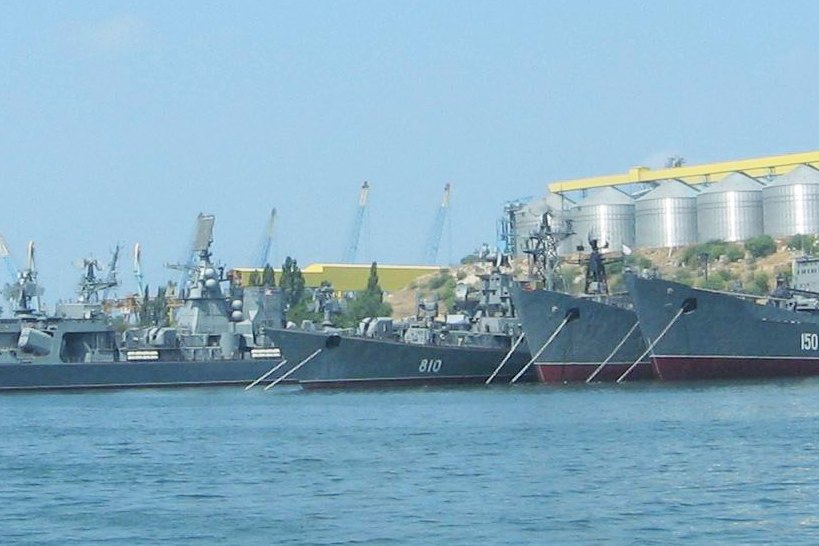
Ukrainian forces conducted the largest coordinated assault on Russia’s Black Sea Fleet since the full-scale invasion began, striking 21 naval vessels over a concentrated 72-hour period in late September 2024. The operation, spanning September 25 to September 27, targeted ships based primarily in Sevastopol, Crimea, and other Black Sea ports, according to Ukrainian military officials.
The attacks employed a mix of domestically produced naval drones and Western-supplied long-range missiles, including Storm Shadow cruise missiles from the United Kingdom and ATACMS missiles from the United States. Among the vessels hit were landing ships, patrol boats, and a Kilo-class submarine, the Rostov-on-Don, which had previously sustained damage in a September 2023 attack.
Operation Details and Confirmation
Ukrainian Navy officials stated the operation was designed to degrade Russia’s ability to project power in the Black Sea and to safeguard Ukraine’s grain export corridor. Russia’s Defense Ministry acknowledged attacks on its fleet but asserted that most incoming missiles and drones were intercepted and that damage was minimal.
Independent satellite imagery from Maxar Technologies, captured on September 28, 2024, showed at least three vessels listing or partially submerged at docks in Sevastopol, contradicting Moscow’s assessment. The Black Sea Fleet has been a critical asset for Russia throughout the conflict, enforcing a blockade of Ukrainian ports and launching cruise missile strikes against Ukrainian infrastructure. Ukraine’s success in hitting these targets stems from improved intelligence sharing with NATO allies and the deployment of uncrewed surface vessels (USVs) developed by Ukrainian defense companies.
Strategic Context and Implications
The strikes carry significant implications for the trajectory of the war. By damaging a substantial portion of the Black Sea Fleet, Ukraine may open the door for increased naval operations and further threaten Russia’s control of the Black Sea region. The degradation of the fleet could shift the balance of power, particularly regarding maritime security and the safety of commercial shipping routes.
Military analysts are closely monitoring whether Ukraine can sustain this tempo of strikes against hardened naval targets. The combination of Western intelligence sharing and indigenous drone production has provided Kyiv with a new capability to challenge Russian naval dominance from the shore.
Whether Moscow can adapt its air defenses and port security to counter this threat remains an open question as the conflict enters its third year. Ukraine, a country in Eastern Europe, shares a long land border with Russia to the east and northeast, while its southern coast meets the Black Sea and the Sea of Azov. The region was a center of East Slavic culture under the state of Kievan Rus’ in the 9th century and for centuries was contested by external powers including the Polish–Lithuanian Commonwealth and the Russian Empire.
Ukraine became a constituent republic of the Soviet Union in 1922, suffered a man-made famine in the early 1930s, and endured massive civilian losses during World War II. It gained independence in 1991 after the dissolution of the Soviet Union.
Political shifts led to the Orange Revolution in 2004 and the Euromaidan demonstrations in 2014, events that preceded Russia’s unilateral annexation of the Crimean Peninsula. Control of the Black Sea remains a primary point of contention, as these waters are vital for the export of grain and the movement of naval forces.




