
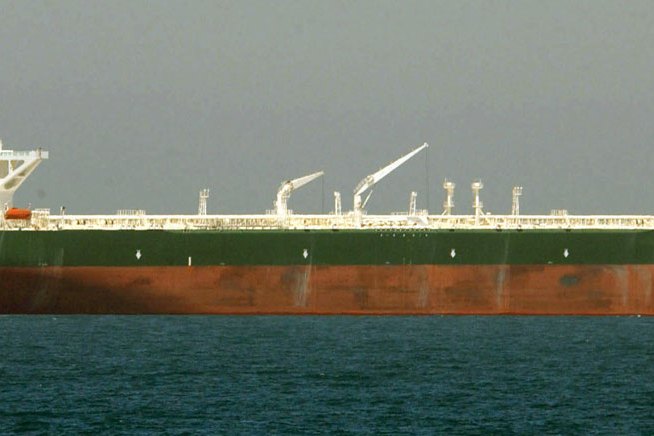
Iran’s state media has formally declared a closure of the Strait of Hormuz “until further notice,” transforming a decades-old rhetorical threat into a concrete action with no set end date. The announcement marks the first time the country has openly and indefinitely shut down the strategic waterway, escalating a confrontation that has simmered since the 1980s. The 2025 closure is not the first instance of hostile Iranian action in the strait, but it is the first to be declared as an open-ended policy by official state channels.
Decades of Tension and the Gap Between Rhetoric and Action
Iran’s pattern of threatening the Strait of Hormuz has been consistent for more than 40 years, but each previous warning stopped short of the action now underway. During the Iran-Iraq War, which lasted from 1980 to 1988, Iran mined the waterway and attacked oil tankers in what became known as the “Tanker War,” a phase that ran from 1984 to 1988. That campaign of maritime aggression prompted the United States to intervene with Operation Earnest Will from 1987 to 1988, a mission to protect shipping and ensure freedom of navigation.
In the years following the war, the Islamic Revolutionary Guard Corps (IRGC) continued to signal its willingness to close the strait. In 2008, IRGC commander Mohammad Ali Jafari threatened to block the waterway if Iran was attacked.
In 2011, the IRGC navy conducted a drill called “Great Prophet 9” that simulated sealing off the strait. Iran issued another warning in 2012, this time in response to U.S. and European Union sanctions on its oil exports, prompting the United States to deploy additional naval forces to the region. After the United States killed IRGC Quds Force commander Qasem Soleimani in 2019, Iran again threatened the strait.
That same year, attacks on tankers near Fujairah in May demonstrated Iran’s willingness to strike commercial shipping, though no formal closure was declared. The current closure—announced “until further notice”—closes the gap between rhetoric and action that had persisted for four decades.
The Strategic Significance and U.S. Response
The Strait of Hormuz is a narrow chokepoint linking the Persian Gulf to the Gulf of Oman, providing the only sea passage from the Persian Gulf to the open ocean. Iran lies on its northern coast; the Musandam Peninsula, shared by Oman and the United Arab Emirates, forms the southern shore.
A large share of global liquefied natural gas and seaborne oil passes through the strait each year. For several Gulf countries—including Iraq, Kuwait, Qatar, Bahrain, and the UAE—it is the sole maritime route for exports. Any sustained closure would affect oil shipments from Saudi Arabia, Iraq, Kuwait, the UAE, and Qatar, in addition to Iran’s own exports. The economic consequences for global energy markets would be substantial, depending on how long the closure lasts and the effectiveness of any countermeasures.
The United States maintains a naval presence in the region through the Fifth Fleet, established in 1995 and based in Bahrain. The fleet was designed specifically to counter threats to freedom of navigation through the strait.
Its commanders have drilled for this scenario repeatedly. During the Iran-Iraq War, the U.S. Navy actively escorted reflagged Kuwaiti tankers and cleared mines. The current situation, however, presents a more open-ended confrontation.
The language used by Iran’s state media suggests the closure is not a short-term show of force but a sustained policy shift. Whether the IRGC can maintain a closure against a determined American naval response remains to be seen.
The U.S. Fifth Fleet has operated out of Bahrain for three decades specifically to prevent this outcome, and its commanders have rehearsed the response.
What Comes Next
Each previous threat carried weight but stopped short of a formal indefinite closure. Iran’s decision to declare the closure “until further notice” raises immediate questions about Washington’s response and that of its allies. The history of the past four decades suggests that Iran’s threats have always been taken seriously, but this time the threat has become a declared fact.
What to watch next is whether the United States will mount a new operation similar to Earnest Will, whether diplomatic channels can de-escalate the situation, and how global oil markets react to the first actual closure of the Strait of Hormuz. The outcome could affect fuel prices and supply chains far beyond the Persian Gulf, touching on the stability of global energy supplies and the security of a route that carries a substantial portion of the world’s traded petroleum.




